
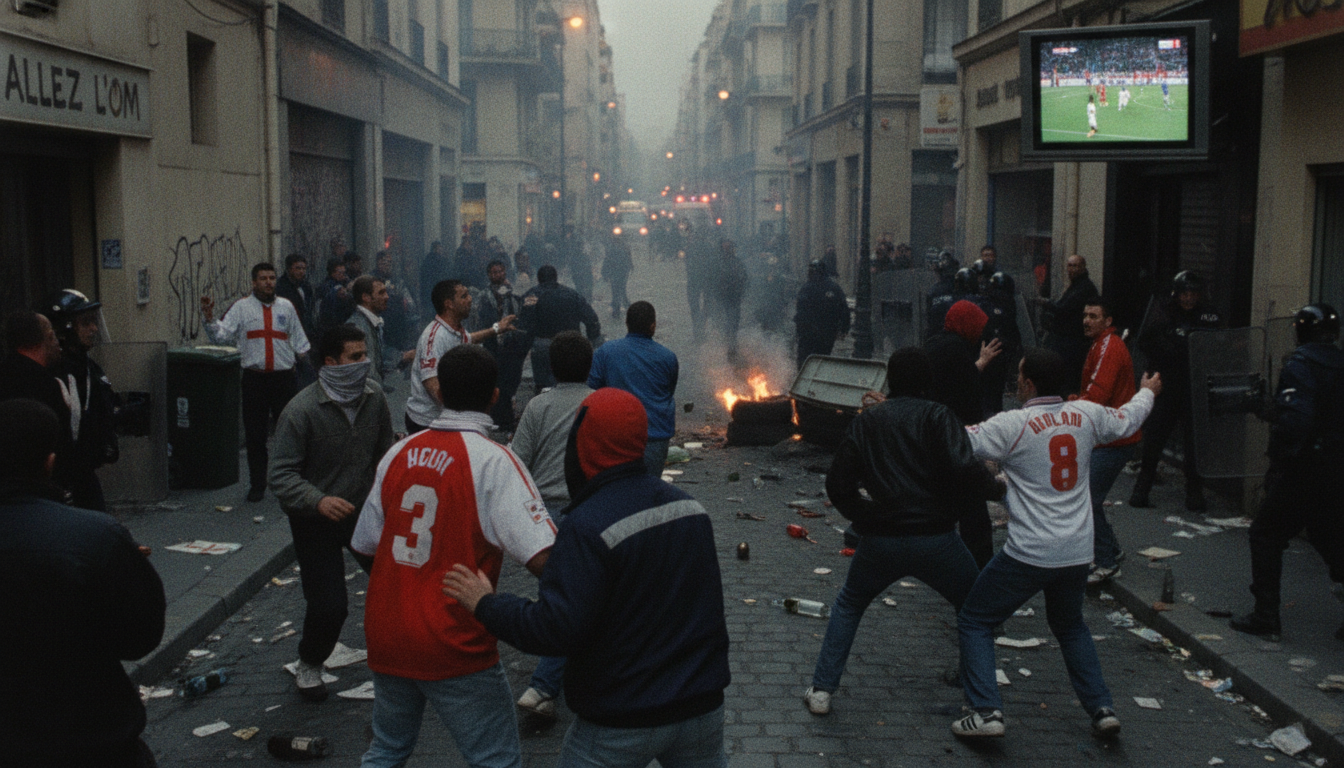
Marseille 1998 World Cup riots: a journalist’s account of violence, tear gas and a chaotic evacuation
A vivid account of the Marseille 1998 World Cup violence recalls clashes after the England–Tunisia match, describing tear gas, bottles, stabbings and a fraught evacuation that lingered in memory.
Violence Erupts After England vs Tunisia
The England–Tunisia match at the 1998 World Cup ignited clashes inside and outside the Velodrome that afternoon. What began with taunting and bottle-throwing in the stands escalated into pitched street battles involving visiting English supporters, Tunisian fans and local youth. Eyewitnesses and reporters described scenes of panic, broken glass and groups pushing and charging in narrow city streets.
Train Station Becomes Battlefield
Trouble followed fans to the train station as crowds tried to leave the city, turning stairwells and platforms into confrontation zones. Supporters were separated along staircases, with English fans above and North African groups below, creating a combustible standoff. The packed, overheated environment and the sudden eruption of violence compounded confusion and fear among civilians and travellers.
Police Tactics and Tear Gas
French riot police intervened with batons and tear gas in attempts to disperse the clashes and regain control of transit points. Officers deployed canisters that produced choking smoke, prompting many people to clutch their faces and flee through the Old Port. The use of CS gas, along with baton charges, was described by survivors as a harsh, immediate response that at times inflamed rather than calmed the situation.
Bottles, Knives and Property Damage
Rioting spread through multiple streets, producing a carpet of shattered glass from thrown bottles and smashed windows. Assaults were reported on both sides of the confrontations, with at least some victims suffering stab wounds and others left bloodied from beatings. Cars were set alight and storefronts damaged, leaving a physical trail of destruction through neighbourhoods near the stadium.
Controlled Explosions and Military Escorts
Authorities later carried out controlled explosions within the station as they processed bomb threats and cleared suspicious items, adding to an atmosphere of alarm. In response to the chaos, some groups of travelling supporters were boarded onto trains guarded by military police with visible weapons. Those escorted services produced sharp anxiety among passengers worried about further violence or being disembarked in unsafe areas.
Overnight Evacuations and Makeshift Accommodations
With regular seating unavailable on late trains, many passengers were instructed to sleep in aisles or luggage compartments for the trip back to Paris. Reports from the scene described overcrowded carriages and a sense of being corralled by authorities while trying to rest or recover. The long, uncomfortable journey home left lasting impressions of a night many described afterwards as the “train from hell.”
Enduring Memory for Reporters and Fans
For a reporter covering football tournaments across decades, the Marseille 1998 World Cup disturbances remained unusually vivid and persistent. The adrenaline, the smell of tear gas, and the sight of injuries and destruction lingered in recollection long after routine news cycles moved on. Many journalists and supporters say those images resurface whenever major international matches stir expectation and intense national fervour.
The Marseille incidents prompted city and tournament officials to reassess security and crowd-management strategies in subsequent competitions. They also reinforced debates about hooliganism, policing tactics and how to protect peaceful fans and local residents during high-stakes international events.
Memories of those events continue to inform how clubs, federations and host cities plan for large-scale matches, aiming to reduce the risks that turned a single game into a night of widespread violence and fear.
