
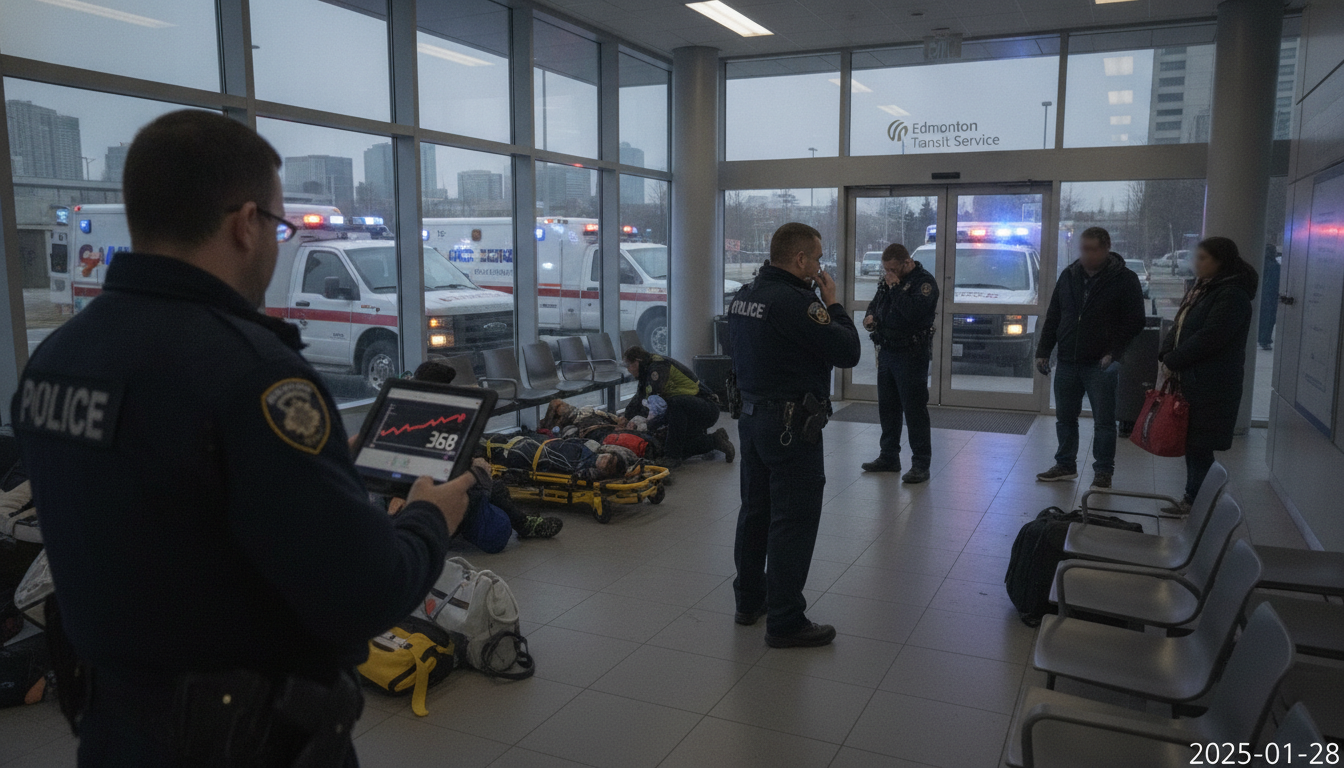
Overdose calls at Edmonton transit stations more than doubled in 2025, Alberta data shows
Overdose calls at Edmonton transit stations more than doubled in 2025 to 368, outpacing Calgary and prompting concern from paramedics and provincial officials.
Edmonton saw a sharp rise in overdose calls to public transit locations in 2025, with 368 incidents recorded — more than twice the number from 2024 and roughly two-and-a-half times Calgary’s total for the same year.
The figures, covering 2018 through 2025 and released via an access-to-information request, apply to all substances and reflect emergency calls dispatched to transit sites across both cities.
The surge has renewed scrutiny of patterns at specific stations, seasonal spikes and how emergency services and health authorities are responding.
Calls surge in 2025, Edmonton doubles year-over-year
The 2025 total in Edmonton jumped from 154 calls in 2024 to 368 last year, reversing a brief dip after three consecutive years above 200 from 2021 through 2023.
Across both Edmonton and Calgary the combined total rose to 514 in 2025, up from 248 in 2024 and well below the 550 peak recorded in 2023.
Officials and advocates say the volatility underscores an unpredictable drug supply and recurring pressure on ambulance services and transit operators.
Churchill station recorded the highest number of incidents
Within Edmonton, Churchill station accounted for the largest share of calls, with 211 incidents recorded since 2018 and 48 calls in 2025 alone.
Central and Coliseum stations also saw substantial volumes, each accumulating more than 150 calls over the eight-year span, and remain frequent sites for emergency responses.
Belvedere and Kingsway stations were the only other locations to register more than 20 calls last year.
Calgary’s trends diverge but totals remain significant
Calgary’s trajectory has been different: the city rose from 78 calls in 2018 to about 220 in 2021, then fell below 200 in 2022 before spiking to 315 in 2023.
That high year was followed by a steep retreat to 94 calls in 2024 and a rebound to 146 in 2025, according to the same dataset.
The contrast between the two cities demonstrates that regional drug markets and local circumstances can produce markedly different emergency-service demands.
Seasonal and holiday concentrations identified in data
The data shows distinct timing patterns: March, December and February each accounted for more than 10 per cent of all transit-related overdose calls across both cities.
Postmedia’s analysis of dates identified Dec. 22 and Christmas Day as the most common single dates for calls over the eight-year period, suggesting holiday periods present elevated risk.
Advocates say reduced access to support services and changes in social routines during holidays can lead to both higher substance use and delayed help-seeking.
Government and health officials point to broader provincial trends
Alberta Health Services told media its emergency health staff are trained and equipped to respond to medical emergencies at all locations, and that triage and dispatch approaches have been consistent.
A spokesperson for the Mental Health and Addiction minister noted provincial drug poisoning deaths declined from a 2023 peak, but said Edmonton remains an outlier with persistently high opioid-related deaths involving potent substances such as carfentanil.
The province’s surveillance dashboard reports drug-poisoning deaths fell to 1,423 in 2025 after peaking at 2,141 in 2023, with 292 deaths recorded in the first three months of the current year.
Paramedics’ union warns of complexity and demand on frontline workers
The Health Sciences Association of Alberta, which represents paramedics, said overdose and substance-use emergencies are often complex, unpredictable and place significant strain on emergency responders.
The union urged careful monitoring and evaluation of trends so that changes in call volumes and outcomes can be tracked and acted upon to protect both patients and staff.
Frontline groups also call for continued expansion of addiction treatment, same-day care and community supports to reduce preventable emergencies.
Patterns across the eight years show a marked increase in calls beginning in 2021, with both cities recording minimal transit-related overdose calls in 2018 and 2019 and very low totals in 2020.
The rise and fall of volumes from year to year has prompted municipal transit authorities, health services and provincial policymakers to reassess how to deliver timely emergency care while also addressing prevention, treatment and the underlying drivers of substance-related harm.
Public health officials and unions say a mix of expanded treatment access, harm-reduction services and targeted outreach around transit hubs will be necessary to reduce both overdoses and the acute pressure on ambulance services.
Longer-term solutions, they add, will require coordinated action across health services, social supports and municipal transit operations to respond to a changing drug supply and the concentrations of need at specific stations and during predictable high-risk periods.
