
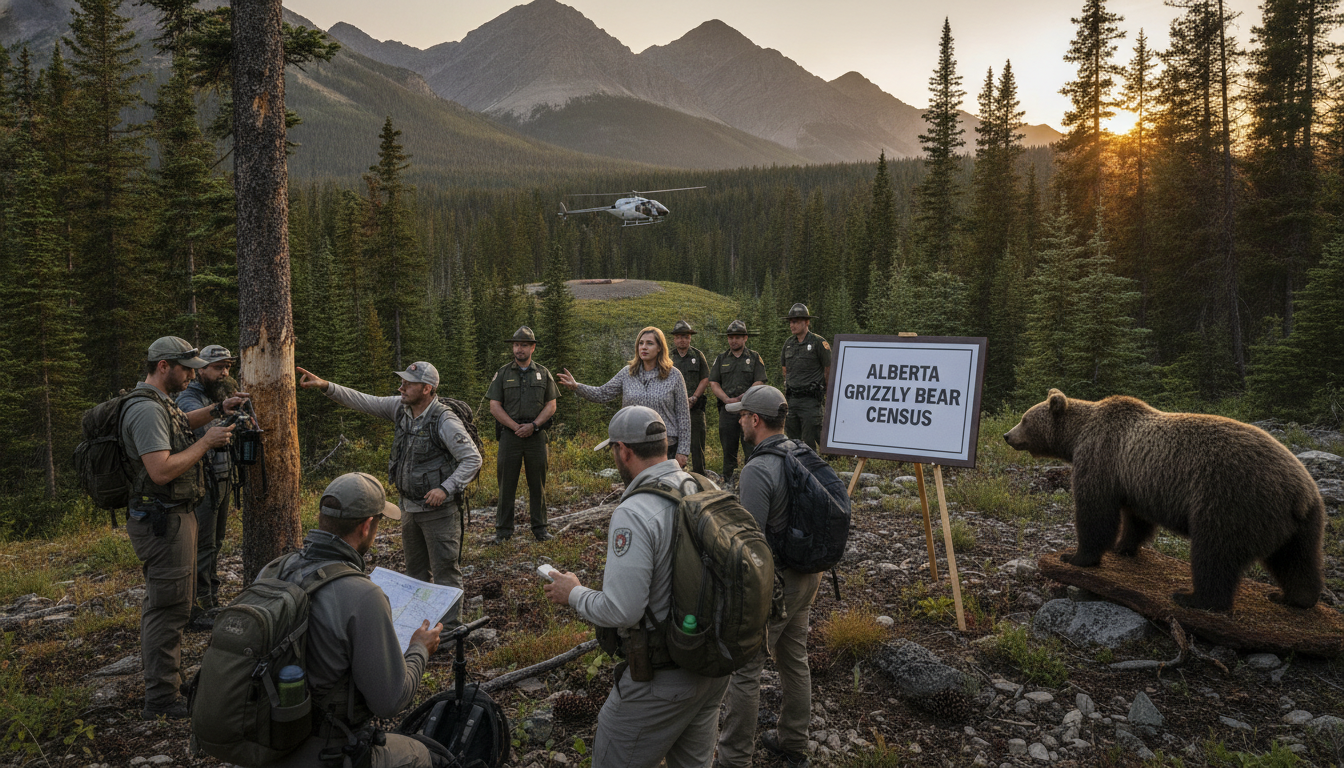
Alberta launches long‑overdue grizzly bear count to inform recovery plan
Alberta has begun a long‑overdue grizzly bear count led by fRI to update population data and inform the Grizzly Bear Recovery Plan.
Province begins first grizzly bear count in eight years
Alberta’s Environment and Protected Areas office announced the province has started a grizzly bear count, the first comprehensive tabulation in eight years. The pilot monitoring project, contracted to the Foothills Research Institute (fRI), will run through the end of 2026 and aims to supply data for management and recovery decisions. Officials said the work will inform the province’s next Grizzly Bear Recovery Plan and be presented to the Endangered Species Conservation Committee.
Where the pilot is being conducted and methods planned
The pilot will cover work in two of Alberta’s seven designated bear management areas, with some field activity reported in the Rockies west of Edmonton. The province confirmed fRI will employ methods used in recent counts, including DNA sampling from hair and field surveys, to estimate abundance, habitat use and population trends. Officials described the effort as a targeted pilot that could be expanded in coming years to meet the recovery plan’s goal of rotating counts across all zones.
Conservation scientists welcome the update but flag resource needs
Researchers and conservationists broadly welcomed the announcement, saying a grizzly bear count is overdue and essential to measure recovery. Andrea Morehouse, an ecologist who last worked on bear tallies 12 years ago, said the effort is “intensive” and depends on multiple partners and sustained funding. She noted the recovery plan calls for regular abundance estimates and that accurate counts are necessary to assess mortality thresholds and conservation status.
Former wildlife officer questions policy implementation
Former provincial conflict biologist Jay Honeyman said he was encouraged by the count but sceptical about the province’s broader commitment to grizzly sustainability. Honeyman pointed to the lack of replacement for the conflict biologist position he vacated in 2022, a role the recovery plan recommends in each bear management area. He said a count alone will not address the full slate of actions the plan envisions, including measures to reduce mortality and mitigate human‑bear conflict.
Policy changes, cull authorization and public safety concerns
The province noted grizzly numbers have grown since 2010, reporting an increase from roughly 800 animals in 2010 to more than 1,100 in recent estimates. At the same time, a ministerial order under the Wildlife Act issued on June 17, 2024, allows targeted killings of grizzlies judged by wildlife officers to be habituated or responsible for livestock deaths, with restrictions that only bears without cubs be removed. Officials said that authorization is applied in cases of human or livestock safety; the province has confirmed at least four grizzlies have been killed under the program so far.
Rising human‑bear encounters and calls for different approaches
Local governments and rural associations have pressed for stronger responses to growing conflicts, particularly in the province’s extreme southwest. The Rural Municipalities of Alberta passed a resolution in March seeking a regulated, draw‑based grizzly hunt, though ministers have said no expansion of hunting is planned. The province also reported four human fatalities in grizzly attacks over the past five years, all occurring in areas northwest of Calgary, a trend that has intensified calls for clear data to guide policy.
Data gaps, illegal killings and vehicle collisions
Conservation groups highlighted gaps in long‑term monitoring and enforcement data that complicate management decisions. Alberta reported 58 grizzlies were illegally killed between 2013 and 2022, and vehicle collisions accounted for the single largest known source of mortality at 66 recorded deaths. Two additional grizzly collision deaths were reported near Sundre in June 2026, underscoring the range of human‑caused mortality the count aims to quantify.
Next steps for recovery planning and monitoring cadence
The provincial recovery plan recommends an abundance estimate for each bear management area on a rotating schedule, effectively twice per decade for each zone, a standard conservation scientists say is necessary to detect meaningful trends. The current pilot is being framed as the first step toward that cadence, with results expected to shape the next formal Grizzly Bear Recovery Plan. Conservationists urged transparency on methodology, timelines and how findings will translate into on‑the‑ground actions to reduce conflicts and protect habitat.
Alberta’s grizzly bear count represents a renewed attempt to ground policy in updated science, but experts and former officers say its value will depend on follow‑through, adequate resourcing and concurrent measures to reduce mortality and human‑bear encounters.
