
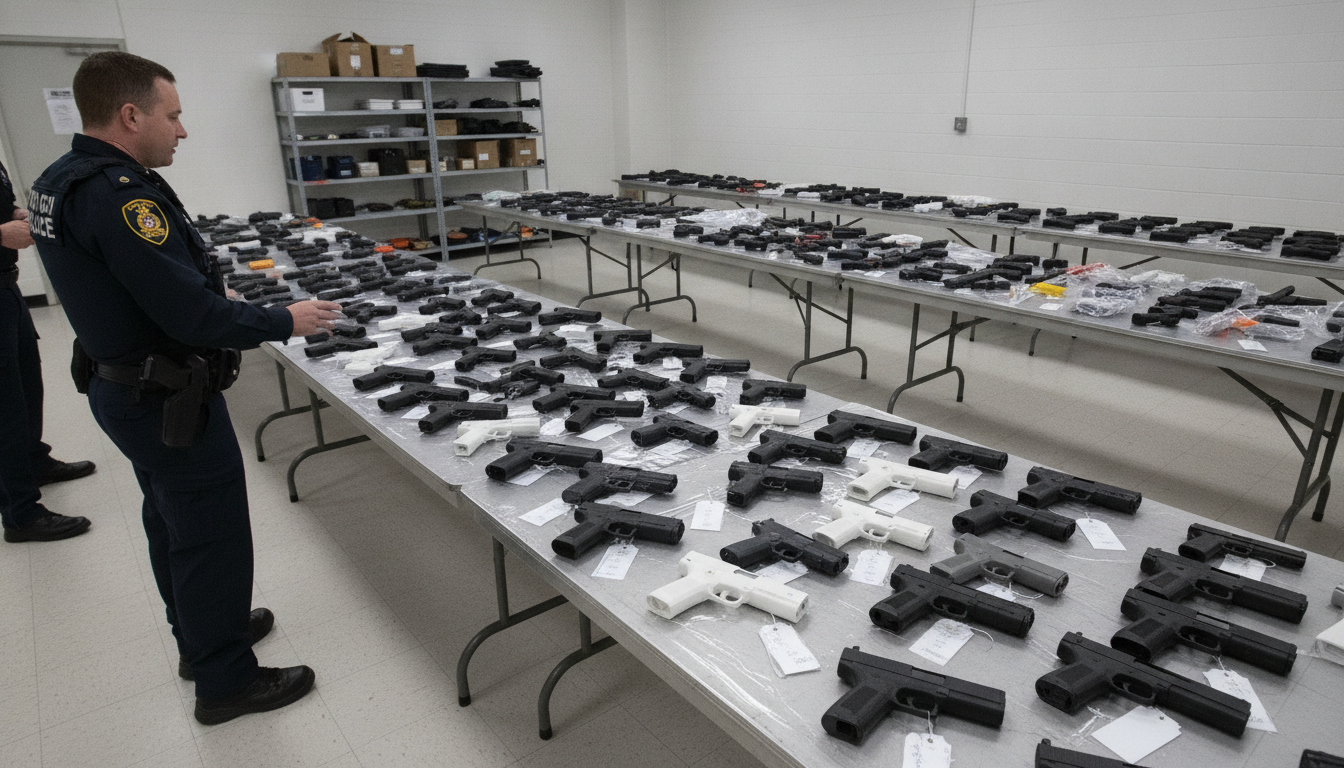
3D-printed firearms surge in Alberta evidence rooms as labs report monthly cases
Alberta sees a surge in 3D-printed firearms in evidence; Edmonton firearms lab now handles multiple monthly files, prompting concern from law enforcement.
Arresting officers and forensic staff in Alberta are encountering 3D-printed firearms with greater frequency, a trend that has transformed a once-rare curiosity into a routine part of police evidence. The rise in privately manufactured firearms, including those produced with 3D printers, is reflected in Edmonton’s firearms laboratory case load and is prompting renewed questions about detection, tracing and regulation. Examiners who routinely process weapons say the pattern has shifted sharply since 2020.
Rising volumes on Alberta evidence tables
Forensic technicians across the province report a steady increase in privately manufactured firearms arriving at lab benches and evidence lockers. Tools and components produced outside established manufacturing chains, including polymer frames and metal parts made or modified at home, now appear regularly in case files. The change has altered the daily work of provincial firearms examiners and the resources police allocate to evidence processing.
Lab examiner describes change from rarity to routine
Tolley, a firearms examiner who works with police agencies across southern Alberta, says 3D-printed firearms have moved from novelty to the most common type of homemade gun he examines. He notes that in 2020 the Edmonton firearms laboratory handled only two case files involving 3D-printed weapons; the lab now averages three or four files each month that contain one or more privately manufactured firearms. That shift has produced heavier workloads and new technical demands for the lab’s analysts.
How privately manufactured and 3D-printed guns differ
Privately manufactured firearms cover a wide spectrum, from hand-built metal barrels to polymer receivers produced with consumer-grade 3D printers. 3D-printed firearms are often made from plastics and composites that can be hard to identify or trace using traditional tooling marks and serial-number databases. Some devices are created to be assembled with improvised components, complicating forensic analysis and safety assessments carried out at evidence facilities.
Operational challenges for police and labs
Investigators say the increase in homemade guns complicates both crime-scene processing and investigative follow-up. Without factory serial numbers or established manufacturing records, tracing ownership and supply chains can be slow or inconclusive. Forensic examiners also face safety considerations when handling unstandardized weapons, and police departments report additional time and expense to secure, transport and test these items.
Implications for public safety and enforcement
Law enforcement officials express concern that privately manufactured firearms, including many 3D-printed examples, can be produced by individuals with limited machining skill and sold or shared without oversight. The ease of digital sharing of printing files and home-manufacturing instructions is cited as a factor that widens access. Police sources say that while many recovered homemade weapons are found in the context of other offences, the presence of these guns increases the unpredictability and potential lethality of police interactions.
Calls for targeted responses from agencies and policymakers
Police and forensic specialists are urging a range of responses that include updated training for frontline officers, investment in laboratory capacity and clearer pathways for tracing non‑serialised weapons. Some experts also recommend public awareness campaigns to reduce demand for improvised firearms and to inform communities about the risks of handling untested weapons. Officials emphasize a need for coordination between municipal police services, provincial laboratories and federal regulators to address the technical and legal complexities revealed by rising case numbers.
The pattern observed in Alberta mirrors a broader shift toward DIY firearms production that forensic analysts say requires adapting investigative techniques and resource planning. As the Edmonton firearms laboratory and other regional facilities process more files involving privately manufactured and 3D-printed guns, police and policymakers will confront decisions about funding, regulation and public safety priorities. Continued monitoring of case trends and investment in forensic capacity are likely to shape how authorities respond in the months ahead.
