
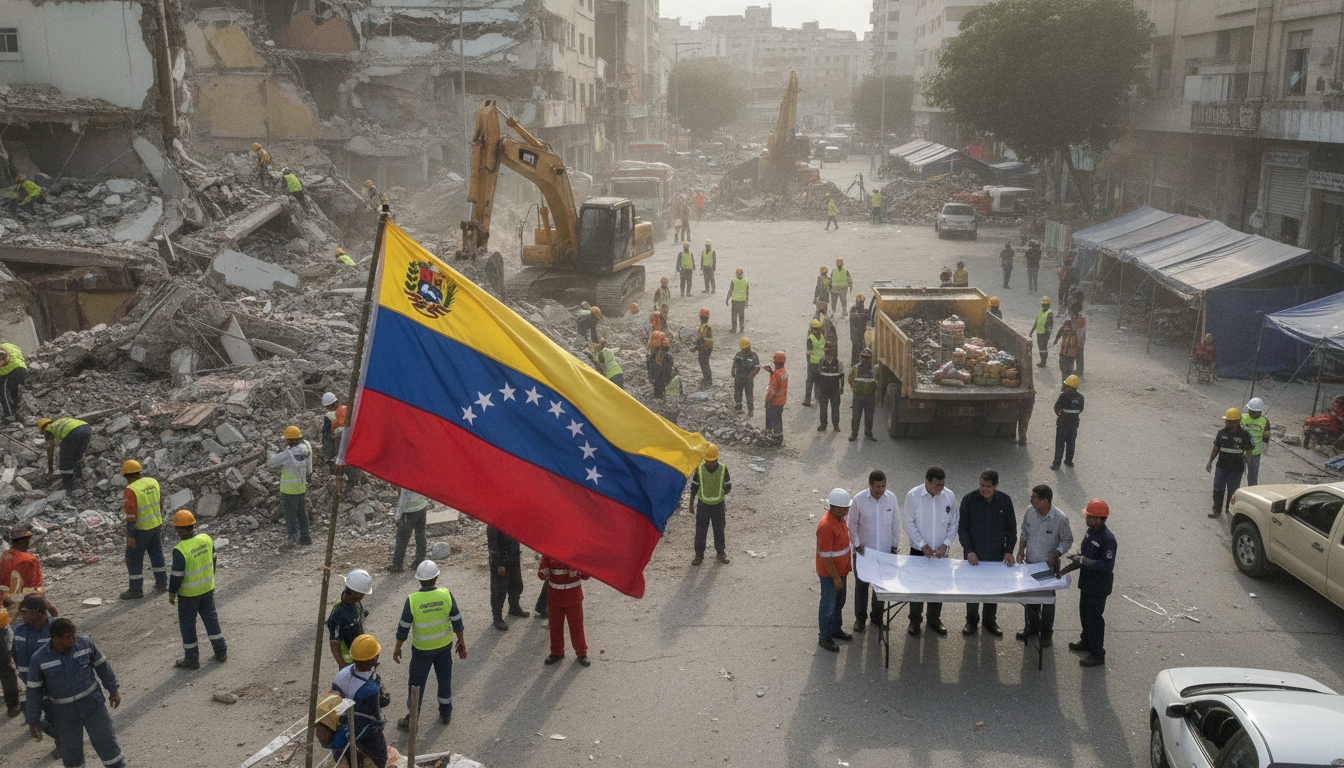
Venezuela earthquakes: 4,829 dead as recovery shifts from rescue to rebuilding
Three weeks after the Venezuela earthquakes killed at least 4,829 people, communities face uncertain timelines as officials shift from rescue to rebuilding.
Death toll and ongoing search efforts
Three weeks after the tremors struck on June 25, 2026, official tallies put the death toll at a minimum of 4,829 people, with hundreds more injured and many still unaccounted for, according to government figures. Local emergency teams and community volunteers continue targeted search and recovery in pockets of rubble where buildings pancaked, even as large-scale rescue operations have wound down. Families in several hard-hit towns say the cadence of emergency response has moved from immediate extraction to body recovery and clearing debris, a grim sign of the scale of destruction.
Government announces reconstruction intent but few details
The national government has publicly signalled a shift toward reconstruction, saying it will prioritize housing, infrastructure and services, but it has not released a comprehensive timetable or detailed financing plan. Officials have described a phased approach that will pair temporary shelter efforts with long-term rebuilding, yet residents and local leaders say they lack clarity on eligibility, delivery schedules and oversight mechanisms. The absence of concrete maps, timelines and oversight structures has left many survivors unsure when damaged homes and lifelines will be restored.
Displaced families confront housing and basic needs shortfall
Across affected communities, thousands of families remain displaced and living in improvised shelters, public buildings or with relatives, and the need for safe, durable housing is acute. Local aid groups report shortages of mattresses, cooking supplies and reliable potable water, while municipal authorities contend with limited budgets to convert temporary shelters into longer-term accommodation. For many households, the immediate concern is not only rebuilding walls but restoring livelihoods and access to schools and health centres that were damaged or destroyed.
Critical infrastructure damage complicates recovery
The earthquakes severely damaged roads, bridges, electricity grids and water systems, leaving entire districts with intermittent power and restricted access to relief deliveries and construction materials. Hospitals in several towns suffered structural damage, forcing patients to be evacuated and surgical services to be scaled back while engineers assess safety. Repairing transport links and utilities will be essential to moving construction crews, medical supplies and heavy equipment, and engineers warn that these repairs must be coordinated to avoid bottlenecks that could stall reconstruction for months.
International offers and coordination challenges
International agencies and neighbouring countries have offered assistance, but logistical hurdles and coordination gaps have slowed the flow of outside aid reaching some of the worst-hit areas. Humanitarian groups point to damage on transport routes, customs processes and the need for clear channels between national, regional and local authorities as central constraints. Donors and non-governmental organisations say they are ready to supply emergency shelter kits, medical teams and engineering expertise, but they emphasise that predictable access and transparent procurement systems are needed to make external support effective.
Long-term risks and funding uncertainties loom
Recovery experts and disaster economists caution that reconstruction will require sustained funding, strong oversight and seismic-resistant designs to reduce future risk, all of which face headwinds in an environment of strained public finances. The cost of rebuilding schools, hospitals, housing and critical infrastructure is likely to run into the billions, and officials have given few firm indications of where financing will come from or how projects will be prioritised. There are also concerns about governance, procurement transparency and the technical capacity at the municipal level to manage complex reconstruction projects over multiple years.
Three weeks on, many survivors say the immediate relief they received has been a lifeline but is not a substitute for comprehensive reconstruction that restores safety and livelihoods, and the pace of planning will determine whether recovery becomes a generational rebuilding or a protracted crisis. Community leaders are pressing for clear timetables, independent oversight and participation in planning to ensure reconstruction addresses both housing and the services that underpin daily life. The coming months will test the government’s ability to translate initial commitments into concrete projects that can withstand Venezuela’s seismic reality and meet the urgent needs of displaced families.
