
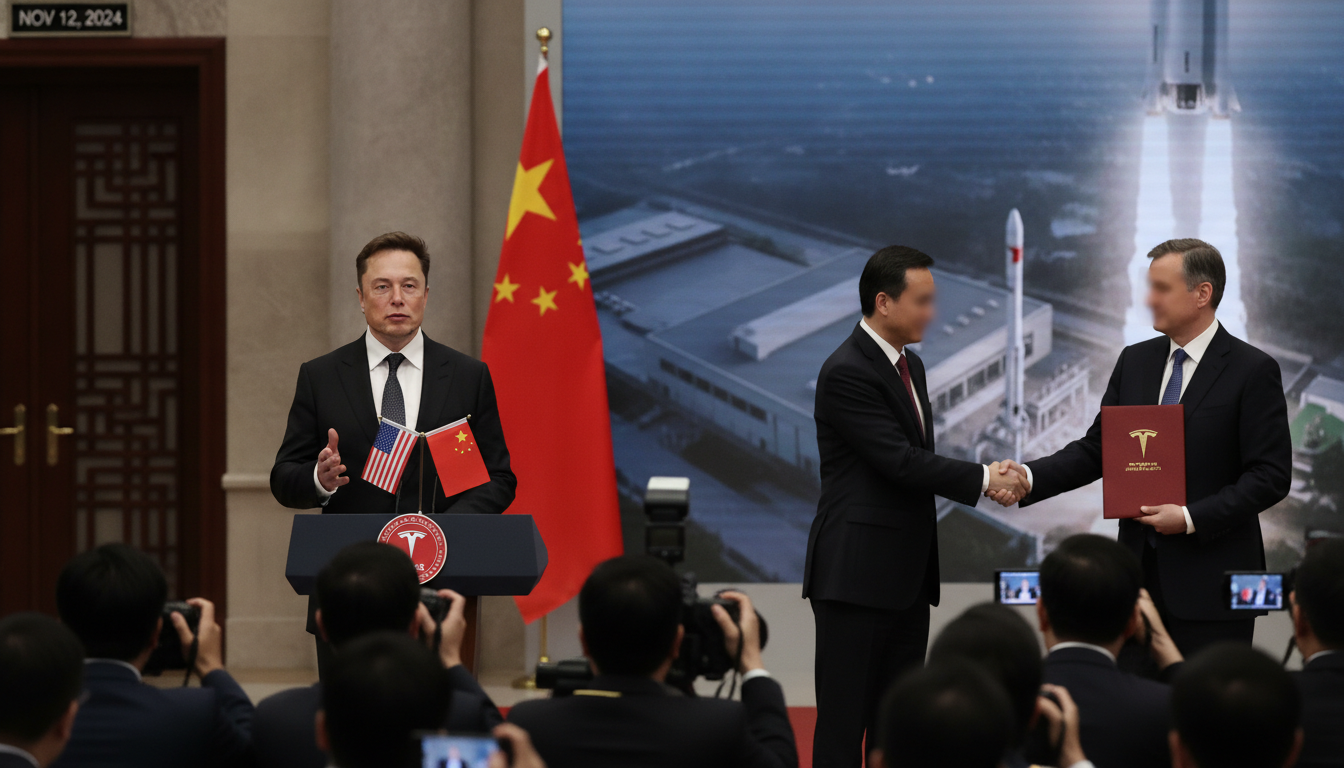
Tesla China business could be split off as part of potential SpaceX merger
Tesla China business reportedly may be spun off or sold to ease a merger with SpaceX, a Wall Street Journal report says.
Tesla is preparing to separate its China operations from its global business as part of contingency planning tied to a possible merger with SpaceX, according to people briefed on the discussions. The move, which could take the form of a spinoff, sale or closure of the unit, is said to be under active review by senior executives. (wsj.com)
Tesla Weighs Separation of China Business
Senior Tesla executives have reportedly been asked to prepare for a rapid split of the company’s China arm, the Wall Street Journal reported, citing unnamed sources familiar with internal deliberations. The company’s contingency planning is described as detailed enough that implementation could be executed on a compressed timeline if leadership so decides. (wsj.com)
SpaceX Merger Cited as Motive
People familiar with the matter told reporters the principal rationale for a separation would be to simplify the legal and regulatory hurdles of folding Tesla into SpaceX, a U.S. defense contractor that faces strict rules on foreign ownership and national-security clearances. SpaceX and related merger talks have been reported in the press as part of broader consolidation moves among Elon Musk’s companies. (bloomberg.com)
Options Under Consideration: Spinoff, Sale or Closure
The options reportedly being evaluated range from a formal spinoff that preserves the China operations as a separate listed or private company, to an outright sale or an orderly closure of local activities. Each path presents distinct legal, financial and political tradeoffs, including shareholder approval processes, tax consequences and potential pushback from local authorities. (wsj.com)
China’s Role in Tesla Production and Sales
China is a central pillar for Tesla’s manufacturing footprint and market demand, with the Shanghai factory producing a large share of the company’s global output and the country accounting for a significant portion of sales. Analysts and trade reporting have estimated that China represents a substantial slice of Tesla’s revenue, and the Shanghai gigafactory supplies vehicles not only to Chinese buyers but to other Asian and European markets as well. (axios.com)
National Security and Regulatory Hurdles
Integrating a major automaker with a defense contractor raises immediate national-security questions, particularly where foreign investment or operations in adversary states are involved. Recent reporting and investigations into foreign investment in U.S. defense contractors have heightened scrutiny across government agencies, adding complexity to any corporate restructuring that would move sensitive business under a single corporate umbrella. (propublica.org)
Potential Market and Supply-Chain Impacts
A split of Tesla’s China business would reverberate across supply chains that were built around the Shanghai factory and regional logistics hubs. Suppliers, parts vendors and regional dealers would face new contractual dynamics, while European and Asian delivery volumes could be affected if production is reallocated or if trade relationships change. Market reaction would likely vary depending on how a separation is structured and whether assets remain operational under local management.
Political and Diplomatic Stakes
Any decision to divest or alter the company’s footprint in China will carry political weight in Beijing and in Washington, where lawmakers and regulators have in recent months intensified scrutiny of cross-border investment in sensitive industries. Officials on both sides of the Pacific have shown heightened interest in transactions that could affect national security or critical supply chains, increasing the likelihood that regulators will examine major corporate changes closely.
Industry observers note that Tesla’s global strategy has long balanced growth in China with geopolitical risk, and a forced decoupling—whether voluntary or compelled by regulatory pressure—would mark a major shift for the automaker. Analysts say the timing and structure of any separation will be pivotal for Tesla’s near-term profitability and long-term manufacturing strategy.
If Tesla proceeds with a formal separation of its China operations, the practical steps would include corporate carve-outs, asset reassignments and negotiations with local partners and authorities. The company would also need to communicate clearly to investors about valuation impacts and any continuing ties between the separated businesses.
For employees, customers and suppliers in China the immediate priorities are continuity of production, warranty support and supply commitments, and market participants are likely to press for clarity on those fronts as talks advance. Investors will watch how the proposal, if formalized, affects Tesla’s consolidated results and strategic alignment with SpaceX.
The coming weeks and months will determine whether preparation moves into execution or remain contingency planning, and whether regulators in multiple jurisdictions will permit, delay or block any major restructuring tied to a potential merger with SpaceX. The outcome will shape not only Tesla’s footprint in China but broader discussions about corporate governance, national security and international commerce.
