
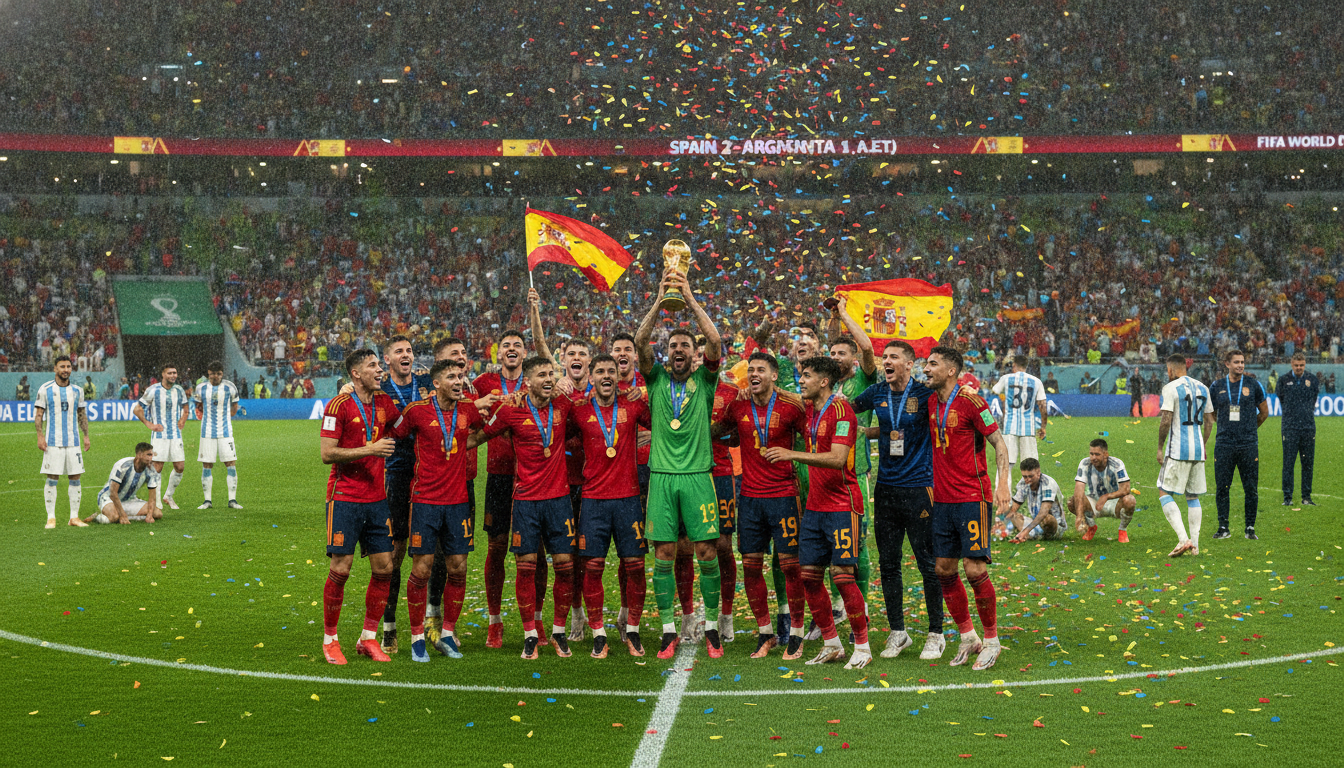
Spain 2026 World Cup: Ferran Torres nets extra-time winner as Spain beat Argentina 1-0
Spain beat Argentina 1-0 after Ferran Torres’ extra-time strike at New York Stadium to secure the Spain 2026 World Cup title after a dominant display in extra time.
Spain 2026 World Cup victory came at New York Stadium on Sunday as Ferran Torres fired a left-footed finish in the 106th minute to separate the teams and deliver Spain their second World Cup crown. The goal followed an intensely one-sided 90 minutes in which Spain controlled the match but could not find the breakthrough until extra time. Argentina pressed sporadically but ultimately could not overturn a game defined by Spanish possession and chance creation. The result ends a tournament run that pushed both sides to the limit and crowns La Roja once again.
Spain clinches the title with Torres’ decisive strike
Ferran Torres struck in the first half of extra time, rifling a low left-footed shot into the net that settled a contest that had been level through regulation. The goal proved decisive despite earlier near-misses and a disallowed effort that briefly appeared to give Spain the lead. Coaches, players and fans reacted immediately as the stadium erupted, while Argentina scrambled to respond with limited time and a numerical disadvantage. Torres’ finish will be remembered as the moment Spain converted dominance into a championship.
Match statistics underlined Spanish dominance
Stat sheets from the match painted a clear picture: Spain recorded 15 shots to Argentina’s none and led 9-0 in shots on target by the end of 90 minutes. The Spanish side held 64 percent of possession and completed 91 percent of its passes, outpacing Argentina’s 36 percent possession and 81 percent pass accuracy. Those figures highlighted Spain’s sustained territorial control and pattern of play even as the scoreboard remained stubbornly level. The numerical disparity amplified the sense that Spain’s breakthrough was overdue rather than unexpected.
Key moments and disallowed goal changed the momentum
A controversial stoppage-time sequence in extra time saw a Nico Williams effort first counted as a goal and then ruled out after the referee judged a foul by Mikel Merino on Nicolás Otamendi in the build-up. Refereeing decisions around that phase of play briefly shifted momentum and drew intense scrutiny from both camps. Earlier, Torres had come close after a precise cross from Lamine Yamal, only for Argentina goalkeeper Emiliano Martínez to produce a strong save on a headed attempt. Yamal also curled a late stoppage-time set piece that Martínez tipped away, underlining the fine margins that shaped the final result.
Disciplinary incidents left Argentina down to ten men
Tensions flared in the second half and were reflected in disciplinary action that affected Argentina’s capacity to mount a comeback. Leandro Paredes received a yellow card for a shove on Dani Olmo, a moment that increased physicality on the pitch and left Argentina on edge. The situation escalated when Enzo Fernández was sent off near the start of stoppage time for a hard tackle on Pau Cubarsí, reducing Argentina to ten players at a critical juncture. Playing a man down in extra time compounded the defensive burden on Argentina and limited their ability to press riskier attacking options.
Tactical execution and standout performances for Spain
Spain’s tactical plan emphasized patient buildup and high-percentage passing, forcing Argentina into reactive defending for long stretches. Midfielders rotated effectively to create overloads and open passing lanes, while fullbacks provided width to stretch the Argentine backline. Ferran Torres delivered the decisive finish, but the match featured numerous contributors who advanced Spain’s control of possession and territory. Goalkeeper Emiliano Martínez was outstanding for Argentina with key saves that kept the score level until extra time despite the onslaught.
Aftermath and implications for both nations
The victory gives Spain a second World Cup title, their first since 2010, and marks a return to football’s highest prize after a 16-year wait. For Argentina, the defeat ends a campaign that produced moments of resilience but ultimately fell short against a side that dominated play. The final will prompt reflection for Argentina on discipline and defensive shape, while Spain will celebrate a tournament-long approach that culminated in clinical execution when it mattered. Fans and national federations on both sides will now begin planning for celebrations, reviews and the next cycle of international fixtures.
Spain’s win in the 2026 World Cup closes this edition with a single, decisive moment etched into the tournament’s history, while the broader match narrative will be debated by analysts for weeks to come.
