
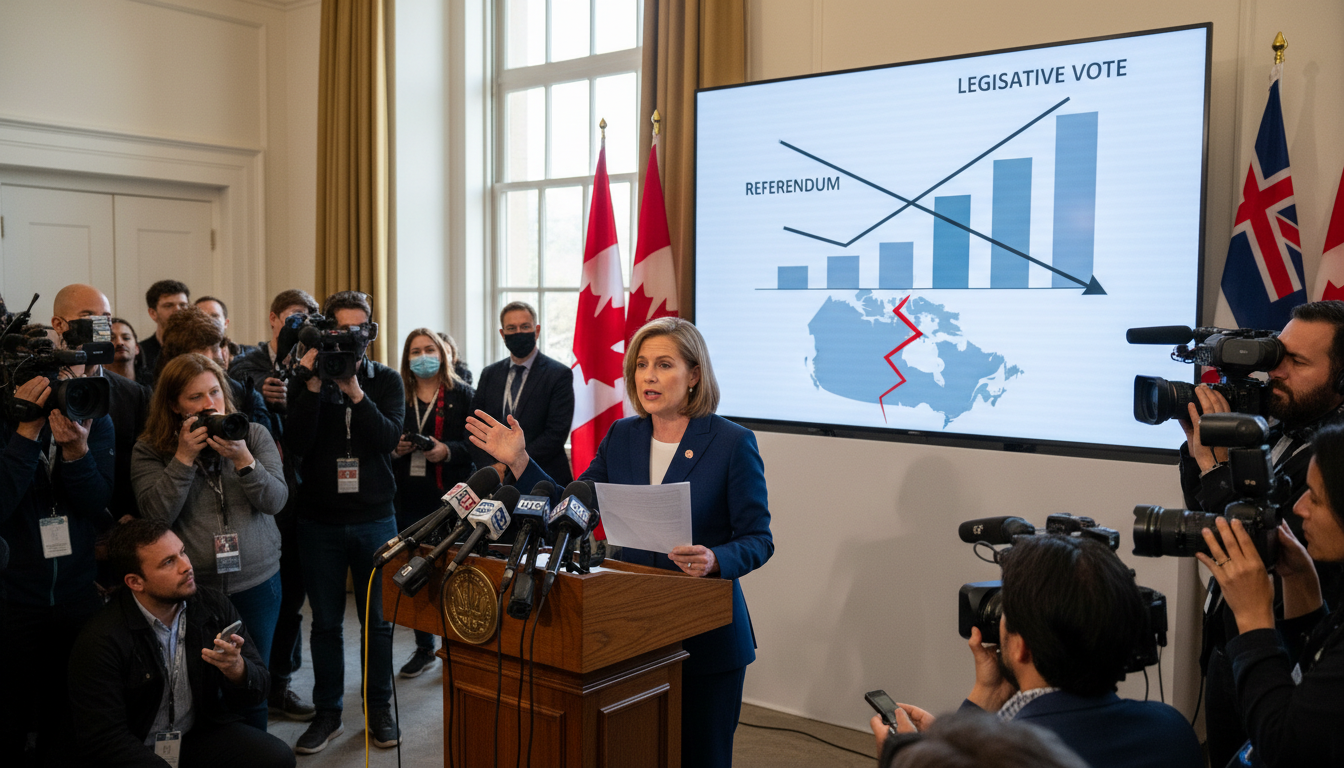
Province divided as official says leader is pressing ahead with divisive referendum
A provincial politician warned the proposed referendum is deepening divisions in the province, saying courts have flagged problems, an electors list has been reported stolen and separatist questions were struck down. The official urged the leader to accept a parliamentary vote as an alternative, but said the offer had not been taken. The dispute has heightened legal and political uncertainty around the referendum and intensified calls for restraint.
Court rulings and procedural setbacks
Several courts and judicial bodies have, according to the politician, raised concerns about elements of the referendum plan and its preparation. Those rulings, the critic argued, undermine the legal footing of a public vote and make the timetable and phrasing legally vulnerable. Observers say repeated judicial intervention could both delay and complicate any attempt to hold a binding referendum. Legal experts warn that unresolved procedural issues often invite further litigation, increasing the risk of rulings that could nullify outcomes.
Allegations of a stolen electors list
The controversy was intensified by an allegation that a list of electors was stolen, a claim the politician cited as evidence of compromised process and heightened risk. Electoral lists are sensitive records, and any breach can erode public confidence in a ballot’s integrity. Officials and opposition figures have stressed the need for clear, verifiable steps to secure voter information before any large-scale vote is authorized. The presence of such an allegation has prompted calls for an independent review of records-handling and data security.
Quashed separatist questions and messaging problems
Separate from procedural and security concerns, the politician said that proposed referendum questions on separation had been quashed, further complicating the path forward. When referendum questions are rejected or ruled deficient, advocates must either rewrite them or risk legal fallout that can invalidate the exercise. Critics argue that repeated changes to ballot language feed public confusion and suspicion about motives, while proponents counter that precise wording is essential for a clear mandate. The clash over phrasing has become a focal point for debates about democratic legitimacy.
An offered parliamentary vote as an ‘off-ramp’
In an attempt to defuse tensions, the politician told reporters they had proposed an alternative: a formal vote in the Legislature that could address the issue without moving straight to a popular referendum. A legislative vote, the official suggested, would provide a controlled, accountable forum for debate and decision-making while avoiding the polarizing effects of a province-wide plebiscite. Supporters of a parliamentary approach say it could produce a clear political signal with less social disruption. Opponents insist that only a direct public vote can confer the full democratic legitimacy required for the matter at hand.
Political fallout and public reaction
The dispute has sharpened divisions between the leader and rival parties, and it is reverberating through municipal and community organizations. Local civic groups and business associations have expressed concern about the social and economic costs of protracted political conflict. Pollsters note that prolonged controversy can harden positions on both sides and reduce the space for compromise. Lawmakers and municipal officials are increasingly calling for an orderly, legally sound process to prevent escalation.
Legal and constitutional implications remain unsettled
Legal scholars caution that the combination of court rulings, disputed ballot language and questions about voter-roll security raises complex constitutional issues. Any major constitutional or territorial change typically requires clarity across multiple legal and administrative fronts, from question wording to electoral safeguards. Without that clarity, parties risk protracted legal battles that could leave the province in political limbo for years. Analysts say that courts will likely remain central to resolving disputes unless politicians agree on a mutually acceptable alternative.
The coming days are likely to test whether the leader will heed advice to step back from a direct referendum and consider the legislative alternative, or whether momentum will carry the province toward a divisive public vote. Observers say the decision will shape not only immediate political fortunes but also public trust in provincial institutions, and they urge transparent, evidence-based steps to restore confidence and avoid further polarization.
