
PGA Tour Offers Limited Path for LIV Golf Players to Return as League Winds Down
PGA Tour sets strict rules for LIV Golf players to return amid the league’s shutdown, as Si Woo Kim’s earnings rise and rookie and earnings races heat up.
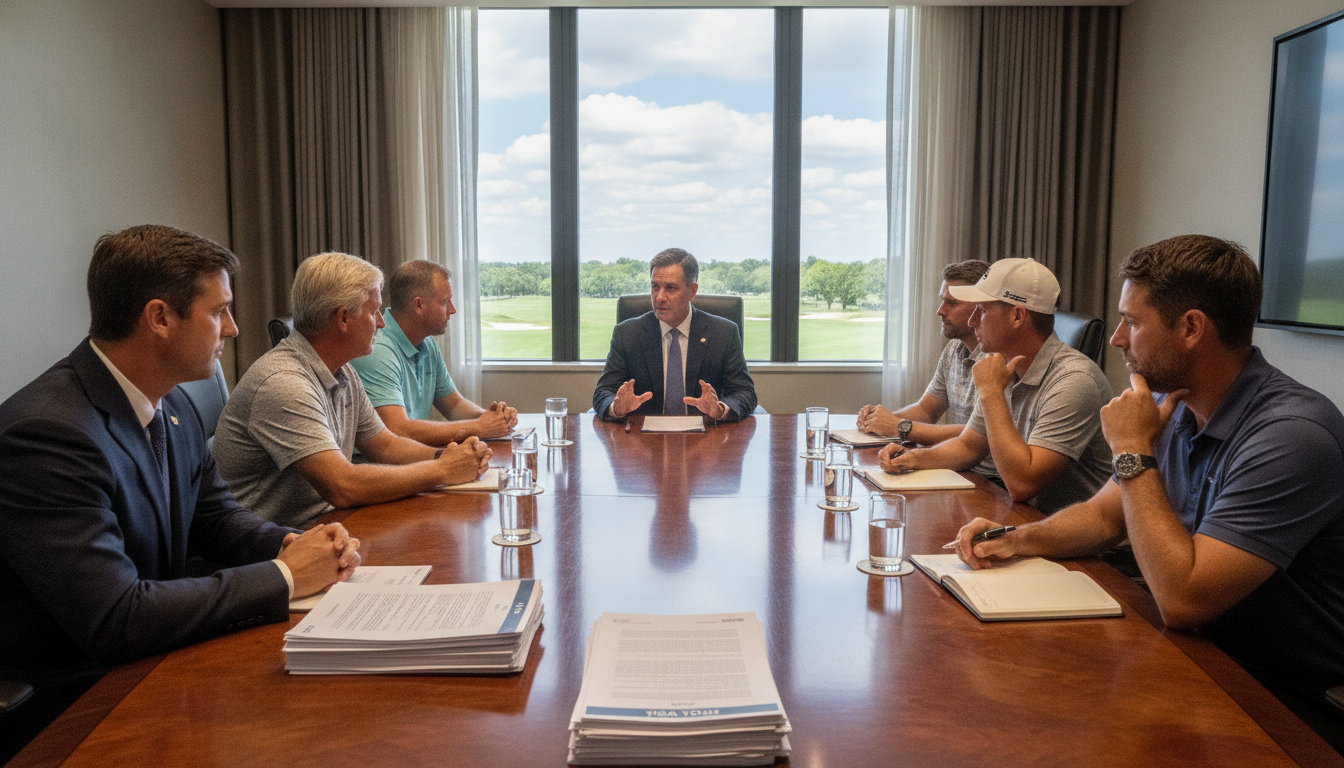
The PGA Tour has signaled a narrowly defined path for LIV Golf players to return to competition, saying relief from contractual obligations and adherence to membership rules will be required for any reinstatement. PGA Tour CEO Brian Rolapp emphasized accountability and enforcement as prerequisites as speculation grows about high-profile names possibly seeking to rejoin the Tour. The announcement frames the return question as contingent on legal and sporting conditions rather than spontaneous readmittance.
Rolapp Frames Eligibility Around Contracts and Accountability
Rolapp told reporters that players interested in coming back must first show they are free of lingering contractual commitments or “tail” obligations tied to the legacy LIV model. He warned that the opportunity to return could be time-limited, and that the Tour will prioritize enforcing its regulations to preserve fairness and competitive integrity. The statement reiterated that the PGA Tour operates as a membership organization with rules designed to protect competition and the sport’s standards.
The CEO linked enforcement to the Tour’s credibility, saying rules mean little unless consistently applied. That stance signals the Tour intends to treat potential returnees on a case-by-case basis, weighing their contractual status and the timing of any last LIV appearance against established penalties or waiting periods. The message was clear: readmission will not be automatic and will likely hinge on documented releases.
Brooks Koepka’s Exit Cited as a Potential Template
Officials pointed to Brooks Koepka’s departure from LIV Golf at the end of 2025 as an example of the kind of contractual resolution the Tour requires before serious consideration. Koepka mutually ended his contract, clearing the immediate legal obstacle that had kept him separated from PGA Tour events. Tour leaders say similar formal releases or settlements would be necessary for other players to be evaluated for a return.
That precedent does not guarantee a smooth transition for others, however, because many LIV contracts included complex financial clauses and long-term payments that could complicate reinstatement. The Tour is focused on ensuring any returning player no longer carries obligations that could undermine competitive neutrality or create conflicts with Tour membership duties.
High-Profile Names and Circulating Speculation
Interest in a return is expected to focus on some of LIV’s most prominent figures, with names such as Jon Rahm and Bryson DeChambeau mentioned in industry conversations. The shortened final season of the LIV circuit has intensified speculation about who might seek readmission and under what conditions. Roland’s comments serve as an early framework for how those discussions might proceed if players begin approaching the Tour.
Despite public curiosity, PGA Tour leaders emphasize process over personalities, explaining that each case will be judged on legal status, timing and whether the player meets competitive eligibility standards. That approach aims to avoid ad-hoc reversals and to maintain a transparent standard for all applicants.
Rules, Waiting Periods and the Meritocracy Argument
Tour officials reiterated that players who defected to LIV generally faced a one-year ban from PGA Tour-sanctioned events measured from their last LIV appearance. Rolapp stressed that meritocracy is a cornerstone of the Tour, and that consistent rules — including enforcement of waiting periods or other disciplinary measures — are necessary to uphold a level playing field. He framed such measures as both a practical and ethical imperative for an organization that places high value on rules.
Enforcement mechanisms and timelines will be central to any reinstatement discussion, and the Tour’s public posture suggests it will resist pressure for blanket amnesties. The emphasis on discipline and accountability is also pitched to reassure members and sponsors that competitive fairness will not be compromised by individual negotiations.
Si Woo Kim Nears $10 Million Mark Without a Win
Meanwhile, attention at the Tour level has turned to Si Woo Kim, who is closing in on $10 million in PGA Tour career earnings in a standout season despite not yet recording a victory. Kim has collected numerous top-10 finishes and sits comfortably above last-place prize money guarantees that will push him past the threshold at the season finale. His recent switch to a long putter has been credited with steadying his stroke after years of struggles with the yips.
Kim’s season includes multiple runner-up results and a string of high finishes that reflect a consistent upward trajectory in performance. He called the year the best of his career and said improved putting has been the critical factor in maintaining form across a demanding schedule.
Rookie Contenders and Career-Earnings Races at East Lake
The Tour Championship looms as the site of several consequential outcomes, including the Rookie of the Year race and a career-earnings chase that could see Scottie Scheffler overtake Tiger Woods on the PGA Tour money list. Kristoffer Reitan and Alex Fitzpatrick are the two rookies still in contention for the rookie honor, each having posted signature results that carried them into the season finale. Scheffler sits within reach of Woods’ long-held career earnings lead, with specific finishing positions at East Lake capable of deciding the matter.
The concluding events of the season also carry implications for future scheduling, exemptions and major entry lists, including guaranteed starts for certain veterans and amateurs who earned medals in the rankings. Tour officials have signaled plans for a more compact 2028 calendar that could alter player choices about fall schedules and European events.
As the PGA Tour navigates potential player returns, high-stakes season finales and structural calendar changes, the organization faces a balancing act between enforcing its rules and managing reintegration in a way that maintains competitive integrity. The coming weeks will likely determine whether any former LIV players secure release from contractual constraints and satisfy the Tour’s criteria for reinstatement, while the Tour’s own competitions continue to produce money and awards races that shape its future.
