
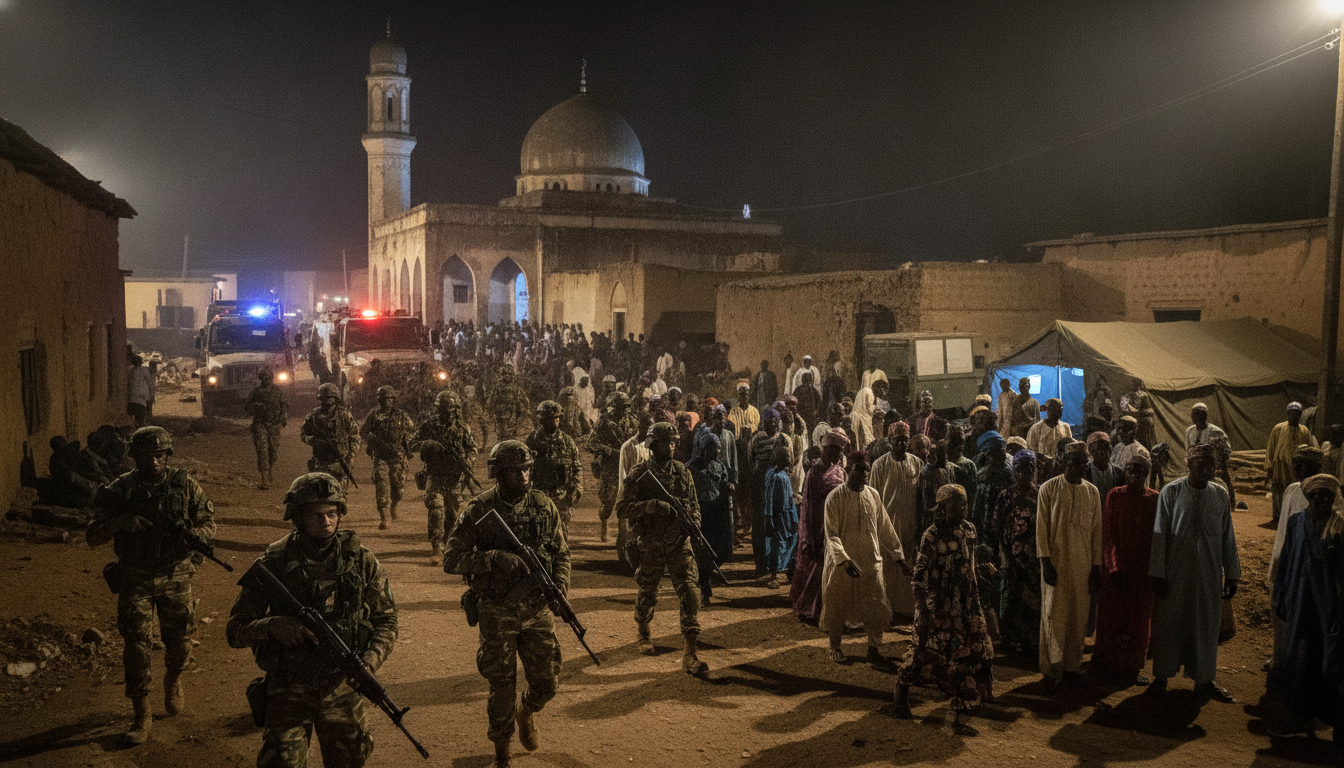
Niger State mosque kidnappings prompt military-led rescue as Tinubu orders immediate action
Nigeria launches rescue after mass mosque kidnappings in Niger State; Tinubu vows action as video of captives circulates and families plead urgently for help.
President Bola Tinubu has ordered a large-scale security operation after an estimated 600 worshippers were abducted from an area near Dekera village in Niger State, in one of the largest mosque kidnappings reported in recent months. The president directed the armed forces, police, the domestic intelligence service and other agencies to carry out a coordinated rescue, saying the government will keep up pressure until the victims are found. A video that emerged online showing a group of captives being held in a forest has intensified public alarm and prompted international appeals for urgent action.
Tinubu orders nationwide rescue operation
President Tinubu publicly instructed Nigeria’s security chiefs to mount an immediate and coordinated response following the abductions, mobilizing military and civilian forces across affected areas. The presidency described the attack as a grave assault on civilians and pledged sustained oversight of the rescue effort, with the president requesting regular briefings from intelligence and security agencies.
Officials said the operation is focused on locating the abductees and apprehending those responsible, and security leaders have been given directives to prioritize safe recoveries over other objectives. The administration framed the effort as both a security imperative and a national duty to families of the missing, promising justice for perpetrators.
Details of the Dekera abductions and video evidence
Local reports indicate the mass abductions occurred in broad daylight around Dekera village in north-central Niger State, where worshippers were seized during a series of raids. Authorities estimate roughly 600 people were taken, a figure that underlines the scale and audacity of the operation carried out by the gunmen.
A video that surfaced on social media platforms shows a large group of people in captivity in a forested area, with children audible in the footage and an armed man speaking directly to relatives in the Hausa language. News organisations have not independently verified when or exactly where the recording was made, and officials caution that online material must be treated carefully as investigations continue.
Casualties, burials and mass displacement
An official in the district affected by the attacks reported that about 30 people were killed during the assaults and were buried in a mass interment over the weekend. Local leaders said the violence triggered a large movement of people, with community members fleeing across the border into neighbouring Benin to escape further attacks.
Community authorities and rights groups have described a mounting humanitarian concern, noting families remain separated and many are seeking basic assistance and protection. Humanitarian organisations have urged authorities to ensure safe corridors for the displaced while pressuring armed groups to release captives unharmed.
Security experts point to ransom motive and operational gaps
Analysts specialising in Nigerian security affairs say mass kidnappings in the region frequently have a ransom component, and they expect those behind the Dekera abductions may seek to open communications with families. Security commentators also underline that the daylight nature of the operation exposes weaknesses in local protection measures and intelligence collection.
Observers stressed that until responsibility is established through credible evidence, authorities must avoid speculative attribution and instead focus on immediate rescue, forensic investigation and the disruption of logistics that enable kidnappers to move large numbers of people. Calls for improved community policing and intelligence-sharing have resurfaced as urgent reforms.
Regional militant activity and cross-border implications
Northwest and north-central Nigeria have increasingly been used as transit and operational zones by armed groups moving across borders with Niger, Chad and Benin. The porous nature of these frontiers and the mix of criminal gangs and extremist militants in the corridor complicate efforts to secure vulnerable communities.
Security officials point to the need for enhanced regional cooperation to block routes used for weapons transfers and hostage movements, while diplomatic channels and neighbouring states’ authorities are being engaged to prevent further cross-border displacement. The intersection of criminal kidnapping-for-ransom networks and extremist violence poses a complex threat that requires coordinated military, law enforcement and development responses.
Political stakes rising ahead of January elections
The mass abductions have taken on heightened political significance with national elections scheduled for January, when security will be a prominent campaign issue. Opposition figures and civil society organisations are likely to press the government for clearer results and shorter timelines for accountability as political debate intensifies.
President Tinubu has used strong rhetoric to reassure the public that the state will defend civilians and bring perpetrators to justice, a position that aims to balance immediate operational demands with broader political reassurance ahead of the vote. How quickly and transparently authorities can secure releases and hold those responsible to account is expected to shape public confidence in state institutions in the run-up to the election.
The rescue operation remains underway, with security forces continuing searches in affected areas and officials promising sustained updates to the public. Families of the abducted and displaced communities are awaiting word as authorities pursue leads and attempt to secure the release of those taken.
