
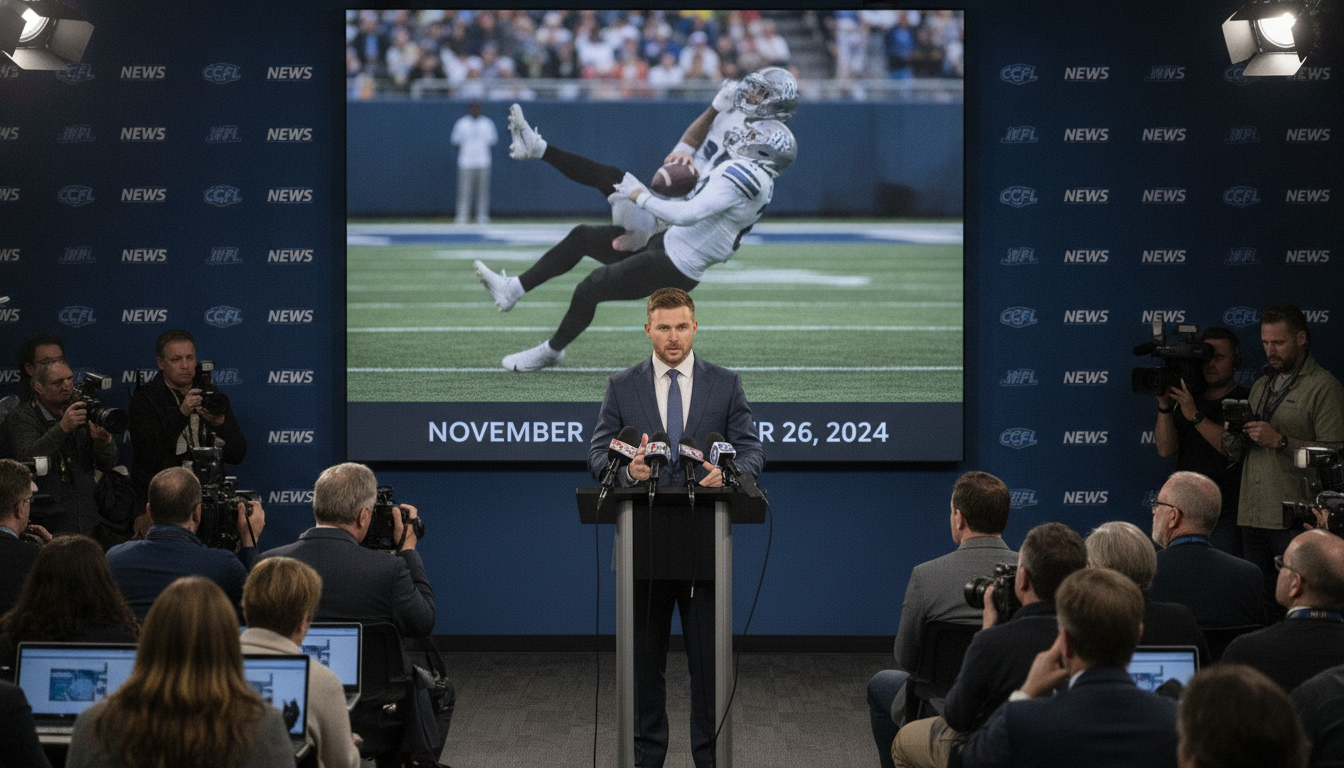
Nick Arbuckle on the hit that knocked Chad Kelly out of Argos vs BC Lions game
Nick Arbuckle says he cannot judge whether the hit that knocked Chad Kelly out of Saturday’s Argos vs BC Lions game was dirty, acknowledging the difficulty of assessing intent in the moment. Arbuckle, the Toronto Argonauts quarterback, spoke publicly after the play that removed Kelly from the contest, noting uncertainty about the nature of the contact. The exchange has prompted renewed attention to player safety and how officials and leagues evaluate hits.
Arbuckle on intent and split-second decisions
Nick Arbuckle told reporters he could not determine whether the hit was intentional or dirty because he was not in a position to judge another player’s intent in the split second before contact. He said he saw the play unfold but emphasized that intent is difficult to assess from the field. Arbuckle’s statement underscored the challenge players face in immediately interpreting fast-moving collisions.
Arbuckle also acknowledged the emotional weight such incidents carry for both teams and players involved. He framed his remarks around the limits of on-field perspective, avoiding a definitive judgment and leaving room for post-game review. His measured response contrasted with some of the sharper commentary that often follows high-impact plays.
How the play affected Saturday’s matchup
The hit in question occurred during Saturday’s game between the Toronto Argonauts and the BC Lions and resulted in Chad Kelly being knocked out of the contest. Kelly’s exit altered the flow of the game and forced both coaching staffs to adjust offensive plans on short notice. The immediate tactical impact was clear as quarterbacks and coordinators reshuffled personnel and play-calling.
Beyond the tactical shifts, the play created a broader moment of uncertainty for fans and teammates watching from the sideline. Games that hinge on quarterback availability often change in tempo and approach when a starter is removed. That reality added urgency to post-game conversations about how the play unfolded and what it meant for both squads moving forward.
Medical and team responses after the hit
Details about Chad Kelly’s medical status immediately following the hit were limited in initial reports, though the play clearly removed him from the field. Team officials typically assess players on-site and determine availability, but Arbuckle’s comments focused on intent rather than injury specifics. That emphasis left medical updates to the teams and their medical staff.
Both teams have protocols for evaluating head injuries and significant contact, and supporters expect clear updates when a player is knocked out of a game. In situations like this, teams sometimes provide condition reports in the days after the contest to clarify recovery timelines and next steps. Observers will watch for any such reports to understand Kelly’s prognosis.
Potential for league review and disciplinary considerations
The incident has prompted questions about whether the play will draw a formal review or disciplinary action from league officials. Hits that result in serious injury or that appear to involve prohibited contact commonly attract scrutiny from governing bodies. Determinations about discipline typically involve video review and consideration of intent, timing and the nature of contact.
Whether league officials will impose fines or suspensions depends on their independent assessment of the play and any applicable rules. The broader debate over how to balance physical play with player safety is often reflected in these decisions. Analysts and fans alike will be attentive to any rulings that clarify how similar incidents will be adjudicated going forward.
Reactions from teammates and coaching staff
Reactions in the locker rooms after such plays are often cautious and focused on player welfare rather than assignment of blame. Teammates commonly rally around an injured player and prioritize support and recovery. Coaches typically emphasize the immediate tasks of game management while acknowledging the human element of injuries.
Public statements from coaches and teammates may be measured in the hours and days following an incident, with medical updates and official reviews guiding subsequent commentary. The way teams handle their communications can shape public perceptions and set the tone for how the incident is discussed in the wider sports community.
Broader conversations about player safety in Canadian football
The exchange involving Nick Arbuckle and the hit on Chad Kelly feeds into an ongoing conversation about player safety, concussion protocols and rule enforcement. Leagues across contact sports have refined their approaches to head contact and dangerous hits, and each high-profile incident renews scrutiny of those policies. Fans and stakeholders often use such moments to press for clearer standards and consistent application of rules.
Discussions about intent, accountability and protective measures remain central to efforts to reduce risk on the field. While split-second decisions will always be part of contact sports, many argue that stronger preventive measures and transparent review processes can help minimize severe outcomes. The balance between preserving the sport’s physical character and protecting player health continues to shape policy debates.
Nick Arbuckle’s public remarks that he could not judge the intent behind the hit on Chad Kelly left the situation open to official review and further comment from medical and team authorities. Both clubs and league offices are likely to provide additional information in the coming days as they assess the play and its consequences.
