
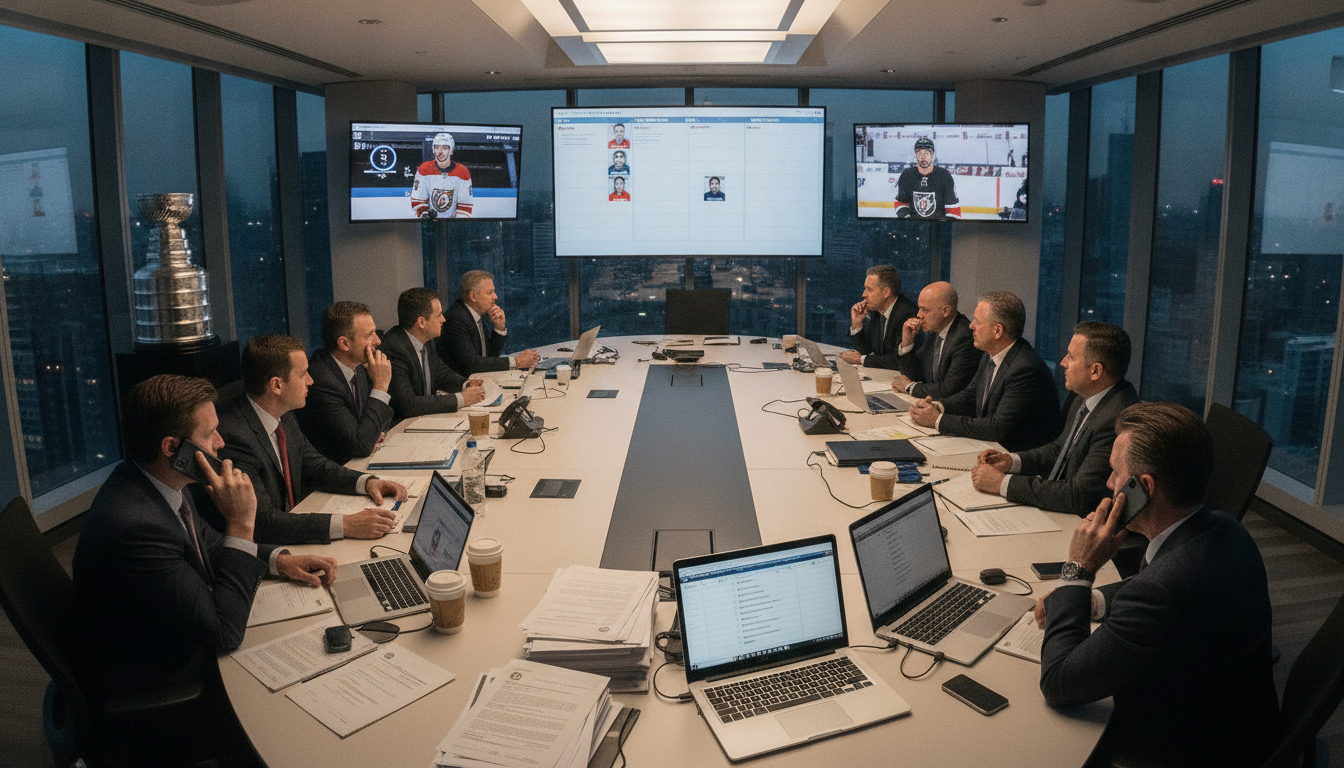
NHL free agency opens July 1, 2026: what to watch on day one
Free agency in the NHL opens Wednesday, July 1, 2026, setting the stage for a flurry of signings, negotiations and potential trades as teams reshape rosters ahead of the new season. This year’s free agency will test front offices and agents as unrestricted free agents hit the market and restricted free agents enter the offer-sheet process.
The opening of free agency on July 1, 2026, allows unrestricted free agents to sign with any club immediately, while restricted free agents may negotiate with other teams but must be processed via offer sheets that give their current club the right to match or accept compensation. The class arriving on the market this summer is viewed as modest compared with recent cycles, but roster movement could accelerate quickly as teams pursue upgrades. Broadcasters and outlets plan live coverage throughout the day, and league followers should expect a steady stream of smaller and strategic transactions alongside occasional headline signings.
Free agency rules and the offer-sheet mechanism
Unrestricted free agents (UFAs) are free to reach agreement with any team starting July 1, 2026, with deals registering under the collective bargaining framework that governs term and salary. Restricted free agents (RFAs) retain limited-mobility status: other clubs can present offer sheets, but the player’s current team has the contractual right to match the terms.
When an offer sheet is signed by an RFA and accepted by the player, the original club has a window to decide whether to match; if it declines, the signing team must provide draft-pick compensation. The offer-sheet route remains uncommon but can be a lever for clubs willing to use draft assets to acquire a player they value highly.
Market depth and expectations for the 2026 class
Scouting and salary-cap dynamics have led many evaluators to call this free-agency class shallower than in some prior years, particularly at the top end of the market. Teams without large cap flexibility may be cautious, prioritizing shorter-term or lower-cost options to preserve maneuverability.
That said, middling depth can increase demand for specific role players — penalty killers, depth scorers, and defensive forwards — driving competitive bidding in those tiers. Clubs that identify undervalued fits early could extract outsized value before budgets tighten.
Trade market dynamics and potential for surprises
With free agency opening, the trade market often responds in kind as teams look to balance cap sheets and create roster openings for new signings. Front offices that prefer internal moves may instead pursue trades to reallocate salary or acquire draft capital.
Expect inventive transactions as franchises try to retool without overspending in free agency. The possibility of multi-team deals or salary-retention trades increases when clubs seek to reconcile cap constraints with roster ambitions. These moves can alter the landscape as much as headline signings.
How teams and agents will approach negotiations
General managers are likely to combine data-driven scouting with targeted fits when negotiating contracts on July 1, 2026. Salary-cap forecasting and term considerations remain central; many teams are emphasizing shorter commitments to hedge against long-term cap risk.
Agents, conversely, will push for market clarity and quick resolution for clients prepared to sign, while also testing leverage where demand exists. Players and representatives will weigh immediate financial terms against role, stability and prospects for playoff contention.
Where fans and media will follow developments
Multiple outlets will offer live coverage of free agency day, with televised signing shows and rolling updates across platforms starting the morning of July 1, 2026. Sports networks and league media will publish signing trackers and trade trackers to compile moves as they are filed with the league.
Live blogs and social feeds will provide minute-by-minute reports, while analytics and commentary pieces will appear later in the day to contextualize major transactions. Fans should use official trackers for confirmation of contract filings and club announcements.
The first hours of free agency often set the tone for the rest of the summer, but the most consequential roster construction can unfold across days and weeks as front offices reassess after initial moves. Monitor official club communications and league filings for confirmed signings and trades, and expect an active market as teams and players react to developments throughout July.
