
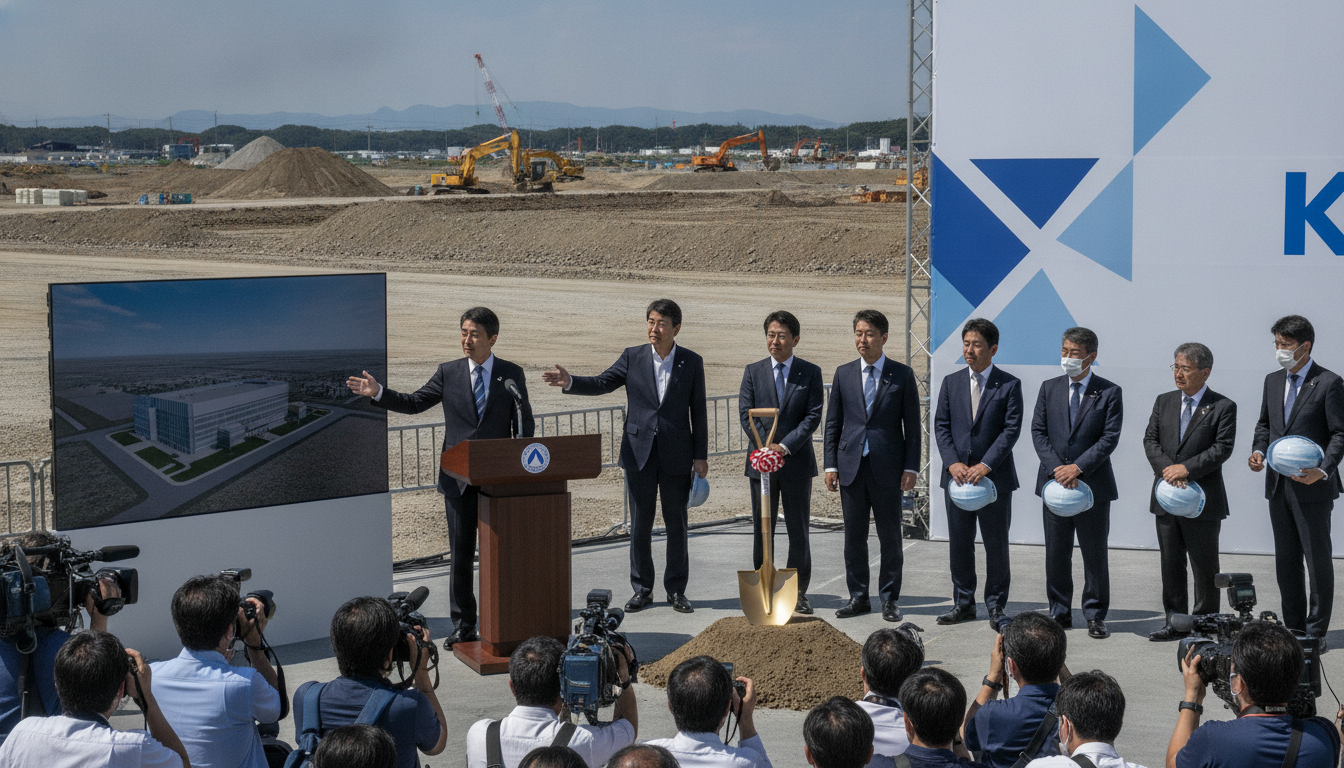
Kioxia Kitakami plant set for ¥1.8 trillion investment to produce high‑density 3D NAND for AI
Kioxia will invest ¥1.8 trillion in a new Kitakami plant to manufacture high‑density 3D NAND chips designed for AI data workloads, the company’s CEO said. The Kioxia Kitakami plant is aimed at expanding domestic flash-memory production to meet surging demand from artificial intelligence services. Sources who spoke on condition of anonymity confirmed details while saying the plans are not yet public.
Company Announcement and Investment Scale
Kioxia’s chief executive, Hiroo Ota, announced the planned investment on Thursday, describing the outlay as a major expansion of the Tokyo‑based firm’s manufacturing footprint. The company said the funds will be directed to a single new fabrication facility in Kitakami, in Iwate Prefecture, although it provided limited public detail beyond the headline figure.
Industry sources speaking anonymously to reporters said the investment total of ¥1.8 trillion reflects both equipment purchases and factory construction costs. Kioxia’s move follows a broader push by Japanese and global memory makers to bolster domestic capacity for cutting‑edge flash storage.
Planned Production: High‑Density 3D NAND
The Kitakami plant is slated to produce the company’s latest high‑density 3D NAND flash memory, a type of non‑volatile storage that stacks memory cells vertically to increase capacity. These chips are being optimized to handle the enormous volumes of data generated and processed by modern AI services, the company indicated.
High‑density 3D NAND supports applications from cloud infrastructure to large‑language models by delivering both capacity and cost‑efficiency per bit. Kioxia’s investment signals an intent to capture a larger share of the market for memory that underpins AI training and inference workloads.
Kitakami Site and Local Economic Impact
Kitakami, located in northeastern Japan, has become a focal point for technology investment as companies seek stable locations for semiconductor fabrication. Local officials have historically welcomed such projects for the jobs and secondary economic activity they produce.
A factory of this scale is likely to create hundreds to thousands of direct positions during construction and operation, along with broader demand for suppliers and services. Municipal leaders typically coordinate with companies on land, utilities and workforce training, though Kioxia has not yet disclosed firm hiring targets or construction timelines.
Strategic Context: AI Demand and Memory Supply
Global demand for NAND flash has been reshaped by the rapid adoption of generative AI and increasingly data‑heavy cloud services. Memory and storage manufacturers are racing to scale production of high‑density components that can store large model parameters and datasets efficiently.
Kioxia’s planned expansion follows similar announcements from other industry players aiming to shore up supply chains and reduce reliance on single regions. The move also aligns with national efforts in several countries to enhance domestic semiconductor capacity for economic security and technological sovereignty.
Timeline, Confidentiality and Next Steps
Kioxia has framed the Kitakami investment as a strategic, longer‑term commitment, but the company has not provided a detailed timeline for construction, equipment installation or production start. Executives and outside sources declined to offer specific dates while plans remain confidential.
Regulatory approvals, site preparation, and the lead times for advanced lithography and packaging equipment are among the factors that typically shape a multi‑year buildout. Observers expect further announcements as project milestones are reached and formal local agreements are finalized.
Kioxia’s decision to invest heavily in the Kitakami plant underscores the escalating importance of high‑density 3D NAND in a market driven by AI workloads. The planned facility will be closely watched by customers and competitors for signals about future memory capacity, pricing and the pace at which the industry can meet surging data‑storage needs.
