
Kimi K3 Challenges Western Models as Benchmarks Place It Among Top LLMs
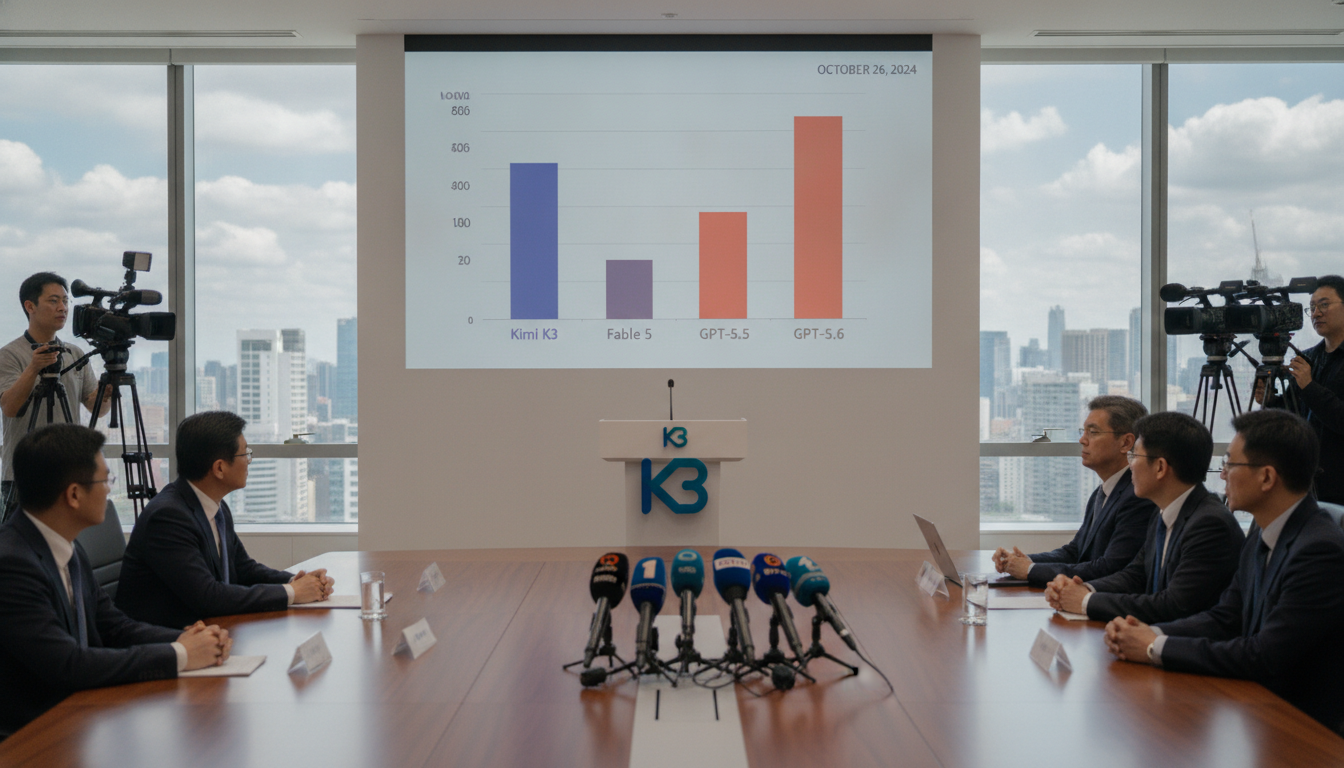
Kimi K3 enters the global AI conversation as a Chinese startup says the model rivals Anthropics’ Fable 5, while benchmarks place it between Fable 5 and OpenAI’s GPT-5.6 Sol. The announcement and third-party test results have drawn attention to Kimi K3’s capabilities on complex tasks and web programming.
Company statement compares Kimi K3 to Fable 5
Moonshot AI, the Chinese startup behind Kimi K3, released performance claims stating the model’s capabilities match those of Anthropics’ Fable 5. The company framed the comparison as evidence that its latest release can compete with leading Western systems on many standard benchmarks. Moonshot highlighted specific areas of strength while acknowledging that the newest OpenAI models have exceeded Kimi in some evaluations.
Independent tests place Kimi K3 among elite models
Several independent testing firms have evaluated Kimi K3 and reported competitive results. U.S. tester Vals AI ranked Kimi between Fable 5 and GPT-5.6 Sol in its assessments, indicating a position solidly within the upper tier of current large language models. These third-party findings corroborate parts of Moonshot AI’s claims while also showing consistent differences at the high end of the performance scale.
Performance on complex tasks shows parity with Western alternatives
Analysis from research firm Artificial Analysis suggests Kimi K3 can match modern Western products when handling complex, multi-step problems. The firm noted that Kimi performs particularly well in tasks requiring reasoning across multiple inputs and sustained context management. Experts say this parity matters because it demonstrates progress in model architecture and training approaches outside the dominant Western labs.
Kimi K3 leads in web programming benchmarks, according to Arena AI
Specialized benchmarks have highlighted Kimi K3’s strength in code-generation and web development tasks. Arena AI, a benchmarking platform focusing on developer workflows, rated Kimi K3 as the worldwide leader for programming websites. The assessments emphasized the model’s ability to produce functional HTML, CSS, and JavaScript with fewer iteration cycles than many peers.
OpenAI’s GPT-5.5 and GPT-5.6 Sol remain ahead on some fronts
While Kimi K3 has closed gaps in several areas, the latest OpenAI models still outpace it in targeted evaluations. Moonshot AI acknowledged that GPT-5.5 and GPT-5.6 Sol have “clearly surpassed” Kimi in their internal comparisons. Observers say the differences are most pronounced in generative reasoning tasks and specialized domain expertise where OpenAI’s iterative updates have focused performance gains.
Market implications and competitive landscape
Kimi K3’s emergence sharpens competition in a field increasingly defined by both capability and ecosystem support. Analysts expect enterprises to weigh performance alongside factors such as data governance, localization, and integration with existing tools. For Chinese vendors, a model that can rival Western alternatives on measurable benchmarks presents opportunities for local deployment and licensing, especially in markets prioritizing data sovereignty.
Moonshot AI’s disclosure and the subsequent third-party evaluations have triggered renewed interest from developers and potential customers interested in alternatives to U.S.-based providers. Firms evaluating LLM vendors will likely add Kimi K3 to shortlists for pilot projects, particularly those that require robust web programming assistance or multi-step reasoning in production settings.
Kimi K3’s positioning also underscores the rising importance of independent benchmarks in shaping market narratives. As firms like Vals AI, Artificial Analysis, and Arena AI publish comparative results, buyers gain more granular views of where each model excels and where gaps remain. This comparative transparency accelerates procurement decisions and helps prioritize real-world testing.
Future updates from Moonshot AI, including potential optimization passes or larger training datasets, could narrow remaining gaps with the highest-performing Western models. Observers expect Moonshot to iterate rapidly, leveraging developer feedback from early deployments and benchmark results to steer improvements. How quickly and effectively the company translates those insights into model updates will determine Kimi K3’s longer-term standing.
Industry watchers caution that benchmarks are one piece of evaluation, and real-world integration, support, and compliance ecosystems weigh heavily in adoption. Organizations considering Kimi K3 should plan hands-on trials, measure outcomes on specific business tasks, and assess the vendor’s roadmap for continued development. The combination of competitive performance and focused benchmarking attention makes Kimi K3 a model that enterprises and developers cannot ignore.
Kimi K3’s arrival marks another milestone in a multi-polar AI landscape where performance leadership is contested across regions and vendors, and where specialized strengths—like web programming—can define a model’s commercial appeal.
