
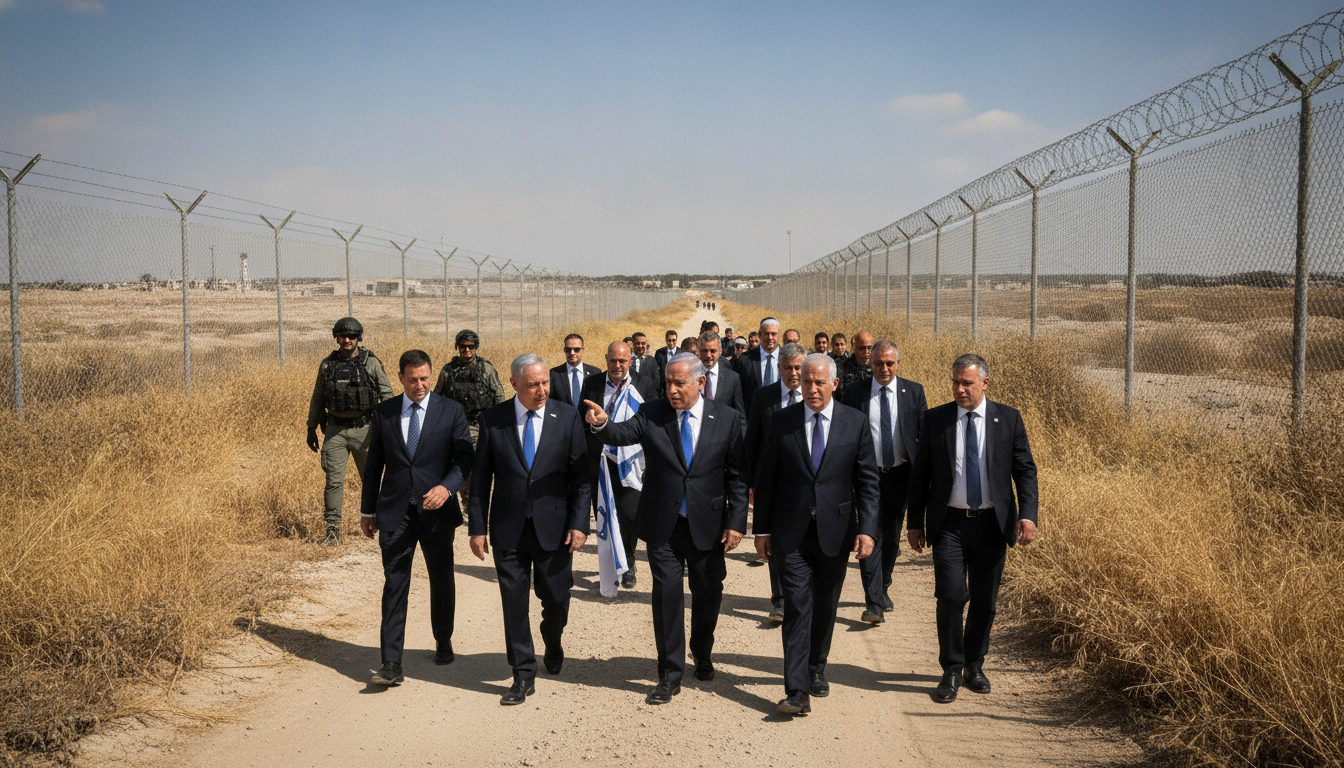
Gaza resettlement march: Israeli ministers press to rebuild 2005 Gaza settlements
Israeli ministers led a July 19, 2026 march to the Gaza border pressing for Gaza resettlement and rebuilding of settlements evacuated in 2005 amid tensions
Israeli cabinet ministers and lawmakers joined a march to the Gaza border on July 19, 2026, pressing for Gaza resettlement and the reconstruction of settlements evacuated in 2005.
The demonstration, organised by the settler group Nachala, brought high-profile political figures to the perimeter fence and underscored the issue’s migration from the political fringe into mainstream debate.
Cabinet ministers join Gaza resettlement march
A number of senior figures in Israel’s government took part in the march, including ministers who oversee settlement and security portfolios.
Finance Minister Bezalel Smotrich and National Security Minister Itamar Ben-Gvir were among those reported to have attended, alongside more than two dozen other ministers and members of parliament.
Some participants carried banners and chanted slogans invoking a return to communities evacuated under the 2005 disengagement, framing the day as a symbolic effort to push for the resettlement of Gaza.
Organisers described the action as a mass movement to reclaim land, while several ministers used the platform to press political arguments in favour of reconstruction initiatives.
Military designates closed zone, alters the route
Israeli military authorities declared the area around the Gaza perimeter a closed military zone for 24 hours ahead of the march, citing security concerns and warning against attempts to cross the fence.
Officials said the designation was intended to prevent breaches of the border and to allow security forces to manage the crowd; organisers and some participants said the restrictions were imposed at short notice.
In practice the order changed the planned route for demonstrators and led to clashes between organisers and soldiers over access points.
Military spokespeople stressed that any deliberate attempt to enter the Gaza Strip would be met with enforcement measures, and authorities maintained checkpoints and patrols along likely approaches.
Organisers’ attendance claims and on-the-ground scenes
Nachala, the settler organisation behind the event, called it the “March of Thousands” and claimed more than 10,000 people had attended.
Israeli media and independent observers offered much lower estimates, putting the crowd at a few hundred present along the fence, highlighting a large divergence between organiser claims and press counts.
Video footage verified by media outlets showed dozens of Israelis gathered at the border fence, and reporters documented groups bypassing checkpoints by moving through nearby hillsides.
Those scenes intensified concerns among security officials about the potential for unstable interactions at the perimeter and the possibility of isolated incursions.
Political sponsorship and party divisions
The Likud party was listed among sponsors of the rally, even as Prime Minister Benjamin Netanyahu has publicly said Gaza will not be resettled, illustrating fractures within the governing coalition.
Some attendees and sponsors said party endorsement reflected grassroots support for returning to the evacuated sites, while other politicians distanced themselves from immediate policy changes.
Smotrich and Ben-Gvir used the march to press for concrete steps toward rebuilding, framing the moment as a historic opportunity to re-establish Israeli presence in the area.
Both ministers, who have drawn criticism and sanctions from several European governments in recent years, have made settlement expansion and nationalist priorities central to their political agendas.
Settlements targeted for reconstruction
Participants explicitly demanded the reconstruction of three communities evacuated in 2005: Elei Sinai, Dugit and Nisanit, pressing a slogan of “returning home after 21 years.”
Those settlements were removed during the disengagement from Gaza and their proposed reconstruction has been a recurring rallying point for right-wing settler groups.
Advocates argue the rebuilding would restore Israelis to land they say was formerly theirs, while opponents warn the move would sharply escalate tensions and pose complex legal and security challenges.
The practical and diplomatic obstacles to any such effort remain substantial, given Gaza’s governance, security environment and international objections.
Criticism, legal concerns and past incidents
Palestinian legal analysts and rights advocates condemned the march and the political push behind it, arguing that aggressive resettlement calls reflect an absence of accountability for past actions.
One Palestinian lawyer cited the perceived lack of consequences for previous policies as emboldening groups that seek to expand territory and displace Palestinian residents.
Security officials also pointed to a precedent in December when a small group of activists briefly crossed into Gaza and planted an Israeli flag before being brought back, an incident that heightened alarm about copycat attempts.
Critics warn that such actions risk sparking violent confrontations, undermining fragile security arrangements and complicating any future diplomatic discussions.
The march on July 19 signalled a rising boldness among settler movements and their political allies to put Gaza resettlement on the national agenda, even as senior officials and international actors weigh the legal, security and humanitarian consequences.
