
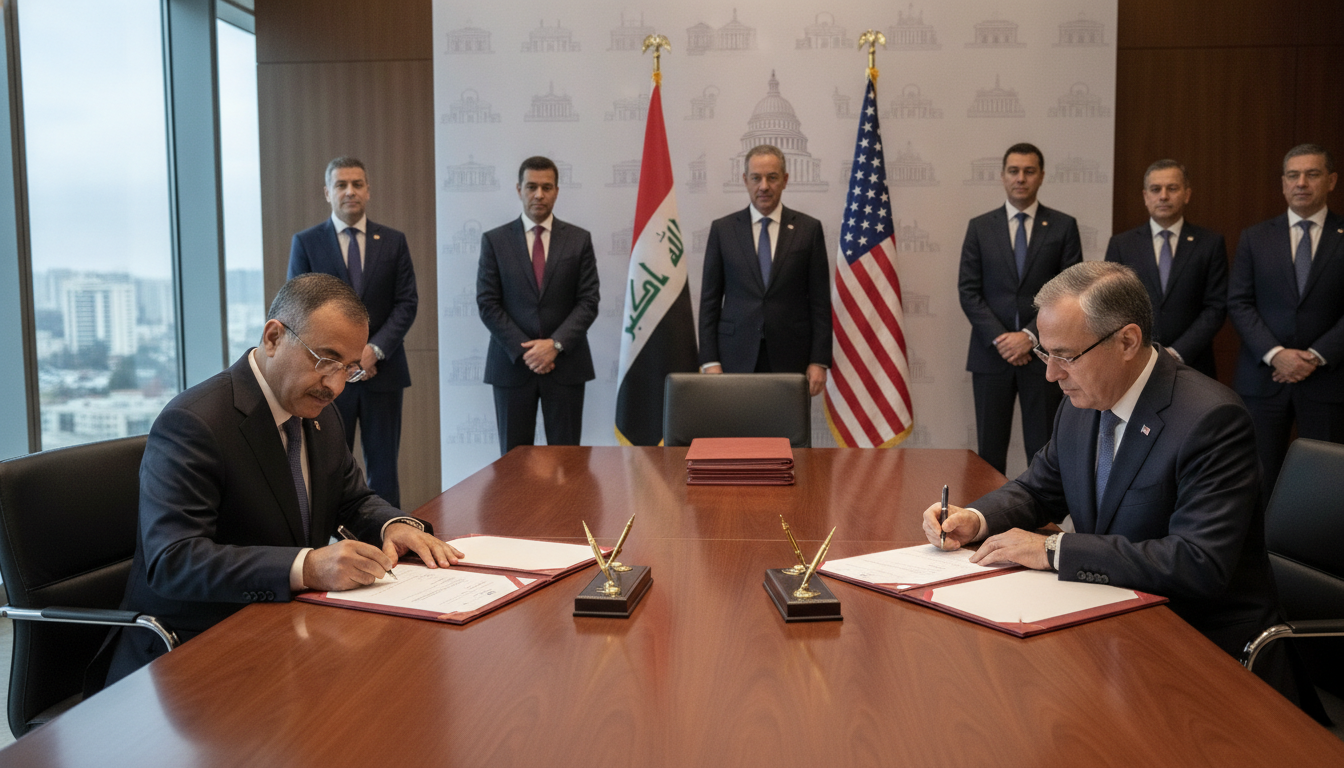
Iraq Signs 48 US Deals, Including Iraq-Syria Oil Pipeline Plan to Bypass Strait of Hormuz
Iraq struck 48 US deals, including rebuilding the Iraq-Syria oil pipeline, during Prime Minister Ali al-Zaidi’s visit to Washington to expand energy, technology and infrastructure ties.
The accord portfolio, signed at a US-Iraq business summit on July 17–18, 2026, includes major contracts with ExxonMobil, Chevron, Shell, Halliburton and technology partners such as Starlink.
Baghdad and Washington framed the pipeline plan as a strategic move to route Iraqi crude to Mediterranean markets and reduce dependence on the Strait of Hormuz.
Washington summit yields 48 agreements
Iraq’s media office said the agreements, memoranda of understanding and partnership declarations were signed between public and private Iraqi entities and US companies.
The deals span oil, electricity, healthcare and satellite communications and were formalized at the US Chamber of Commerce summit attended by Iraqi ministers and US industry executives.
Details of the Iraq-Syria oil pipeline project
Iraq and Syria signed a cooperation agreement to rehabilitate the long-defunct pipeline linking Kirkuk fields to the Syrian Mediterranean port of Baniyas.
The plan, as described by Iraqi officials at the summit, envisions an initial transport capacity of about two million barrels per day once rehabilitation and associated facilities are completed.
US companies and consortium roles
Chevron was named by Iraqi state reporting as a lead contractor for the pipeline work, while the US Department of State said a US-led international consortium would execute technical and financial aspects.
Other US energy firms present at the summit—ExxonMobil, Shell and service providers such as Halliburton and KBR—signed separate cooperation agreements aimed at boosting upstream production and supporting infrastructure upgrades.
Strait of Hormuz and strategic objectives
Officials and diplomats framed the pipeline rehabilitation as a way to route exports away from the Strait of Hormuz, an increasingly contested maritime choke point.
US diplomat comments at the summit described the initiative as a programme intended to make the Strait of Hormuz “an afterthought” for Iraqi exports, reflecting growing concern among buyers and exporters about regional security and shipping disruptions.
Economic scale and sector impact
Iraq’s preliminary tally of deals announced at the summit exceeds US$60 billion, according to reporting by international news outlets and statements from participating firms.
Those figures include investments in oil production, energy infrastructure, satellite communications capacity provided via a deal with Starlink, and projects in electricity and healthcare intended to accelerate domestic reconstruction and diversify service delivery.
Timeline, financing and implementation challenges
Officials said the pipeline project will require coordination across multiple governments, private contractors and financiers and will be executed in phases to test flows and security arrangements.
Analysts caution that reconstruction faces political, security and logistical hurdles in both Iraq and Syria, including land clearance, customs and export controls, and the need to secure long-term commercial buyers for the additional export capacity.
The summit messaging emphasized an “open-door” investment policy from Baghdad, with Prime Minister al-Zaidi inviting firms to present projects and noting simplified procedures for entry and partnership.
US officials signalled diplomatic support for the pipeline as a commercial corridor, while stopping short of detailing direct US government financing beyond facilitating the consortium framework.
The agreements also included technology and connectivity measures, with the deal involving Starlink aimed at expanding satellite communications availability in Iraq to support government services, remote operations and private-sector connectivity.
Energy companies at the summit highlighted plans to raise crude output through targeted field development and to couple production increases with export infrastructure upgrades to ensure markets are supplied reliably.
Observers say the Iraq-Syria oil pipeline project, if realized, could reshape export routes for regional crude and alter trading patterns by opening quicker access to Mediterranean refineries and shipping lanes.
However, they note that moving from signed memorandums to sustained commercial operations will take years and will depend on financing terms, security guarantees and coordination with international buyers.
