
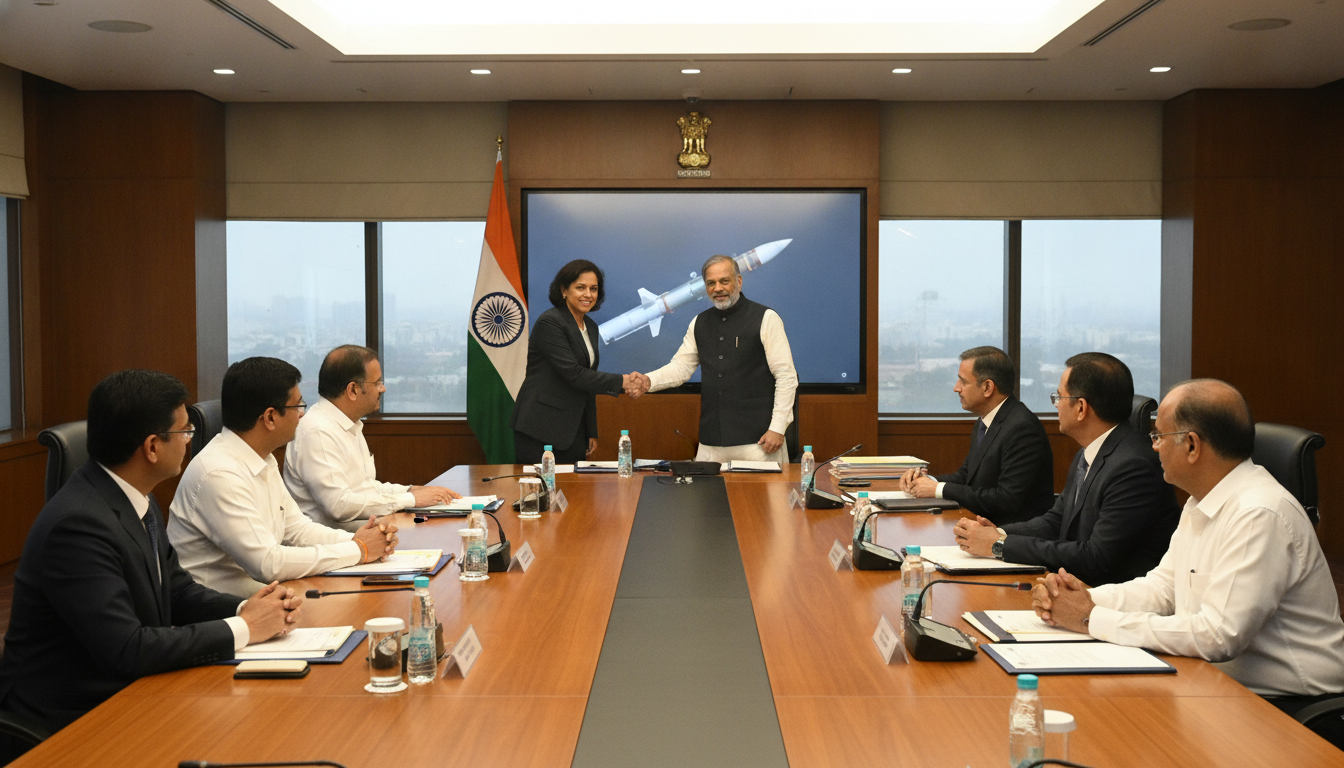
India approves missile technology transfer to private industry to scale domestic production
India’s defence ministry approved a missile technology transfer that lets private firms produce DRDO-developed conventional missile systems, aiming to speed mass production and boost domestic manufacture.
India’s defence minister has approved the transfer of missile technology developed by the Defence Research and Development Organisation (DRDO) to private industry, a move designed to accelerate production of conventional missile systems and deepen domestic defence manufacturing. The missile technology transfer covers all conventional systems and is intended to widen participation by private companies, micro, small and medium enterprises and technology partners. Officials say the decision is aimed at cutting import dependence, expanding industrial capacity and ensuring faster transition from development to large-scale production.
Government authorizes DRDO missile technology transfer
Defence Minister Rajnath Singh signed off on a policy to enable Indian firms to receive DRDO-developed technologies for conventional missiles, the ministry confirmed. The transfer is conditioned on technical clearances, certifications and regulatory oversight that the government says will protect strategic interests.
The ministry framed the measure as part of a broader push to strengthen the defence industrial base and integrate more domestic suppliers into missile supply chains. DRDO has committed to working with industry to help absorb advanced technologies and support production readiness.
Systems included and industrial responsibilities
The decision spans a wide array of conventional missile types, from surface-to-air and air-to-air missiles to anti-radiation and anti-tank systems, and extends to larger platforms such as land-attack cruise missiles. Experts note that bringing heavy-duty systems into private production represents a step up in complexity for non-state firms.
Under the policy, private companies may become prime integrators rather than only component suppliers, taking on systems integration, testing and serial production responsibilities. That shift requires significant investments in infrastructure, quality control and specialist talent.
Strategic drivers for faster production
New Delhi is pushing the missile technology transfer to shorten the time between development and mass production, an objective linked to rising regional tensions and lessons from recent conflicts. Officials cite the need for larger reserves of precision munitions and faster replenishment during sustained operations.
The move also aligns with the government’s Atmanirbhar Bharat policy to promote self-reliance in defence and to attract foreign and domestic manufacturers to produce in India. Defence expenditure has increased in recent years, underscoring the government’s willingness to underwrite expanded production if industry capacity is proven.
Private investment and manufacturing readiness
India’s private sector has expanded its footprint in defence, with conglomerates and start-ups investing in ammunition, drones, aerospace and electronics. Companies such as Tata Advanced Systems, Larsen & Toubro, Adani Defence & Aerospace and Bharat Forge have announced or pursued facilities and joint ventures to support higher-value defence manufacturing.
Significant capital commitments have been publicized, including multi‑billion‑rupee plans for missile and munitions production, and procurement drives for domestic drones and other systems have helped stimulate capacity. Nonetheless, analysts stress that private facilities require large, sustained government orders to justify the cost of building missile production lines and to support research and development over the long term.
Exports, partnerships and regional demand
India has rapidly expanded arms exports over the past decade, selling systems and components to countries across Asia and beyond. The BrahMos cruise missile, developed jointly with Russia, has attracted buyers in Southeast Asia and the Philippines, and New Delhi has engaged multiple partners to market its defence products abroad.
Private-sector participation is expected to increase India’s competitiveness in export markets through faster production timelines and potential cost efficiencies. However, export deals have also sparked scrutiny and criticism in some quarters over end-user controls and the geopolitical implications of arms sales.
Security, safeguards and export control commitments
Transferring sensitive missile technology to commercial entities raises cybersecurity and proliferation concerns, underscoring the importance of robust safeguards. International export-control commitments, notably the Missile Technology Control Regime frameworks India adheres to, will inform licensing and end‑use monitoring requirements.
New Delhi intends to impose strict technical and security conditions on recipients, and officials point to the experience many large industrial groups already have in handling classified contracts. Still, experts warn that private-sector involvement will require sustained oversight, enhanced industrial security and investment in cyber defences to mitigate the risk of leaks or illicit transfers.
India’s new policy opens a significant chapter for the country’s defence ecosystem by allowing private companies to take on larger roles in missile production. The practical impact will depend on how quickly firms can scale facilities, the size and certainty of government procurement orders, and the strength of safeguards put in place to protect sensitive technologies. If implementation succeeds, the missile technology transfer could shorten production lead times, broaden supply chains and increase India’s presence in global defence markets, while preserving state control through licensing and oversight.
