
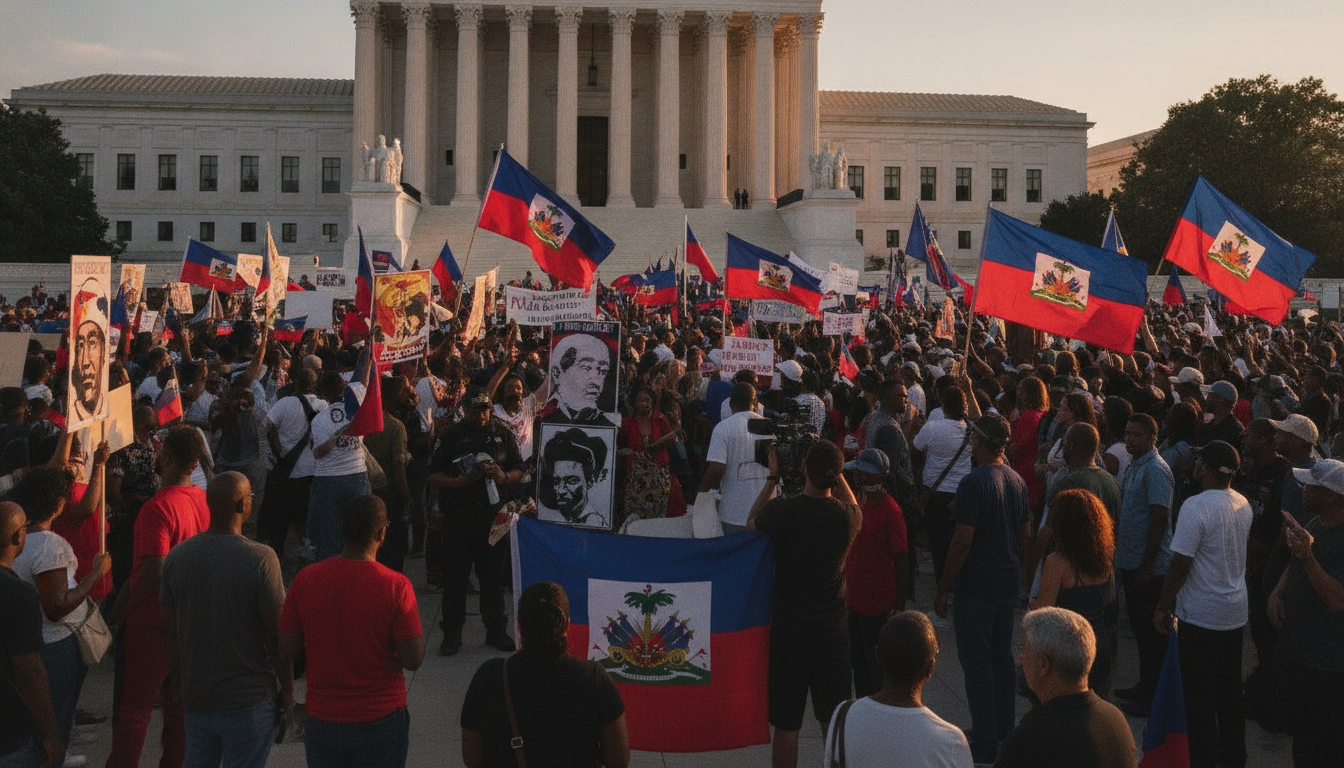
Haitian temporary protected status at stake as U.S. Supreme Court decision looms ahead of 250th anniversary
As the United States approaches its 250th anniversary, more than 350,000 people covered by Haitian temporary protected status face a decisive moment as the U.S. Supreme Court prepares to rule by early July 2026. The court will decide whether the Trump administration may terminate the program that has shielded many Haitians since the 2010 earthquake. Communities from Savannah, Georgia, to suburban Atlanta say the outcome will reshape lives, family plans and local workforces.
Saint-Domingue troops remembered for role at Savannah
In Savannah, a monument to the Chasseurs volontaires of Saint-Domingue stands as a reminder that fighters of African descent from the French colony helped hold a crucial line during the 1779 siege. Historians note that more than 500 of these volunteers took part in actions that allowed retreating allied forces to withdraw and later regroup in the war for American independence.
Several leaders who fought with the regiment later returned to Saint-Domingue and became central figures in Haiti’s own fight for independence, linking the two revolutions in a shared history of armed struggle and state-building. Experts and community advocates in Georgia say that recognition of this past contrasts sharply with the contemporary debate over immigration and protection.
Supreme Court timetable and the legal fight over TPS
The temporary protected status (TPS) designation for Haitians was created after the 2010 earthquake and has been renewed on grounds of ongoing instability on the island. The Trump administration moved to end that designation, prompting litigation that ultimately reached the U.S. Supreme Court, which is expected to issue a ruling in early July 2026.
Legal analysts say the court’s decision could set a precedent for how administrative decisions about humanitarian relief are reviewed and for the ability of future administrations to terminate mass-protection designations. Advocates for TPS recipients argue that abrupt loss of status would create humanitarian and legal crises for families who have built lives in the United States.
Lives in limbo in Georgia congregations and workplaces
At an evangelical Haitian church in Lawrenceville, near Atlanta, congregants gather for Creole services while offering housing and legal help to migrants whose status is uncertain. One father described a migration trajectory that included Haiti, the Dominican Republic, Chile, Mexico and, finally, entry to the United States in 2022; he now worries about the fate of two children, one born on U.S. soil.
Many recipients work in construction, caregiving and other sectors essential to local economies, and community leaders describe heightened anxiety as immigration enforcement activity is visible on neighborhood streets. Families report that the presence of federal immigration officers has deepened fears even as they continue to pursue employment and schooling for their children.
Historians and clergy call for recognition and compassion
Local historians and activists say the story of the Chasseurs volontaires is a corrective to what they call selective memory about the founding era. They argue that public commemoration of Black and Caribbean contributions to early American history should inform current debates about who is welcome and why historical ties matter.
Community leaders and church volunteers urge policymakers to balance legal judgments with humanitarian considerations, emphasizing that many TPS recipients have children in school and long-term ties to their communities. Their appeals ask lawmakers and judges alike to account for those ties when assessing the consequences of policy shifts.
Political irony as the U.S. marks a milestone anniversary
The pending decision arrives at a politically charged moment as the United States prepares public celebrations of its founding, a juxtaposition that local advocates call ironic and painful. They highlight how people whose ancestors once fought to secure American freedoms now face possible expulsion or loss of work authorization during commemorations.
Observers say the case has broader implications for how the nation reconciles founding myths with a more complete historical record, and how that reconciliation affects contemporary immigration policy. For many Haitian families, the legal outcome will determine whether they remain part of the communities they have helped shape or must return to an island still beset by violence and instability.
Community members in Savannah and Atlanta describe the dispute as more than a legal contest; it is a test of national values and of how historical debts are acknowledged. The Supreme Court’s ruling in early July 2026 will be watched closely by affected families, civic leaders and elected officials on both sides of the border.
