
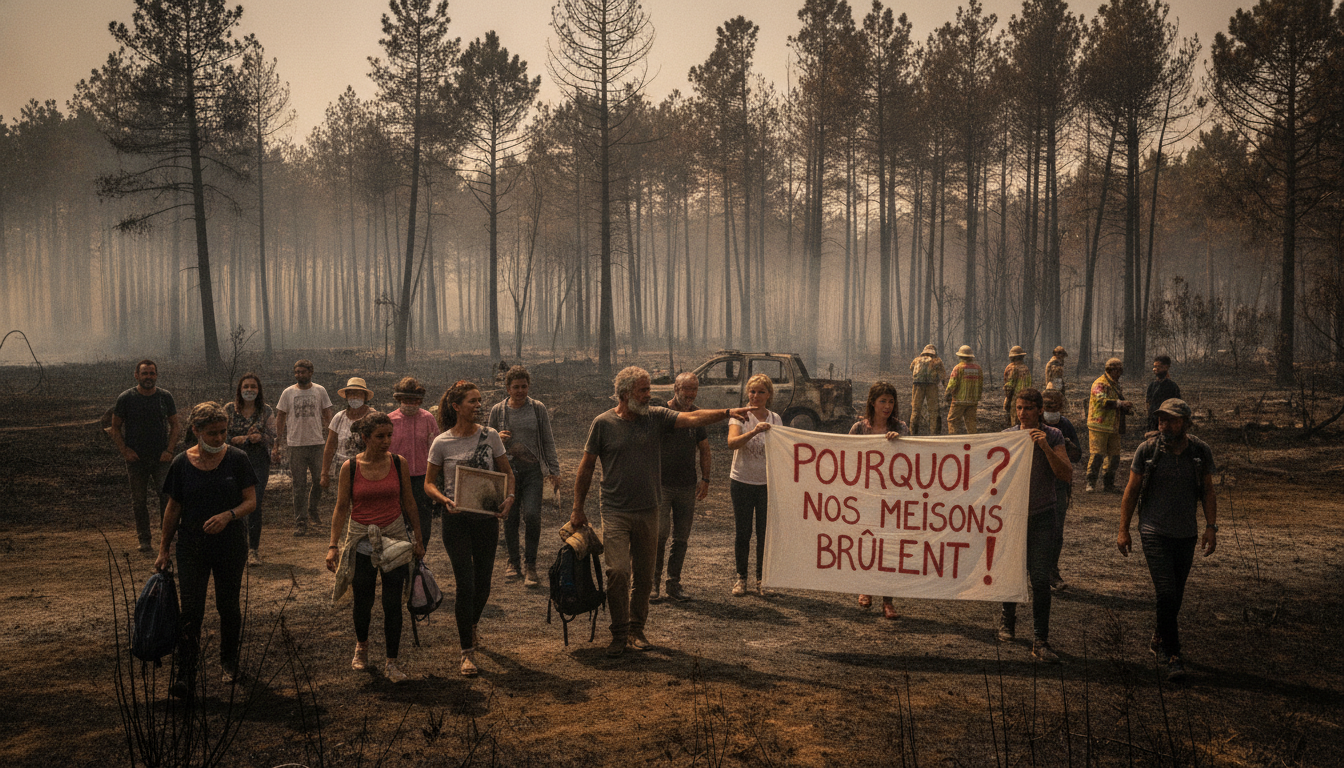
Le Porge wildfire devastates village near Bordeaux, destroying hundreds of homes
Le Porge wildfire devastated a village near Bordeaux, destroying homes and forcing mass evacuations; residents return to charred ruins and demand answers.
The Le Porge wildfire tore through forest and neighbourhoods west of Bordeaux after a blaze that began on July 22 swept across the region, consuming more than 100,000 acres of woodland and peatland. Le Porge itself lost roughly half its land to the flames, with officials saying about 180 houses in the village were destroyed as part of roughly 240 homes lost across the wider area. Residents were allowed to return on Aug. 3, confronting smouldering ruins, damaged infrastructure and the shock of sudden displacement.
Le Porge wildfire destroys hundreds of homes
Le Porge, located about 20 miles west of Bordeaux, was among the hardest-hit communities in the fire that prompted France’s largest peacetime evacuation. The blaze burned an estimated 17,000 acres within the commune, leaving streets lined with ash and foundations where family homes once stood.
Local officials and emergency services say the speed and intensity of the fire outpaced normal containment measures, turning timbered zones into a cascade of embers that spread between properties. For many residents, the scale of damage — from razed workshops to melted vehicles — has erased livelihoods built over decades.
Evacuation timeline and scramble to escape
Authorities say the initial blaze began on July 22, likely ignited by sparks from a brush-clearing machine several miles away, and rapidly expanded as dry conditions and wind carried flames toward populated areas. Evacuation orders were issued in stages, and some residents reported receiving little or no early warning before police and firefighters knocked on doors.
Several families described the frantic decision-making as the fire approached: some left immediately, others delayed when they did not see the danger, and a number of neighbouring towns were later evacuated as the front broadened. The staggered notices were intended to avoid traffic bottlenecks, officials said, but that rationale has done little to calm frustrations among those who felt they were not warned in time.
Firefighting operations and explosive hazards
Fire crews from across the region were mobilized and set up command posts in village buildings, but many units were later redeployed to establish firebreaks on other flanks of the inferno, including near the Cap Ferret Peninsula. Residents and volunteers joined the response by ferrying water and supporting crews at the front lines, often under extreme conditions.
On the second night of the assault, the fire ignited a wartime ordnance dump buried in a nearby field, triggering hundreds of explosions that transformed the scene into what the mayor described as a “war zone.” Mine-clearance teams were brought in as returns began to ensure remaining shells were removed and to reduce ongoing danger to residents inspecting their properties.
Residents confront losses and begin returning
When people were finally allowed back on Aug. 3, many found only charred foundations, twisted metal and the occasional personal item recognisable among the debris. Longstanding family homes and workshop businesses were reduced to rubble, leaving homeowners to measure cultural and economic losses that insurance may not fully cover.
Personal stories coalesced into a broader portrait of grief and endurance: a carpenter sifted through the remains of a treasured bicycle, a bike mechanic discovered his seven-generation family house gutted down to its walls, and young families found little salvageable from rented homes. Volunteers and neighbours helped where they could, but the psychological toll has been immediate and deep.
Questions over warnings, sirens and firefighting resources
Residents and community leaders have raised pointed questions about the communication and resources available during the emergency, asking why local sirens did not trigger and whether text alerts were transmitted effectively. Some point to shortfalls in equipment or crew deployment as factors that limited firefighting effectiveness in certain sectors of the blaze.
Regional authorities have pledged an official inquiry into the response and said firefighters were dispatched in large numbers and acted under extraordinarily difficult circumstances. The prefecture has also begun offering legal and psychological support at a local school for those returning, even as public debate grows over responsibility and preparedness.
Plans to rebuild and calls for regional aid
Local officials and residents are already debating how to rebuild amid concern that returning to pre-fire land management would leave the area vulnerable to repeat disasters. The government has acknowledged that forests must be managed differently, recommending more firebreaks and changes in tree species to reduce flammability in future seasons.
The mayor has urged national authorities for substantial support, likening the scale of reconstruction needed to a "Marshall Plan" for the region, while some homeowners plan to redevelop in a more fire-resistant fashion and others intend to sell land and leave. Legal action is also being organised by groups of residents seeking answers and potential compensation.
Communities across the region now face the twin tasks of clearing contamination and planning reconstruction, with immediate priorities centred on safety, housing for displaced families and the restoration of basic services.
As villagers begin the slow work of recovery, small signs of regrowth offer a tentative counterpoint to destruction: a green sprout on a scorched banana tree, the sound of neighbours cataloguing losses, and volunteers helping to clear ruins. For many, the path ahead will be measured in rebuilding homes and lives, and in seeking clarity about the warnings and responses that shaped those first critical hours. Only time, residents say, will tell how fully the community recovers.
