
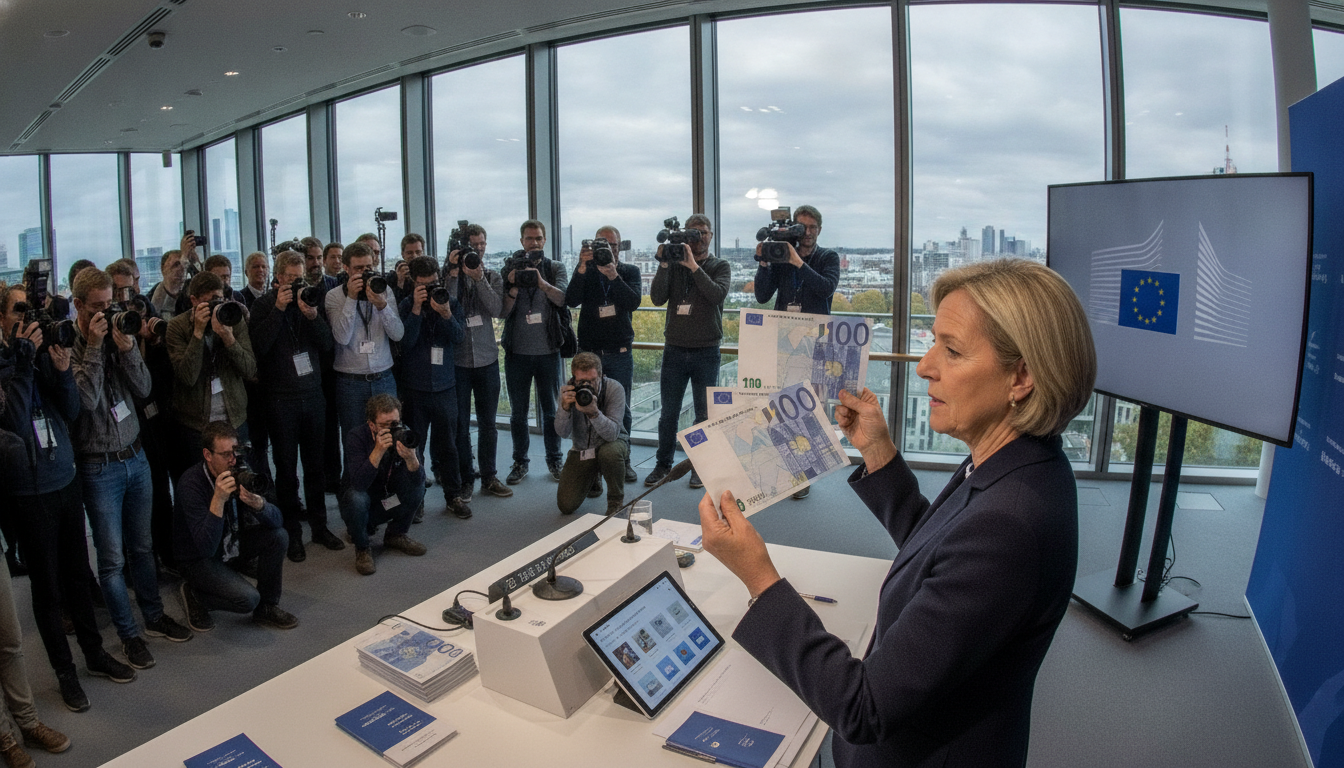
ECB invites public to decide euro banknote redesign
EU citizens are voting on the euro banknote redesign, choosing between nature and cultural themes as the European Central Bank seeks views on security, sustainability and identity.
The ECB’s public consultation on the euro banknote redesign has drawn millions of online responses and wide attention on social media, underscoring the currency’s symbolic role across the eurozone.
Christine Lagarde and senior officials framed the contest as a choice between cultural figures and natural motifs, saying the exercise aims to reflect shared European values while updating banknotes for security and sustainability.
Doris Schneeberger, the ECB’s director of banknotes, described the volume of feedback as evidence of how much the euro matters to people across member states.
Public response and social media reaction
The ECB report shows a surge of engagement: millions of survey entries and more than 26 million views of the bank’s social posts presenting the proposed notes.
Citizens answered in earnest, but many responses came with creativity and satire rather than formal design critique, illustrating that a currency redesign can quickly become a broader cultural conversation.
Social platforms became a forum for mock-ups, including altered portraits and humorous captions, which broadened the debate beyond conventional design circles.
The high volume of commentary also included thousands of alternative proposals submitted by individuals who felt neither official option captured their view of Europe.
Design choices: culture series versus nature series
The two finalist themes take distinct approaches to representing the bloc: one set of notes highlights historical European figures and cultural activities, while the other emphasizes rivers, birds and other natural motifs.
Cultural designs proposed images connected to Europe’s artistic and scientific heritage, featuring figures intended to embody shared achievements in music, science and the arts.
The nature option rests on symbolism of cross-border unity, with designers pointing out that waterways and migratory birds ignore political boundaries and suggest freedom and continuity.
Both approaches aim to create relatable imagery for daily use, but they also invite debate about what visual language best expresses a diverse, multinational union.
Security upgrades and environmental goals
Beyond imagery, the ECB is using the redesign to introduce new anti-counterfeiting measures and to reduce environmental impact across the banknote lifecycle.
Officials said recent technological advances in note production make it possible to strengthen security features while preserving the tactile and accessible qualities of cash.
Sustainability targets include materials and manufacturing processes that lower carbon footprints and improve recyclability, reflecting wider EU climate commitments.
The central bank is balancing technical constraints with aesthetic goals to produce notes that are harder to forge, easier to maintain and more environmentally responsible.
Satire, criticism and questions of recognisability
The public rollout quickly generated parody and pointed critique, from animated characters standing in for historical figures to satirical depictions of politicians and institutions.
Some critics argue that proposed cultural portraits are insufficiently well-known across all member states, raising concerns about recognisability in a 21-nation currency zone.
Others used the exercise to highlight grievances about EU regulation or governance, submitting provocative images of packaging, surveillance devices or symbolic objects tied to specific policies.
The volume of divergent responses illustrates a deeper question for designers: whether banknotes should teach and commemorate or mirror popular, contemporary identities.
Participation, timeline and next steps
The ECB has invited citizens to explain which designs they prefer and why, keeping the public survey open through Sept. 21.
After the consultation closes, the central bank will analyse submissions, carry out technical tests and consider further refinements before selecting a final series and preparing for phased introduction.
Design selection must also navigate legal, production and distribution logistics across euro-area central banks, a process that typically spans several years.
Officials stress that public input will inform—not solely determine—the final artwork, which must meet security, accessibility and practical circulation requirements.
Implications for European identity and the role of cash
The redesign debate has become as much about identity as about currency features, prompting reflection on what visual symbols can unite a linguistically and culturally diverse union.
As cash transactions decline in some member states, the new notes are intended to remain a tangible sign of shared sovereignty and daily life across borders.
For many observers, the exercise is an opportunity to ask how a single currency can both represent and educate, balancing historic memory with contemporary realities.
The ECB’s consultation has thus reasserted the euro’s role not only as a payment instrument but as a public symbol whose appearance invites democratic engagement.
Public reaction to the euro banknote redesign suggests Europeans care about both practical features and the stories their money tells, and policymakers will now weigh a broad public conversation as they move toward a final decision.
