
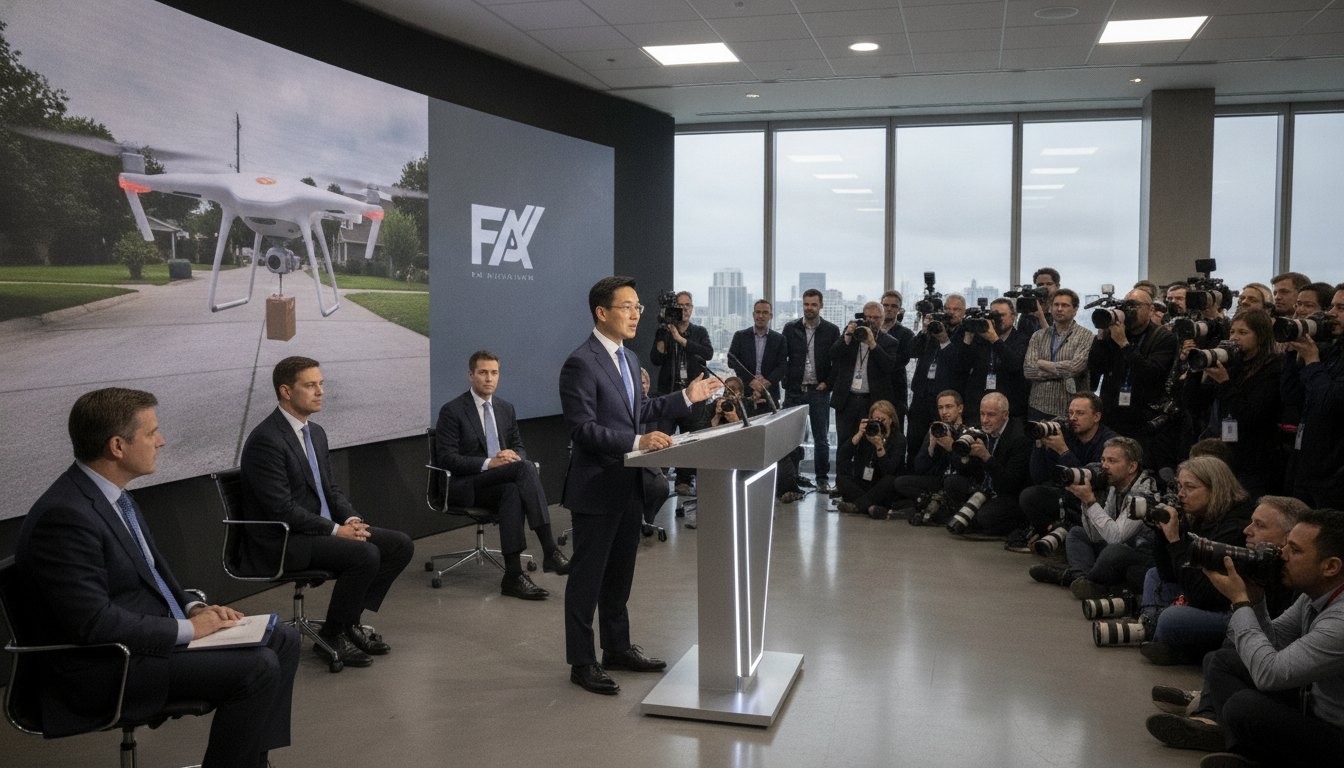
DoorDash Air launches after FAA Part 135 approval, expanding DoorDash drone delivery plans
DoorDash Air receives FAA Part 135 certification to operate commercial drone delivery in the U.S., marking a major step toward integrating drone delivery into DoorDash’s app ecosystem.
DoorDash announced the launch of DoorDash Air, a new business unit created to develop and operate drone delivery systems within its existing platform. The company said it has secured a Part 135 air carrier certificate from the Federal Aviation Administration, clearing a legal path to run commercial drone delivery operations in the United States. DoorDash emphasized that the program will be phased in through limited pilots before any broad consumer rollout of its custom-built aircraft.
FAA certification and what it allows
DoorDash’s Part 135 certification authorizes the company to act as a commercial air carrier for unmanned aircraft, a regulatory milestone required before routine drone deliveries can begin. The certification does not equate to fully autonomous, long-range flights today; instead, it permits DoorDash to operate drones under the regulatory framework that governs commercial aerial operations. Company executives framed the approval as the foundation for staged testing and tightly controlled pilot programs while they work toward broader operational approvals.
Pilot programs and regulatory limits
DoorDash said its initial activities will likely involve short-distance flights that remain within an operator’s line of sight, a common first step for companies scaling drone delivery. For sustained autonomous flights over longer distances, DoorDash will need FAA authorization for Beyond Visual Line of Sight operations, a capability other firms have received in recent years. The company did not provide a firm timeline for when its aircraft will move beyond these constrained trials, signaling a cautious, incremental approach to deployment.
Technology development inside DoorDash Labs
The new drone effort was developed inside DoorDash Labs, the company’s research and development arm that also produced Dot, an autonomous sidewalk delivery robot introduced in September 2025. DoorDash Labs said the hardware work on aircraft is coupled tightly with software systems designed to coordinate deliveries across multiple modes. That integration, the company argues, is central to operating drones alongside human drivers and sidewalk robots on a single delivery network.
Autonomous Delivery Platform coordinates modes
DoorDash described an Autonomous Delivery Platform that will decide in real time which method—driver, robot, or drone—is best for a particular order. The platform is intended to manage routing, embedded systems, and the real-time orchestration needed to dispatch the right asset for each delivery. DoorDash framed this software as critical to the drone delivery proposition, arguing that the operating system that determines delivery mode is as important as the aircraft themselves.
Partnerships and existing drone programs continue
While pursuing its own aircraft, DoorDash will continue existing partnerships with third-party drone operators, maintaining relationships with Wing and Flytrex to supplement its capabilities. DoorDash previously partnered with Alphabet’s Wing for programs in Australia and later expanded Wing-run services to select U.S. cities. The company’s decision to build DoorDash Air reflects a dual strategy: keep partner networks active while developing in-house capabilities that can be integrated into the DoorDash app.
Operational challenges and safety considerations
DoorDash acknowledged the full stack of technical and operational challenges ahead, from hardware reliability to complex routing algorithms and airspace management. Safety and regulatory compliance remain front-and-center, with the company indicating that early flights will adhere to strict limits until further FAA approvals are secured. DoorDash’s public statements stressed that moving to fully autonomous or BVLOS operations will require additional agency signoff and measured testing.
Talent and the case for in-house autonomy work
In announcing DoorDash Air, the company positioned the project as an engineering opportunity, arguing that working across hardware, embedded systems, and large-scale delivery routing is unusually broad in the autonomy sector. DoorDash suggested the scale and interconnectedness of its delivery network present unique technical problems, and that building an in-house drone capability would allow the company to optimize aircraft and software together. The recruiting message emphasized the appeal of solving end-to-end autonomy challenges on a live commerce platform.
DoorDash Air marks a meaningful expansion of the company’s delivery strategy by formally adding aircraft to a network that already includes human drivers and sidewalk robots. The Part 135 certification gives DoorDash regulatory permission to begin commercial drone operations, but the company has signaled a staged rollout focused on short, supervised flights before seeking broader permissions. As DoorDash pursues complementary approvals for Beyond Visual Line of Sight operations and continues partnerships with existing drone vendors, its success will hinge on blending reliable hardware, rigorous safety practices, and the real-time software that determines how each order is delivered.
