
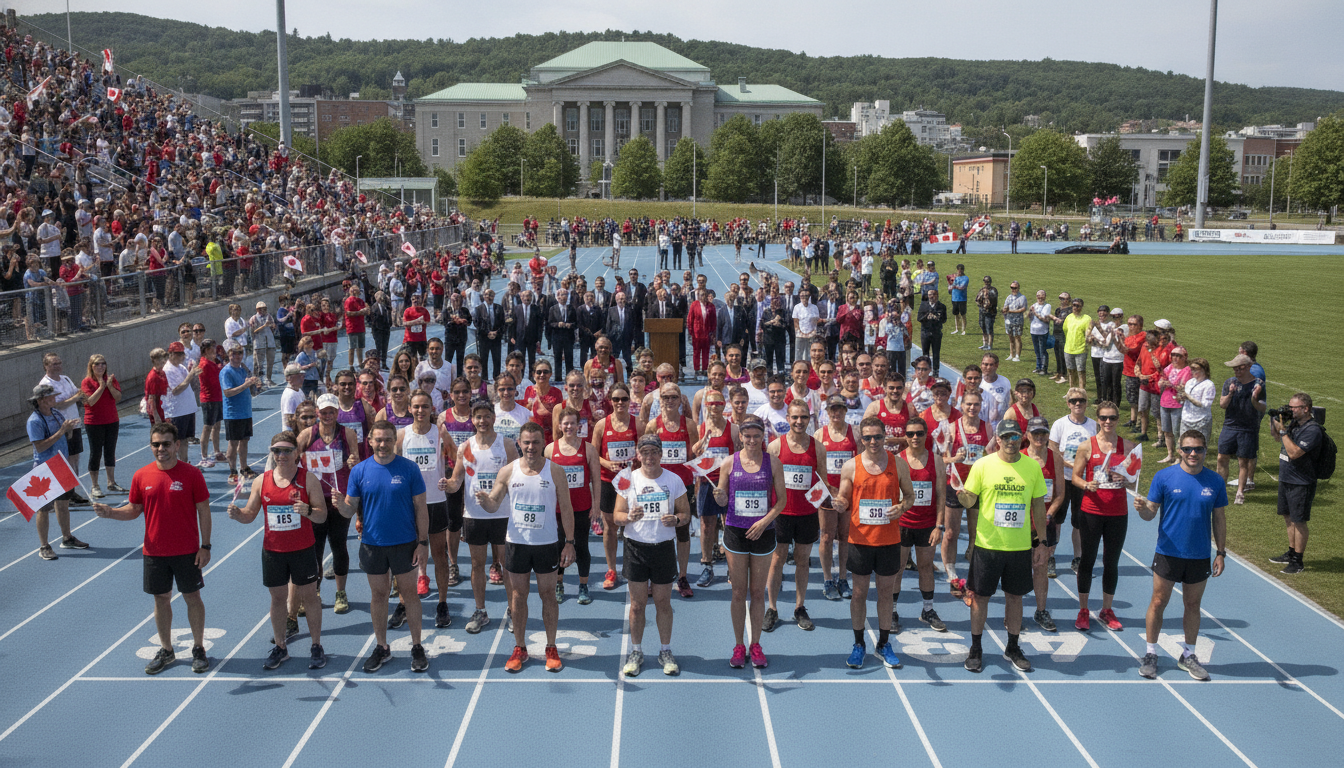
Canadian Transplant Games land in Sherbrooke July 5–11, 2026 to promote organ donation
Sherbrooke hosts the Canadian Transplant Games July 5–11, 2026, showcasing 120 athletes across nine sports while urging Quebecers to register as organ donors.
For the first time since 2010, Quebec will host the national gathering of transplant recipients, donors and supporters when the Canadian Transplant Games open in Sherbrooke on July 5 and run through July 11, 2026.
The week-long event brings together roughly 120 athletes, organizers say, and combines competition with a public campaign to demonstrate the benefits of organ donation.
Organizers intend the Games to show that transplantation restores active, productive lives and to encourage people to register their consent on provincial health cards.
Sherbrooke chosen as host city after 15 years
The event marks a return of the Canadian Transplant Games to Quebec for the first time in 15 years, with Sherbrooke selected to welcome athletes and supporters.
Local volunteers and health partners spent thousands of hours preparing venues and logistics to stage nine sports across municipal facilities and club sites.
Organizers describe the Games as both a sporting competition and a community festival designed to connect recipients, donors and families.
Participation figures and invited communities
Organizers expect about 120 competitors representing provinces and territories, alongside living donors and family members, according to the event committee.
Athletes of all ages will compete in age-grouped categories adapted to different levels of fitness and medical clearance.
The inclusive roster is intended to celebrate recovery while offering social support and peer connection for those living after transplant.
Sporting program highlights nine disciplines
The schedule features nine sports, including golf, swimming, triathlon and pétanque, alongside athletics and racket sports that showcase both endurance and skill.
Event planners say competitions are structured to accommodate participants at varying stages of rehabilitation, with classifications and safety protocols in place.
Medals and provincial team recognition aim to give athletes a tangible reward and an incentive to continue training after the Games.
Organ donation message at the heart of the Games
A central objective of the Canadian Transplant Games is to persuade the broader public that transplantation saves lives and that registering as a donor matters.
Committee members say the visible testimony of recipients competing in public sports spaces helps counter misconceptions that transplant recipients remain housebound after surgery.
Organizers are coupling on-site messaging with outreach in local clinics and through Transplant Quebec to encourage people to indicate consent on their health cards.
Rehabilitation and the role of sport after transplant
Medical teams and participants emphasize that physical activity is a core element of post‑transplant rehabilitation, often introduced very early through physiotherapy.
Athletes and clinicians agree that structured exercise plus healthy habits supports long-term graft outcomes, quality of life and social reintegration.
The Games therefore serve a dual purpose: they provide competitive goals and model the practical benefits of prescribed activity for recovery.
Volunteer leadership and a personal donor story
The Sherbrooke organising committee is led in part by André‑Georges LeBlond, a liver transplant recipient in 2017 who shifted from local volunteerism to advocacy after learning his donor helped multiple people.
LeBlond cites his own recovery and international experience—he was part of Team Canada at the World Transplant Games in Dresden in 2025—as motivation to bring the national event to Quebec.
He and his team say the aim is to leave participants with strong memories, a sense of provincial pride, and renewed motivation to remain active.
Despite a slight dip in transplant activity in 2025, Quebec has seen a marked rise in the number of organ transplants over the past decade (2016–2025), officials note.
Organizers hope the Sherbrooke Games will strengthen public support, increase registrations for organ donation and spotlight the medical and social advances that make transplantation a viable path to renewed life.
The Canadian Transplant Games in Sherbrooke combine competition, recovery and outreach with the explicit goal of showing residents that transplantation works and that registering as an organ donor can save lives.
