
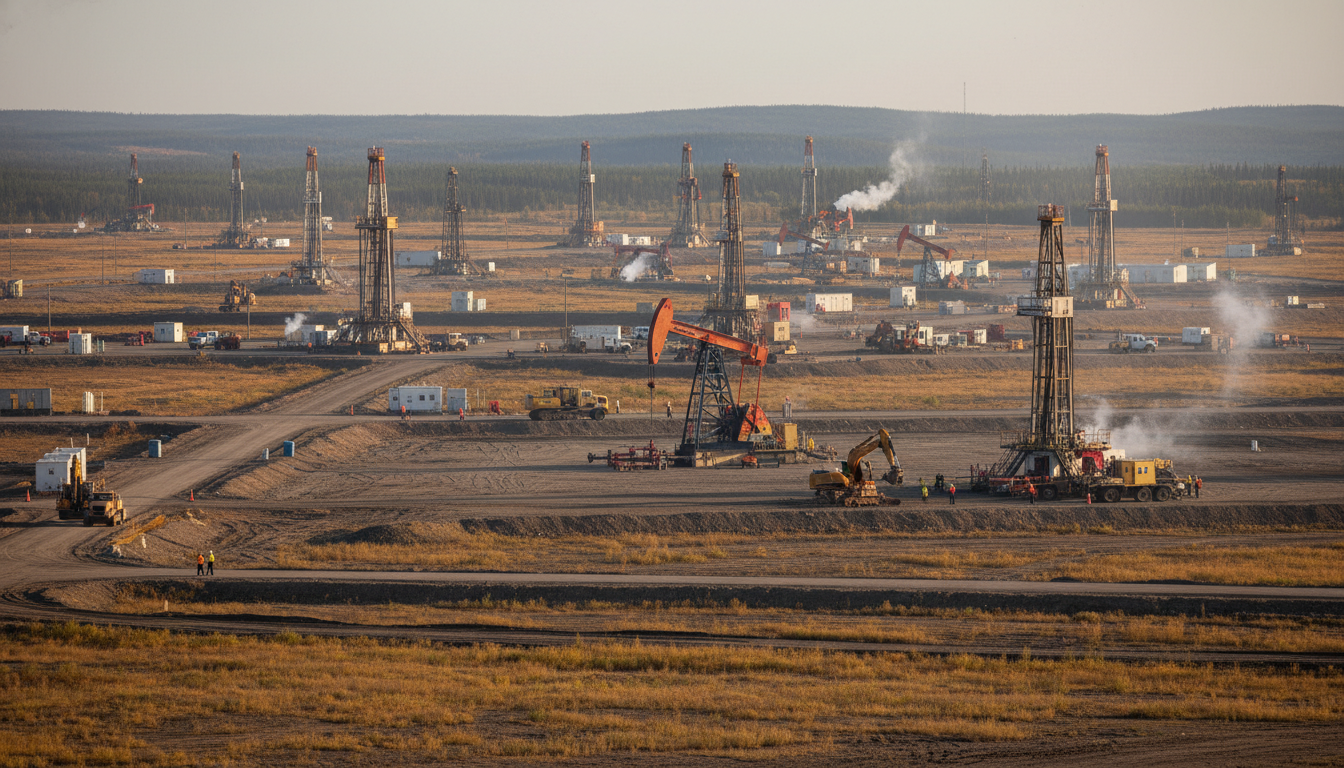
Western Canada oil rush accelerates as rig counts hit decade high
High oil prices spark a new Western Canada oil rush, with active rigs and operator activity surging as producers chase higher returns.
Western Canada is experiencing a clear oil rush as drillers ramp up activity in response to sustained higher crude prices and improved industry confidence. The region’s rig count jumped sharply in May, and operators from Calgary to the oilsands are moving to restore capacity and capture near‑term revenue. Industry leaders say the momentum reflects both market signals and shifting political ground that has reduced uncertainty for large projects.
Drilling activity highest since 2014
A Baker Hughes rig count showed 160 rigs actively drilling across Canada in May, a 45 per cent increase from the same month last year. Analysts at ATB Cormark Capital Markets noted this is the most drilling activity observed since 2014, marking a significant rebound after years of weak investment.
The uptick is concentrated in oil plays across Western Canada, where producers have the most to gain from elevated prices. Industry executives and contractors describe the current pace as the busiest many have seen in more than a decade, driven by both demand for new wells and the reactivation of previously idled rigs.
Price surge driving the Western Canada oil rush
Global crude prices have vaulted well above earlier forecasts, with oil trading near the mid‑to‑high US$90s per barrel in recent weeks and expectations that prices will remain elevated into 2027. Market participants attribute the spike to supply disruptions and heightened geopolitical risk, particularly in parts of the Middle East that affect shipping through key choke points.
“Rigs that are running are making money,” said Bob Geddes, president of Calgary‑based Ensign Energy Services Inc., reflecting operator sentiment that stronger prices justify renewed drilling programs. That profitability has translated into firm demand for rig time and related services across the supply chain.
Operators expanding fleets and bringing rigs back
Ensign reported it was operating 40 rigs in Canada this spring, about a 43 per cent increase year‑over‑year, and planned to bring another 10 units online through June. The company’s experience is emblematic of a broader trend: contractors are mobilizing equipment and crews to meet a surge in client requests for drilling services.
Industry leaders say the capacity squeeze has pushed day rates higher and improved margins for active rigs. Equipment shortages and crew availability remain constraints, but suppliers and contractors are prioritizing the most profitable basins and customers as activity normalizes.
Political developments lift industry confidence
Beyond market forces, recent federal‑provincial talks have helped shift the political landscape that operators weigh when making multi‑year investment decisions. A recent agreement between Alberta and the federal government on industrial carbon pricing has been cited by executives as a factor that reduces policy risk for pipeline and emissions‑management projects.
Executives said this political progress has emboldened firms to commit to growth, noting that clarity on regulatory and fiscal frameworks is as important as crude prices when planning large capital programs. Producers and service companies alike are tracking the next steps, including negotiations tied to major carbon‑capture initiatives.
Pipeline and carbon‑capture negotiations still determine long‑term capacity
Industry sources say the pathway to new or expanded pipeline takeaway remains contingent on parallel progress on multibillion‑dollar carbon‑capture and storage plans proposed by oilsands producers. The so‑called Pathways-style project is a critical federal condition for large new pipeline approvals, and its advancement will influence transport economics for years.
While the current drilling surge responds to spot and near‑term price signals, long‑term growth in Western Canada’s oil production depends on resolving those infrastructure and emissions questions. Project proponents are engaged in complex talks over route selection, cost allocation, and timelines that will determine whether new export capacity can keep pace with rising output.
Labour market and local economic effects
Although employment in the oil and gas sector has not fully returned to decade‑earlier levels, workers and contractors are reporting renewed optimism about career prospects. “They’re starting to get really excited about their careers and their future,” said Mark Scholz, chief executive of the Canadian Association of Energy Contractors, pointing to stronger hiring and more stable work schedules on many rigs.
Communities in Alberta and other western provinces are already seeing increased activity in service sectors tied to drilling, from lodging and transportation to equipment maintenance. The challenge now for operators and governments will be sustaining skilled labour supply and ensuring safe, productive work as activity climbs.
The immediate picture is clear: rising crude prices and easing political uncertainty have combined to trigger a new Western Canada oil rush, prompting the most intensive drilling seen in more than a decade. Industry participants caution that while the near‑term outlook is constructive, longer‑term growth will hinge on final decisions around pipelines, carbon‑capture infrastructure, and the ability of supply chains to keep pace with demand.
