
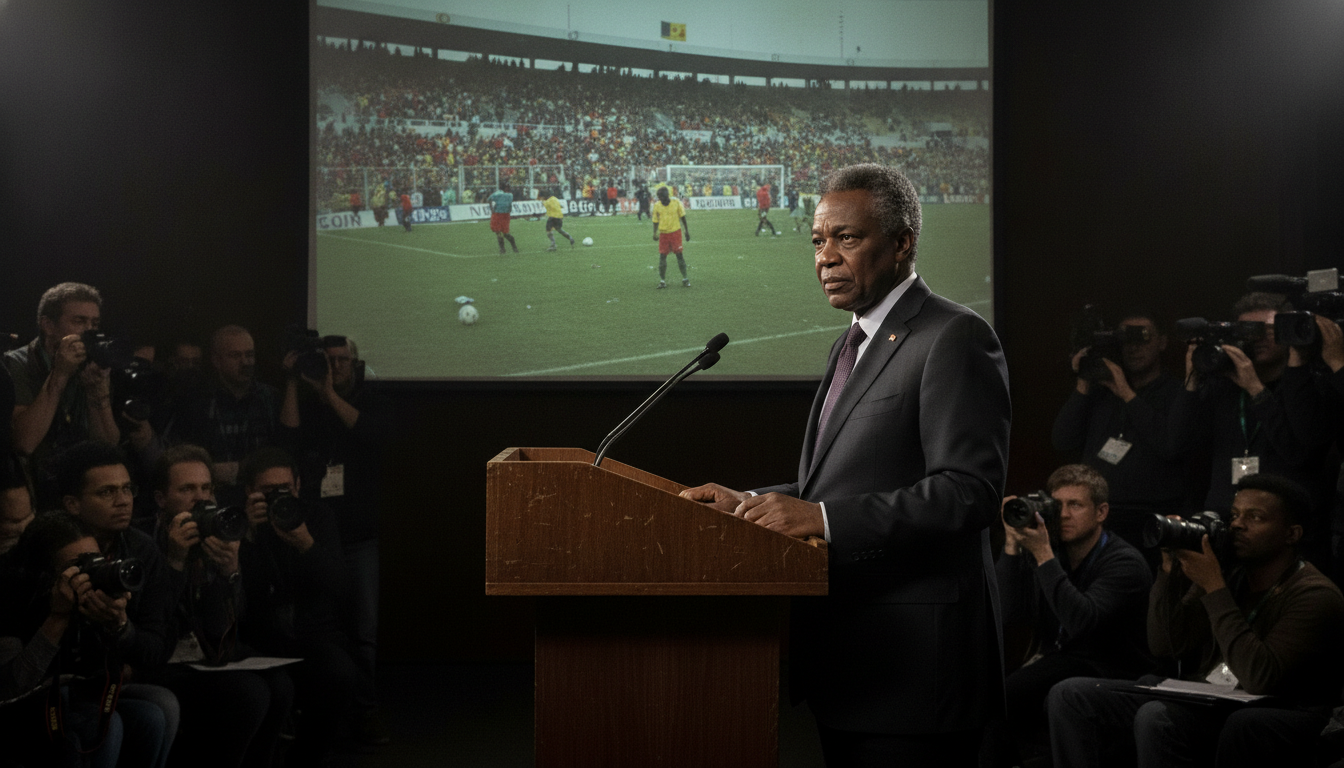
Pierre Womé penalty miss in 2005 still shapes memories as World Cup 2026 nears
As the 2026 World Cup unfolds across North America, memories of Pierre Womé’s penalty miss on October 8, 2005, in Yaoundé remain vivid for Cameroonian fans and the journalists who covered the match. The Pierre Womé penalty miss cost Cameroon qualification for the 2006 World Cup and sparked violence that left reporters trapped and injured outside the stadium. Veteran journalists and analysts say the episode still echoes in discussions about fan passion and stadium security.
Missed penalty ends Cameroon’s 2006 World Cup hopes
On October 8, 2005, Cameroon entered the match against Egypt needing a win to secure a spot at the 2006 FIFA World Cup in Germany. Late in the game, a penalty was awarded to Cameroon, and Pierre Womé stepped up to take the decisive kick. His shot struck the post and the match ended in a draw, eliminating Cameroon from the qualifying race and handing the ticket to rival Côte d’Ivoire.
The immediate aftermath was stunned disbelief among supporters who had already celebrated in anticipation of qualification. Players such as Samuel Eto’o and Geremi, both established stars in Europe at the time, had carried expectations that the team would reach the World Cup, making the miss all the more devastating for fans.
Violence erupts in Yaoundé as fans seek retribution
Following the final whistle, the atmosphere at Yaoundé’s stadium deteriorated rapidly into chaos. Angry spectators poured out of the stands and began searching for the player they blamed for the defeat. The unrest quickly spilled into the streets, with reports of property damage and injuries as crowds overturned their frustration on public spaces and vehicles.
Former sports reporter Steve Djouguela, present that day, recounts the scene as a “cataclysm” that left lasting impressions. He and colleagues found themselves trapped when an enraged crowd surrounded the bus carrying accredited journalists and began pelting it with stones.
Journalists assaulted and rescued by military intervention
Journalists accredited to cover the match became inadvertent targets of the crowd’s fury, accused by some supporters of harboring the player or colluding with officials. Djouguela and others report being trapped inside a bus as windows shattered and stones rained down, fearful for their lives as the mob attempted to force entry.
After prolonged moments of terror, military forces intervened to escort the trapped journalists to safety and disperse the crowd. The incident illustrated the acute risks reporters can face in volatile sporting environments and prompted calls for better protection at high-stakes matches.
Pierre Womé’s career and the weight of a single moment
For Pierre Womé, the miss became an indelible part of his public image despite a professional career that included significant club stints in Europe. Former colleagues and fans still recall the penalty as a turning point in how he was perceived at home, where the passion for soccer intensified the fallout from the error.
Observers say the single-event narrative overlooks broader factors at play during qualification campaigns, including team dynamics, officiating decisions and the pressures placed on individual players. Still, the psychological and reputational consequences for Womé have endured in the national conversation about that era.
Soccer passion compared with Canadian sporting culture
Voices familiar with both Cameroonian and Canadian sporting cultures draw comparisons to illustrate how deeply soccer can resonate in different communities. Djouguela, now based in Quebec, likens the fervor in Cameroon to the way hockey captivates fans in Canada, noting rituals such as communal viewings and intense local allegiances.
Canadian commentators such as Olivier Tremblay point out that soccer’s place in Canada is still evolving and does not yet elicit the same intensity as hockey nationwide. At the same time, analysts like Sydney Fowo suggest that strong national-team performances at tournaments like the 2026 World Cup could accelerate soccer’s cultural footprint across Canada.
Calls for improved stadium safety and fan education
In the wake of incidents like the 2005 Yaoundé unrest, sports administrators and safety experts emphasize the need for stronger crowd-management measures. Analysts argue for a combination of fan education, clearer enforcement of stadium rules, and well-trained security contingents to ensure that supporters of all ages can attend matches without fear.
Sydney Fowo stresses that while passion is integral to sport, it must be channeled safely. He recommends targeted outreach and policing strategies that protect vulnerable attendees and prevent scenes in which journalists, players or ordinary fans become accidental victims of collective anger.
As the 2026 tournament proceeds, memories of Yaoundé in 2005 serve as a reminder of the volatile edge of sporting emotion. Those who were there recall not only the heartbreak of missing a World Cup berth but the broader human cost when a game’s outcome unleashes violence.
The episode underscores the responsibility shared by governing bodies, clubs and local authorities to safeguard stadiums and promote a culture of respect among fans, so that sporting moments remain defined by competition rather than crisis.
