
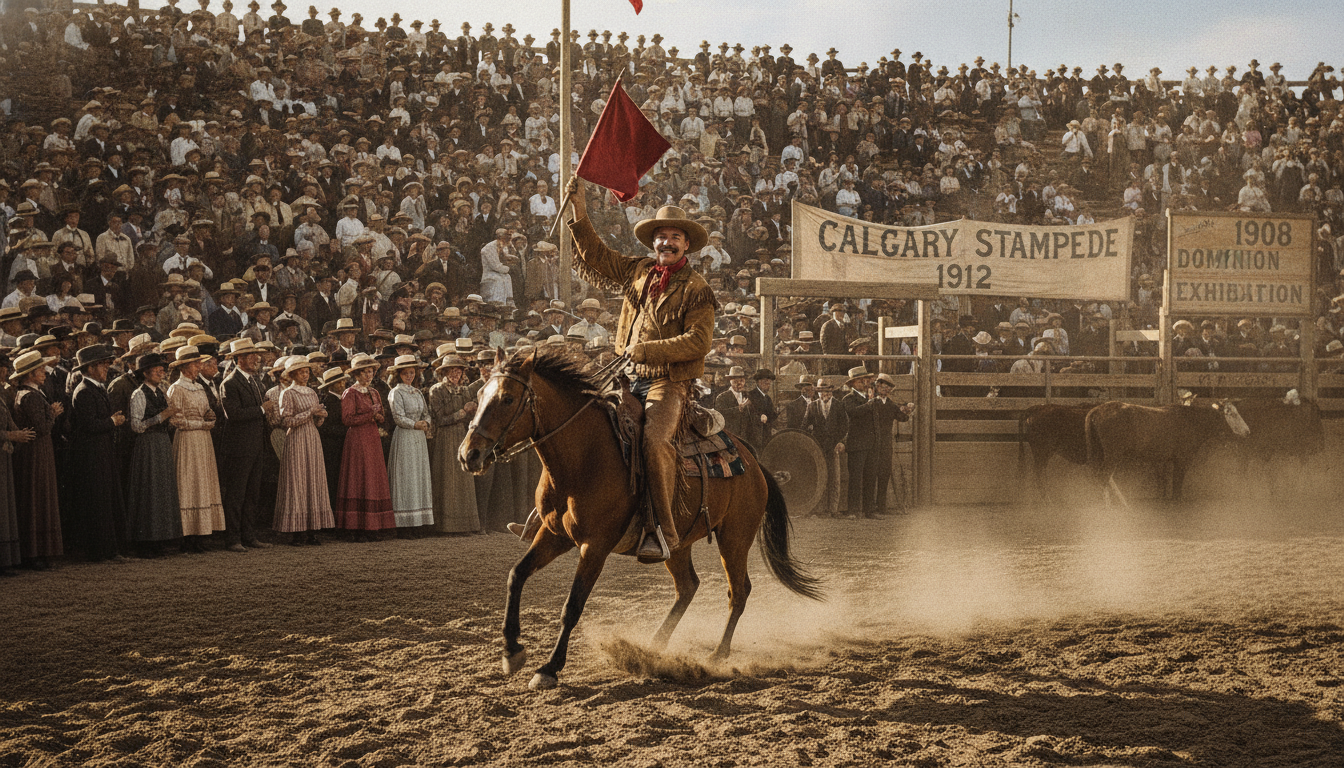
Calgary Stampede history traced from the 1908 Dominion Exhibition to the 1912 inaugural rodeo
A concise look at Calgary Stampede history from the 1908 Dominion Exhibition to Guy Weadick’s 1912 rodeo and the post‑war 1919 Victory Stampede and its legacy.
The history of the Calgary Stampede traces back to civic fairs and agricultural exhibitions, with roots that were sharply visible after the Dominion Exhibition of 1908. The event helped reveal Calgary’s potential as a gathering place for prairie agriculture, livestock competitions and sporting spectacles. That momentum, combined with the vision of showman Guy Weadick, set the stage for the 1912 inaugural Stampede that brought rodeo and cowboy performance to the public square.
Dominion Exhibition of 1908 revealed Calgary’s potential
The Dominion Exhibition held in Calgary in 1908 showcased agricultural displays, competitive livestock classes and organized sporting events that drew regional attention. Local boosters and business leaders took note of the crowd turnout and the economic activity surrounding the fairgrounds. The exhibition’s success created a belief that Calgary could host larger events that blended rural traditions with civic promotion.
The 1908 fair provided a template for future gatherings by demonstrating how exhibitions could be used to market the city to visitors and investors. Agricultural societies and show committees began planning for events beyond mere displays, focusing on entertainment that would attract broader audiences. This moment is widely regarded as a turning point in the early civic calendar for Calgary.
Guy Weadick championed a new kind of prairie show
Guy Weadick, an American-born cowboy and vaudeville performer, recognized how the Dominion Exhibition had highlighted Calgary’s potential as an entertainment hub. He combined his skills as a trick roper and showman with a passion for frontier culture to propose a new festival celebrating cowboy life. Weadick pitched the idea to civic leaders and ranching interests, arguing that a mounted spectacle could serve both as entertainment and as a promotional vehicle for the region.
Weadick’s persuasive organizing and theatrical background were central to securing support for the first Stampede. He recruited performers and local ranch hands, and he envisioned a program that mixed rodeo competition with staged frontier theatre. His role bridged show business and rural tradition, and it shaped the event’s early identity.
Inaugural Stampede in 1912 introduced public rodeo
The first Calgary Stampede opened in 1912 as a compact program that placed rodeo competition at its core alongside pageantry and theatrical presentations. The event introduced organized contests for roping, riding and other ranching skills, presenting them to urban and visiting audiences for the first time in a focused spectacle. Public appetite for the combination of sport and pageant immediately established the Stampede as more than a local fair attraction.
Organizers framed the 1912 Stampede as a demonstration of western skills and a celebration of prairie life, which resonated with both rural and city populations. The event’s success encouraged larger-scale planning for subsequent years and solidified the rodeo as a central pillar in Calgary Stampede history.
Victory Stampede of 1919 resumed festivities after the war
After the interruption of the First World War, the festival returned in 1919 under the name Victory Stampede, marking a post‑war revival of public celebration. The 1919 events echoed the original mix of rodeo competition, entertainment and civic celebration but carried added symbolism as a celebration of peace and community resilience. The return galvanized support from veterans, ranchers and municipal leaders who sought to re-establish communal gatherings.
The Victory Stampede reinforced the event’s place in civic life and helped transform it from an occasional show into a recurring institution. Attendance and participation in 1919 signaled to organizers that an annual or regular festival could tap enduring public interest.
Agricultural roots shaped the festival’s early character
From its inception, the Stampede operated out of a dual identity as both an agricultural exhibition and a popular spectacle. Livestock competitions, grain displays and farm implements remained central features even as rodeo events gained prominence. This mixture allowed the festival to serve multiple constituencies: farmers and breeders, ranch hands and performers, and city residents seeking entertainment.
The agricultural foundations also provided practical support through exhibitor networks and prize funds that underpinned competitions. Maintaining those roots helped the Stampede balance spectacle with substantive industry showcases, preserving its original purpose as a promoter of regional agriculture and commerce.
Early gatherings established a lasting cultural institution
The period between 1908 and 1919 established many of the rituals and forms that would endure in Calgary Stampede history. Early organizers, performers and participants shaped the event’s choreography, from parades and pageants to the format of rodeo competition. These formative years created a recognizable blueprint that later decades would refine and expand.
Local acceptance of the Stampede as a civic event strengthened its political and financial backing, allowing it to grow into a major annual attraction. The legacy of those early exhibitions and Stampedes is visible today in the festival’s continued emphasis on rodeo, agriculture and community spectacle.
As Calgary marks successive anniversaries of its signature festival, historians and citizens draw a clear line from the 1908 Dominion Exhibition through Guy Weadick’s 1912 innovation to the 1919 Victory Stampede. Those milestones helped shape the Calgary Stampede history that remains central to the city’s cultural identity and continues to inform how the festival presents western heritage to national and international audiences.
