
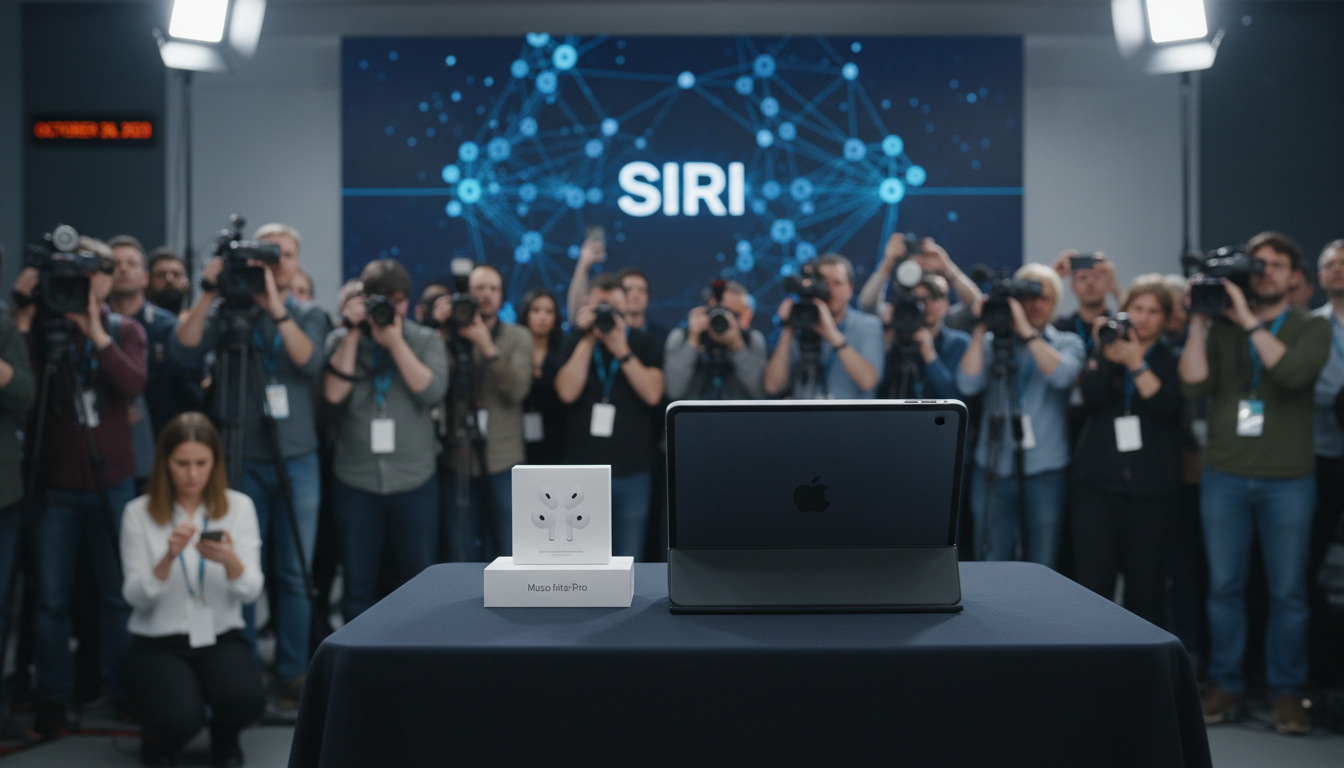
Apple’s AirPods launch at risk as software, Siri and visual AI still unfinished
Apple’s AirPods launch may be delayed as software readiness — including a new Siri and visual AI features — could fall short of quality and push back release.
Apple’s planned AirPods launch is facing renewed uncertainty as company sources and supply-chain signals point to software shortcomings that could postpone the roll-out. The AirPods launch remains contingent not only on hardware readiness but also on a revamped Siri and a suite of visual AI capabilities that Apple is still refining. Industry contacts say an earlier delay occurred when the company missed an internal deadline for the updated Siri, and there is now a risk that the public introduction could slip again if visual AI performance does not meet internal benchmarks.
Software problems at the center of the delay
Senior engineers and suppliers have flagged software stability and feature-completeness as the primary gating items for the AirPods launch. These software elements include the next-generation Siri and integrated visual AI features that require cross‑discipline testing across hardware, firmware and cloud services.
Apple’s device cadence has historically hinged on synchronized software and hardware readiness, and executives have shown reluctance to ship devices where key user-facing functions are still immature. That cautious approach appears to be at work again as teams push to avoid releasing a product with compromised functionality.
Siri update linked to earlier postponement
Sources indicate that Apple previously postponed the AirPods introduction after the company failed to finalize a new version of Siri in time for the originally planned launch window. The updated voice assistant is intended to deliver broader conversational responses and tighter device integration than prior releases.
Delays to Siri have ripple effects because the assistant underpins many of the AirPods’ expected hands‑free and contextual features. Engineers cited the complexity of on-device processing and privacy-preserving architectures as reasons the update took longer than anticipated.
Visual AI features under scrutiny
Apple is reportedly developing visual AI capabilities for the AirPods that would combine camera-derived context with audio and sensor data to enhance user experiences. These functions are said to include scene understanding, situational awareness and contextual prompts tied to what users see and hear.
Quality testing of those visual AI systems has become a decisive factor for timing, with internal benchmarks emphasizing accuracy, latency and privacy safeguards. If the visual AI stack does not consistently meet those standards in real-world conditions, engineers are prepared to recommend further refinement before shipment.
Supply-chain and retail timing considerations
Beyond software, suppliers and manufacturing partners are watching the launch timetable closely because any shift affects component orders and logistics schedules. Factories preparing packaging, accessories and wireless charging components may have to reschedule production runs to align with a later release window.
Retail partners and carriers also factor into launch planning, as coordinated marketing and distribution require firm dates weeks in advance. A delayed announcement could compress promotional lead times and complicate inventory forecasts ahead of the holiday season.
Competitive and market implications
A postponed AirPods launch would give rivals an added window to promote competing true wireless and mixed‑reality accessories built around their own AI and voice platforms. Market analysts caution that timing matters in the crowded audio and wearable segment, where sustained consumer interest can shift quickly.
However, delaying until software and AI features meet Apple’s quality thresholds could spare the company reputational risk from an underwhelming debut. Observers note Apple often opts for a slower, more polished rollout when core services are essential to the product proposition.
Apple’s public posture and expectations
Apple has not publicly confirmed a revised timeline and typically declines to comment on unannounced products, a pattern that leaves partners and consumers waiting for official word. The company’s internal criteria for launch readiness reportedly emphasize user experience metrics rather than fixed calendar dates.
Staff briefings and internal milestones will likely determine whether the AirPods launch proceeds on the planned schedule or shifts to accommodate additional software development. For now, attention is centered on the performance of the new Siri and the robustness of the visual AI features.
The coming weeks will be decisive: if software teams clear the remaining validation and integration hurdles, Apple may proceed with the AirPods launch as planned; if not, the company appears prepared to delay until both voice and visual AI functions meet the standards it sets for new product introductions.
