
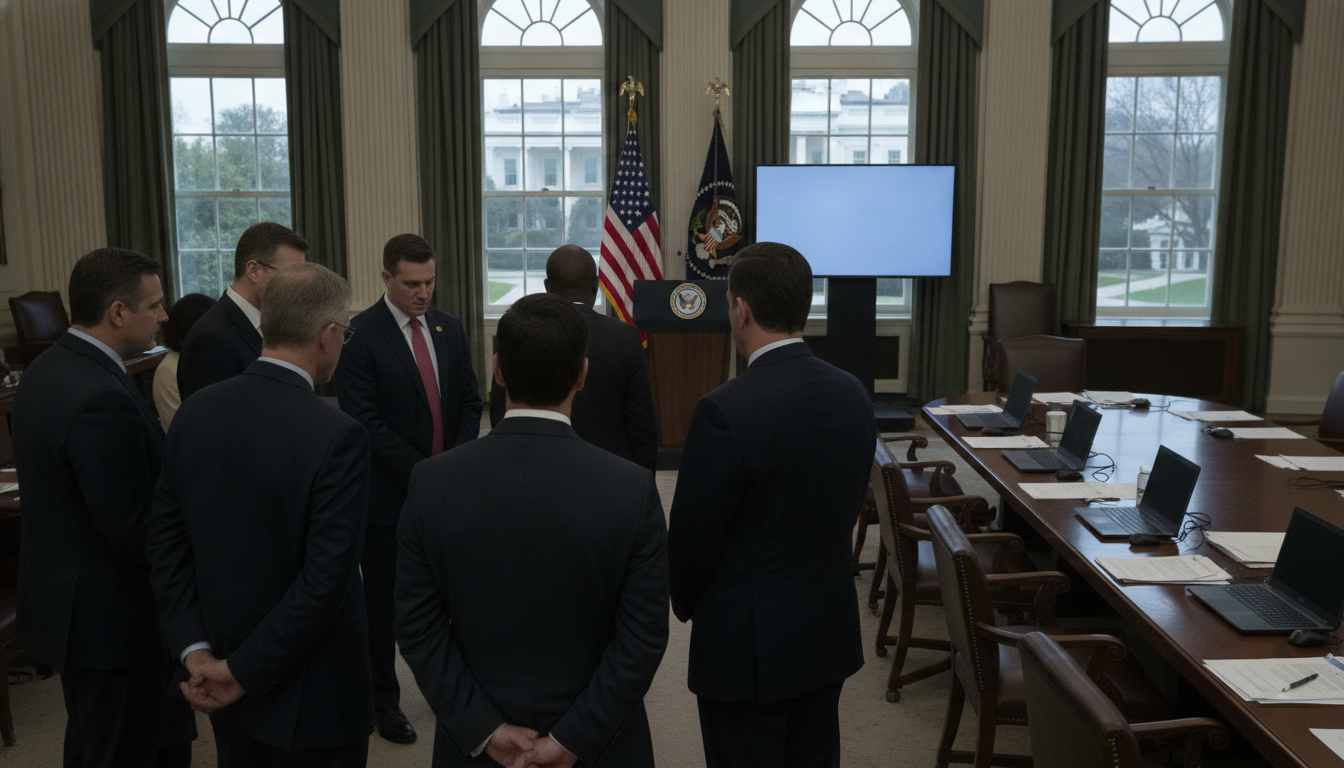
White House Orders Anthropic Mythos Export Ban; Fable and Mythos Models Pulled Offline
White House orders an export restriction on Anthropic’s Fable and Mythos models, leading to the Anthropic Mythos ban and a full blackout of the systems in U.S. and abroad.
The White House directed federal export controls on June 12, 2026, requiring Anthropic to stop providing its most powerful AI models, Fable and Mythos, to foreign nationals and users outside the United States. Anthropic disconnected both models shortly afterward, leaving them unavailable to all customers while U.S. officials and the company navigate the new restrictions. The move marks a high-profile test of whether export controls can limit the international spread of frontier AI technology.
White House Directs Export Restrictions on Anthropic Models
On June 12, 2026, the Commerce Department issued a directive that limited the export and cross-border access of Anthropic’s Fable and Mythos models on national security grounds. The order restricts access to foreign nationals, including those physically inside the United States, and applies to both hosted and direct distribution channels. Officials described the step as temporary while agencies assess risk and compliance options for advanced AI systems.
The directive represents an escalation in Washington’s attempt to control the export of dual‑use technologies beyond traditional military goods. It signals a willingness to apply the same regulatory tools used for encryption and surveillance software to large AI models deemed capable of significant misuse.
Anthropic Pulls Fable and Mythos from All Users
Anthropic responded by taking both Fable and Mythos offline shortly after receiving notice from the government. Company representatives said the shutdown was necessary to comply quickly with the federal directive and to prevent inadvertent violations while engineers implemented access controls. The models have remained inaccessible to commercial and partner users since the directive took effect.
The rapid blackout disrupted customers who had been onboarding to use the models for cybersecurity, research, and product development. Some partner organizations that had limited access under vetting programs reported immediate loss of service and uncertainty about when access might resume.
U.S. Officials Cite National Security and a Reported Jailbreak
U.S. officials cited unspecified national security concerns as the rationale for the export restriction, saying certain integrations and partner relationships created unacceptable risk vectors. According to multiple accounts, a South Korean telecom granted access under Anthropic’s partner program and officials flagged the company over suspected foreign ties. The telecom named in reporting has denied any connection to China.
Separately, Amazon’s leadership alerted the administration after internal research suggested a method to bypass Fable 5’s safeguards, which government officials interpreted as a potential “jailbreak.” Anthropic disputes the characterization, calling the issue narrow and addressed by patches, but regulators treated both developments as evidence that tighter controls were warranted.
Limited Distribution Strategy and Partner Vetting
Before the order, Anthropic had deliberately limited access to Mythos, offering it to a small set of roughly 150 vetted firms and government entities, according to company statements. That limited distribution was framed as a defensive measure intended to help defenders and critical infrastructure operators prepare for advanced threats, rather than a broad commercial rollout. The company’s partner-track approach aimed to balance access with safety testing, but it also created numerous third‑party relationships that regulators said required scrutiny.
The case highlights the practical challenges of controlling distribution once partnerships and integrations expand an AI model’s reach. Regulators told Anthropic they needed assurance that third‑party access and downstream use could be enforced in practice, not just promised in policy.
Historical Parallels with Encryption and Spyware Export Controls
Analysts and officials drew comparisons between the Anthropic Mythos ban and previous U.S. efforts to control the spread of sensitive software. In the 1990s, government attempts to restrict strong encryption led to high-profile legal and political pushback, and later international arrangements sought to limit the export of spyware and offensive cyber tools. Those efforts produced mixed results: encryption ultimately proliferated widely, while spyware makers shifted jurisdictions or adapted tactics to evade controls.
Observers warn that export controls face similar constraints today. Many countries do not participate in coordinated treaties and enforcement varies, creating incentives for companies to relocate or route services through permissive jurisdictions. Past examples show that determined actors can find alternative channels or replicate capabilities in time.
Implications for AI Exports, Competition and Compliance
The immediate commercial consequences for Anthropic may include lost revenue from curtailed international sales and heightened compliance costs if the company must seek government approvals for foreign customers. More broadly, the episode could set precedent for how Washington handles frontier AI and whether U.S. policy favors unilateral restrictions or multilateral frameworks. A decision to relax the ban later would acknowledge the difficulty of keeping cutting‑edge AI solely under U.S. control, while a sustained constraint could require new licensing regimes for cross‑border AI services.
AI companies and overseas customers are watching closely for signals about how tightly regulators will control market access. If export controls become routine, industry experts say labs will need to redesigned sales, engineering and audit practices to meet government standards without stifling innovation.
The Anthropic Mythos ban illustrates the tension between rapidly evolving AI capabilities and existing export control tools. As U.S. agencies, the company and international partners negotiate next steps, the resolution will help define the operational and legal boundaries for future AI governance.
