
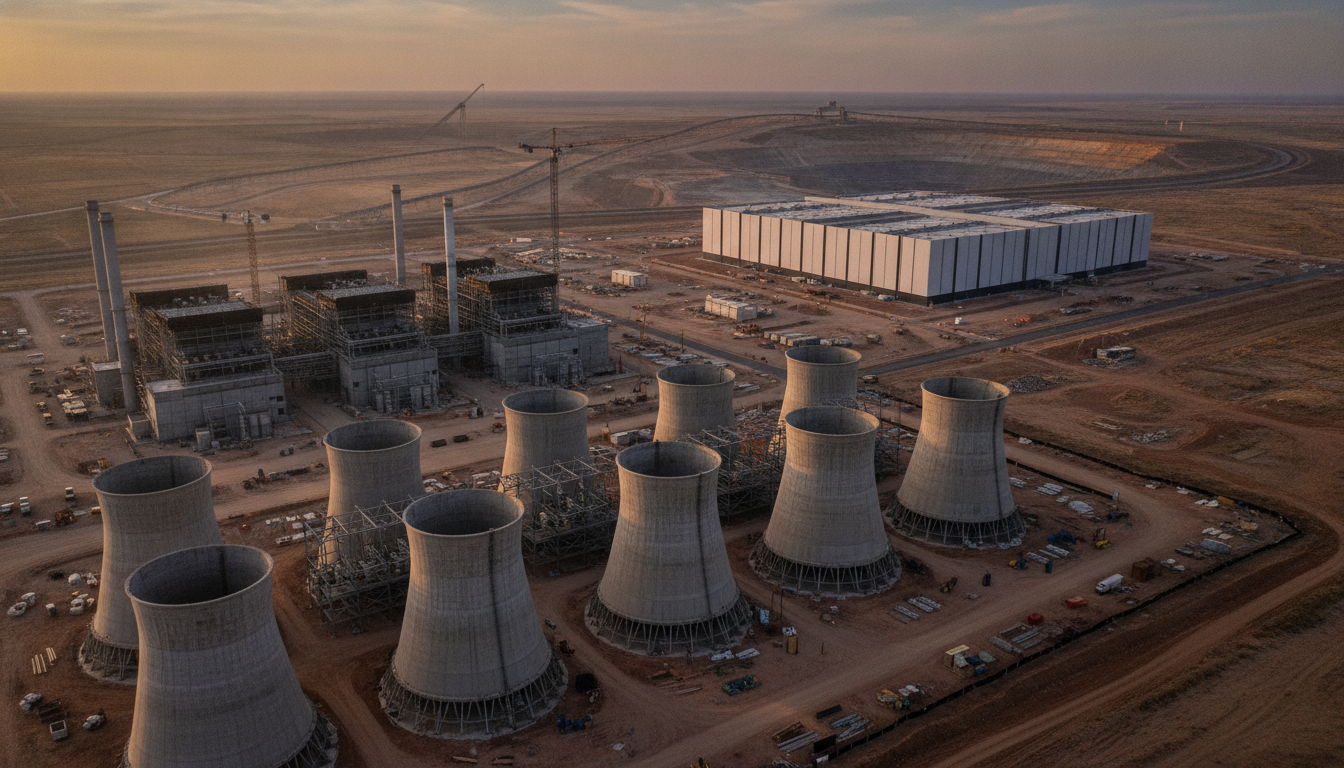
Amazon Pecos County power plant could become largest U.S. climate polluter
Amazon’s planned Pecos County power plant could emit 33 million tons of CO2 a year, potentially the largest U.S. single-source polluter, sparking scrutiny
Amazon’s planned Pecos County power plant, proposed to supply on-site power for a new Texas data center, would be permitted to emit roughly 33 million tons of carbon dioxide annually, a scale that could make it the largest single-source industrial emitter in the United States. The disclosure has intensified scrutiny of the company’s energy strategy and reignited debate over how tech infrastructure and artificial intelligence workloads are reshaping the country’s emissions profile. Amazon has said the facility will include on-site generation designed not to raise electricity costs for Texas families, even as environmental advocates and policymakers push for alternatives.
Planned emissions dwarf existing U.S. plants
A permit associated with the project sets the plant’s potential annual carbon dioxide output at about 33 million tons, a figure that exceeds the operating emissions of any currently known U.S. power plant. That level of permitted pollution would place the installation above traditional large fossil-fuel stations and mark a significant new point source of greenhouse gases. Experts warn that permitting at that scale for an on-site, company-controlled generator redefines how industrial emissions are counted and regulated.
Amazon’s public response and climate commitments
Amazon confirmed the use of new on-site generation and emphasized that the company’s climate commitments remain intact, noting that the energy plan is intended not to increase local electricity bills. The company also pointed to its long-term pledge to reach net-zero emissions and framed the project as consistent with evolving operational realities. Still, the timing has provoked questions because the company reported a rise in its overall carbon output last year, a trend observers say is at odds with an accelerated corporate climate agenda.
AI growth driving demand for power-hungry data centers
Industry analysts link the surge in demand for data center capacity to rapid adoption of artificial intelligence and large-scale computational services, which require continuous, high-power electricity. Several major technology firms have signaled plans for expanded data center footprints, and some have pursued dedicated natural gas generation to secure reliable, dispatchable power. That dynamic has prompted a reassessment of how to meet compute needs while minimizing reliance on carbon-intensive fuel sources.
Local and political opposition intensifies
Data centers and associated generation projects are increasingly drawing resistance from state and local officials, community groups, and consumer advocates concerned about electricity costs, air quality, and long-term climate impacts. In multiple jurisdictions, proposed projects have stalled or faced heightened regulatory review as elected leaders weigh economic benefits against environmental and social costs. The Pecos County proposal has entered this contentious landscape, with advocates calling for more transparent environmental assessments and stronger mitigation commitments.
Regulatory and environmental implications ahead
Permitting of a single plant at this emission level raises novel regulatory questions about how on-site generation is categorized and monitored under federal and state frameworks. Regulators will be asked to reconcile company-level energy planning with existing air-quality statutes and greenhouse gas reporting regimes. Environmental scientists caution that concentrated, high-volume emissions can complicate regional decarbonization pathways and undermine broader efforts to meet national and international climate targets.
Industry options and potential alternatives
Energy experts suggest a range of alternatives that companies typically consider to reduce carbon intensity, including contracts for additional renewable generation, investment in energy storage, and demand-side efficiency measures to lower the need for continuous fossil-fuel backup. Some firms have also explored hybrid approaches that pair intermittent renewables with cleaner firming technologies or long-duration storage to avoid new large-scale gas capacity. The choice made by a high-profile operator like Amazon could influence sector practices and investor expectations going forward.
The coming weeks are likely to feature more scrutiny from regulators, environmental groups, and policymakers as stakeholders request clarity on projected operations, monitoring plans, and mitigation measures. Legal challenges or administrative reviews could slow permitting or force revisions, while the company’s public statements will be weighed against operational details that become available. Whatever the outcome, the project has already underscored the tensions between rapid digital expansion, corporate climate pledges, and the policy tools available to manage emissions at scale.
