
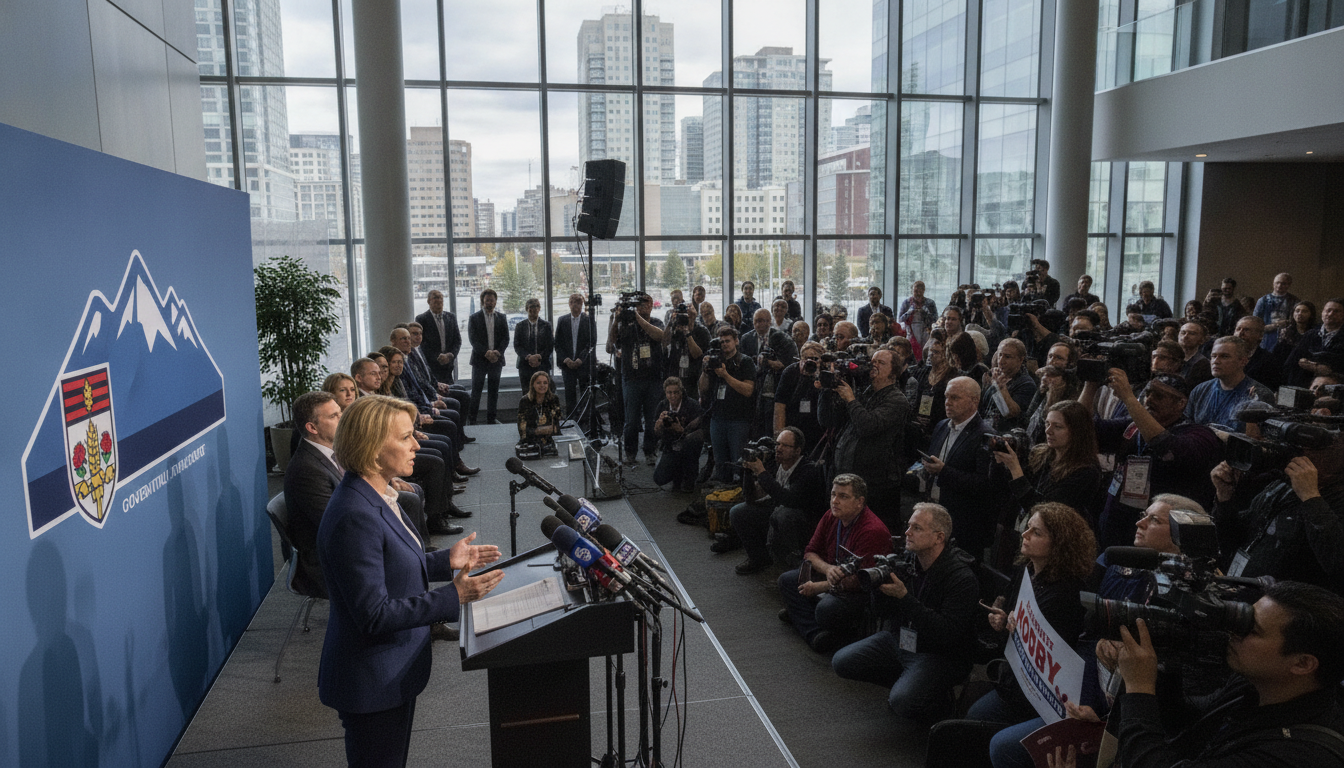
Alberta immigration referendum on Oct. 19 could reshape access to public services
Alberta immigration referendum asks voters whether the UCP should get a mandate to change who can access publicly funded services, including health care and education.
The province will hold a referendum on Oct. 19 that poses 10 questions to voters, five of which focus on immigration policy and public-service eligibility.
Premier Danielle Smith’s United Conservative Party says a majority “Yes” would provide the political mandate to pursue changes that could alter who is eligible for publicly funded education and health-care services.
Referendum Questions and schedule
The provincial ballot will include 10 separate referendum questions, with half addressing immigration-related eligibility for government-funded programs.
Officials say the Oct. 19 date will be used to collect a clear expression of voter intent on those issues, and advance and mail-in voting are expected to be available under provincial election rules.
Elections Alberta will oversee the ballot and the counting process, with official results announced after votes are tallied.
The referendum’s timeline sets the stage for follow-up action by the government if a majority of voters approve measures tied to the immigration questions.
What a majority vote would mean for the government
A majority “Yes” on the immigration questions would, according to the UCP, give the government the mandate it seeks to propose or pursue policy changes.
That mandate would be political rather than an automatic legal change — the government would still require legislative steps, regulatory amendments, or new programs to implement specific measures.
Proponents contend the mandate would allow the government to prioritize services for permanent residents and citizens, and to design residency or eligibility criteria for certain publicly funded systems.
Core themes in the immigration questions
The five immigration-focused questions ask voters about eligibility for publicly funded services and whether access should differ by residency status.
While the exact phrasing on the ballot frames each question separately, the common thread is whether the province should prioritize Albertans and Canadian citizens when allocating public benefits.
Advocates for the questions say they are intended to ensure long-term sustainability of services, while critics argue the measures could exclude vulnerable residents and complicate service delivery.
Reactions from parties, advocacy groups and institutions
The UCP has framed the referendum as a democratic way to settle public concern about service strain and fiscal priorities.
Opposition parties and a range of community and labour groups have raised alarm about potential outcomes, warning that restrictions could harm children, recent newcomers and people who rely on provincial programs.
Health authorities, school boards and service providers have expressed concerns about operational disruption and the administrative burden of enforcing new eligibility rules if the government moves to implement them.
Potential effects on schools, hospitals and public programs
Changes to eligibility rules could require new verification systems at schools and health facilities, increasing administrative costs and potentially slowing access to care.
Experts warn that measures focusing on residency status risk creating gaps in service for children and families, and could have downstream effects on public health and educational attainment.
Economic analysts note that excluding certain residents from services could also produce broader social and labour-market consequences that the province would need to manage.
What voters should know before casting ballots
Voters will be asked to consider each of the 10 questions independently, and turnout will play a significant role in the political weight of the results.
Information campaigns from both proponents and opponents are expected to intensify in the weeks ahead, offering voters competing interpretations of the likely effects of a “Yes” or “No” outcome.
After results are released, the government will be positioned to outline concrete next steps; those could include drafting legislation, seeking federal input where jurisdictional issues arise, or pursuing administrative orders.
Public awareness of the specific wording of each immigration question will be central to informed voting, and Elections Alberta materials should provide authoritative guidance on ballot text and voting procedures.
The Oct. 19 vote places the question of who should access publicly funded education and health-care services at the centre of Alberta’s political debate, and the outcome will shape the province’s policy agenda and public discussions in the months that follow.
