
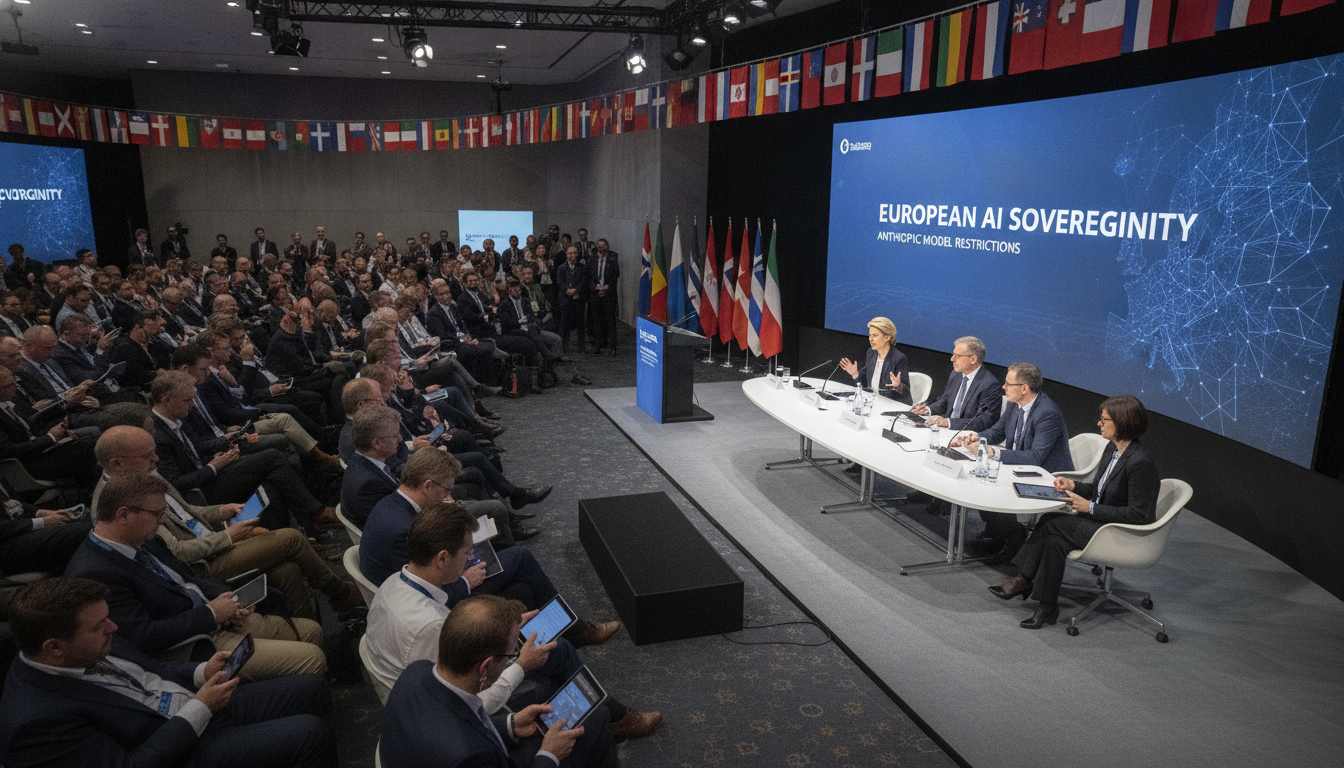
Europe Confronts AI Sovereignty at TechBBQ as Control of Models and Data Takes Center Stage
European startups and policymakers pressed for stronger AI sovereignty at TechBBQ, debating who should control models, data, and infrastructure.
Tech leaders, investors and policymakers at Copenhagen’s TechBBQ converged this week around the question of AI sovereignty as disruptions to access and growing privacy concerns highlighted Europe’s dependency on non‑European AI infrastructure. The debate about AI sovereignty dominated panels, private meetings and late‑night conversations, forcing founders and funders to weigh risks tied to renting intelligence from a handful of global providers rather than owning the systems that power it.
Sovereignty Concerns Polarize Attendees
Conversations at TechBBQ returned repeatedly to whether Europe can and should assert greater control over the AI stack. The topic was driven home by recent incidents in which major models became inaccessible to European users, raising alarm about reliance on providers based outside the region.
Attendees described a split: some founders saw the disruptions as a tolerable operational risk they could hedge around, while others argued the outages revealed a strategic vulnerability that could undermine European competitiveness and regulatory autonomy.
Technical Dependence and the Mythos Disruption
A widely cited disruption this year that removed certain models from European access crystallized technical dependence into an immediate business risk. Engineers at startups reported product slowdowns and integration headaches when external models were throttled or withdrawn without local alternatives.
That episode prompted deeper questions about the locus of model ownership, the resilience of supply chains, and whether European infrastructure and venture investment can scale quickly enough to host the next generation of large‑scale models.
Privacy, Agents, and Operating Systems Debate
Privacy advocates at the conference warned that widespread embedding of AI assistants into consumer platforms can create systems that prioritize data accumulation over user control. A prominent messaging‑privacy leader warned that integrating agents into core operating systems risks establishing a persistent data collection apparatus.
Panelists argued for design choices that preserve user agency, including limiting telemetry, strengthening on‑device processing, and creating clearer consent mechanisms for agentic services. The consensus was that privacy and agent functionality need not be mutually exclusive, but engineering and business incentives must align.
Industry Voices Call for New Infrastructure and Governance
Executives and researchers urged coordinated action on infrastructure investments, arguing that Europe needs sovereign compute, storage and model development capacity to reduce reliance on foreign cloud and model providers. Several speakers recommended public‑private partnerships and targeted funds to accelerate domestic model training and hosting.
Legal and governance experts at the event emphasized parallel work on standards and procurement rules that would encourage public institutions and large enterprises to prioritize European‑based providers when possible.
Economic and Social Stakes of Agentic Workforces
Speakers probed deeper implications of agentic automation for employment, democracy and economic participation. One panelist warned that control over AI could translate into disproportionate influence over national economies if a small group of providers dominates both the technology and its deployment.
Others framed the challenge as an opportunity: building European alternatives could foster new industries, create skilled jobs, and embed social safeguards directly into deployed systems.
Cross‑Regional Collaboration and Funding Conversations
Beyond technical debates, the conference showcased efforts to link Nordic and African startup ecosystems and to channel more growth capital into European technology companies. Investors discussed strategies to sink capital into compute, startups focused on privacy‑first agents, and companies building tools to help enterprises migrate workloads to regional clouds.
Founders underscored that funding must be paired with regulatory clarity and market signals that reward investments in sovereignty rather than short‑term cost savings tied to dominant global providers.
Informal networking and social events, from rooftop barbecues to island dinners, underscored how relationship building fuels the ecosystem’s ability to mobilize around strategic priorities. Attendees noted that face‑to‑face discussions often produced the most concrete commitments to pilot projects and cross‑border partnerships.
Europe’s conversation about AI sovereignty at TechBBQ was both practical and existential, centering on immediate operational risks and on who will shape the social and political contours of an AI‑augmented future.
The push for greater control over models, data, and infrastructure reflects a broader desire to ensure that technological power does not outpace democratic accountability. As companies and governments consider where to place bets, the choices made now about investment, procurement and design will help determine whether Europe can secure meaningful AI sovereignty that preserves privacy, competition and civic agency.
