
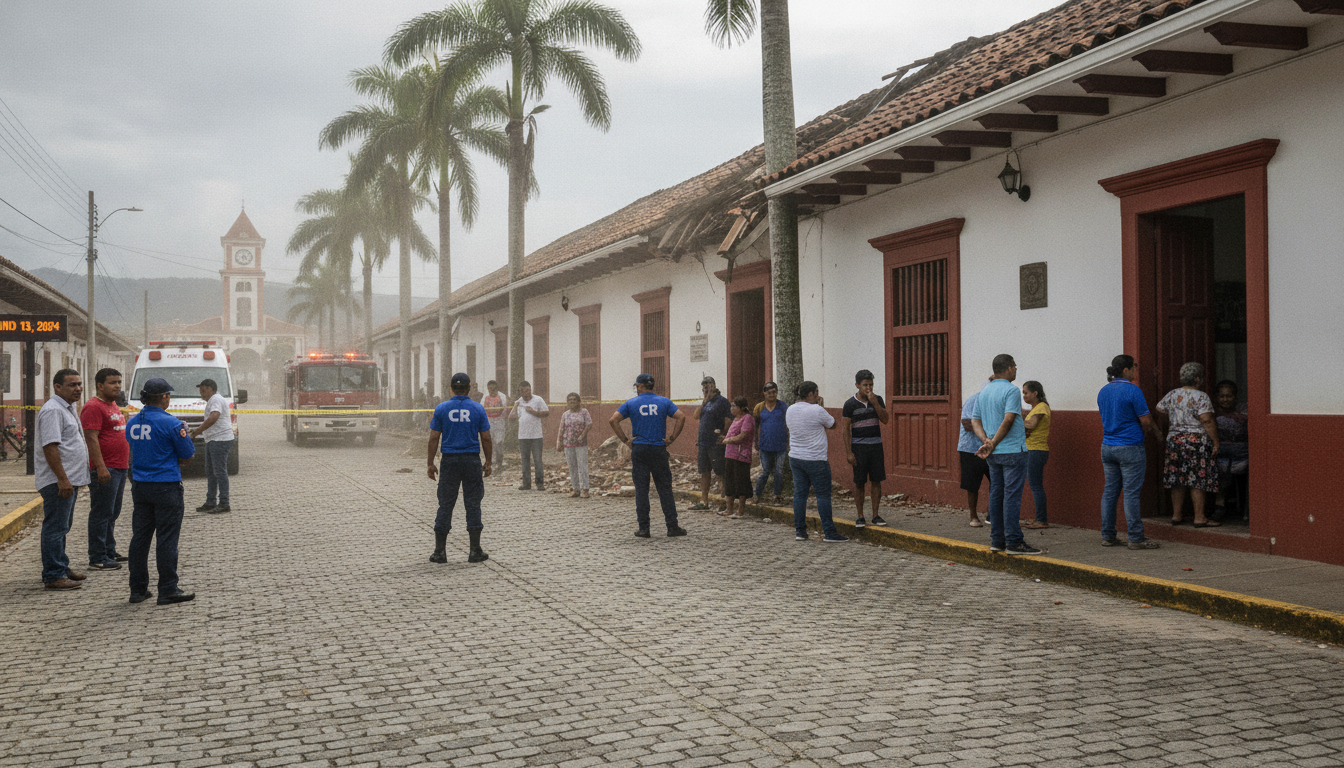
Costa Rica earthquake: 5.3‑magnitude temblor strikes near Orotina, authorities report no major damage
5.3-magnitude Costa Rica earthquake struck near Orotina on July 7, 2026 at 12:11 p.m. local time. Officials report no major damage as assessments continue.
A 5.3-magnitude Costa Rica earthquake rattled communities near Orotina on July 7, 2026, producing noticeable but limited shaking and prompting checks by local emergency agencies. The quake was recorded at 12:11 p.m. local time (18:11 UTC) and was initially reported as magnitude 5.3 by seismic monitoring networks. (earthquaketracker.org)
Epicenter and timeline
Seismological data place the epicenter roughly 10 kilometres west‑southwest of Orotina, in the Alajuela province, with the event logged on July 7 at 18:11 UTC. That location is about six miles from the town commonly used in local reports and situates the shock inland from Costa Rica’s central Pacific slope. (earthquaketracker.org)
Depth and seismic measurements
Preliminary instrument measurements indicate the quake originated at an intermediate shallow depth of approximately 48 kilometres beneath the surface, a depth consistent with crustal activity in the region. Seismologists stress that initial magnitudes and depth estimates are subject to revision after analysis of additional station data. (earthquaketracker.org)
Shake map and felt reports
Shake‑intensity maps produced from the event show weak to moderate shaking across nearby towns, with a small number of Did You Feel It? reports submitted by residents. Official trackers listed several dozen felt reports in the broader area, indicating the quake was perceptible but not widespreadly destructive. (earthquaketracker.org)
Tectonic setting and regional risk
Costa Rica sits where the Cocos Plate is driven beneath the Caribbean Plate, a tectonic environment that routinely produces earthquakes along the Pacific margin and inland fault systems. This subduction and related crustal strain explain why moderate temblors such as this one occur with relative frequency across the country. (pubs.usgs.gov)
Local response and initial assessments
Local emergency authorities and the national civil protection agency monitored the situation after the shock and began rapid assessments of vulnerable infrastructure. Early public updates indicated no immediate reports of major structural damage or casualties, though municipal officials said they would provide more detailed information as field checks conclude. (telediario.cr)
Advice for residents and visitors
Officials and preparedness organisations continue to urge people in affected areas to follow standard safety steps: drop, cover and hold on during shaking, check for gas leaks or electrical hazards after the event, and avoid coastal areas until authorities confirm there is no tsunami risk. Travelers visiting Costa Rica should keep emergency plans and contact lists accessible while local agencies finish their inspections. (sinamot.una.ac.cr)
The event remains under review by seismologists, and final parameters may be updated as more station data are processed and aftershock sequences are logged. Authorities have emphasized that routine monitoring and public alerts will continue while assessments are completed.
