
River safety advisory urges life jackets, arm’s‑reach supervision and correct craft selection
New river safety guidance urges properly fitted life jackets for every user, arm’s‑reach supervision of children, correct watercraft choice and safety kits.
Canada’s summer river advisory emphasizes river safety for families and recreational users as temperatures rise and more people head to inland waterways. The guidance highlights that young children should be actively supervised and remain within arm’s reach, and that every person on the water should wear a properly fitting life jacket. Officials also stress selecting watercraft suited to the river’s conditions, carrying a boat safety kit, avoiding tying craft together and using ankle leashes only where appropriate.
Supervision standard for young children
Young children on rivers must be actively supervised at all times, according to the guidance. Supervisors are advised to remain within arm’s reach so they can respond immediately if a child slips or is swept from a bank or craft. The protocol is intended to reduce response time and prevent drownings in moving water.
Parents and guardians should designate a single, focused adult to watch children when multiple groups are present. Distractions such as phones or alcohol can delay intervention and increase risk around currents and drop offs. Consistent supervision pairs with other precautions like life jackets to form a layered safety approach.
Life jacket requirement for every user
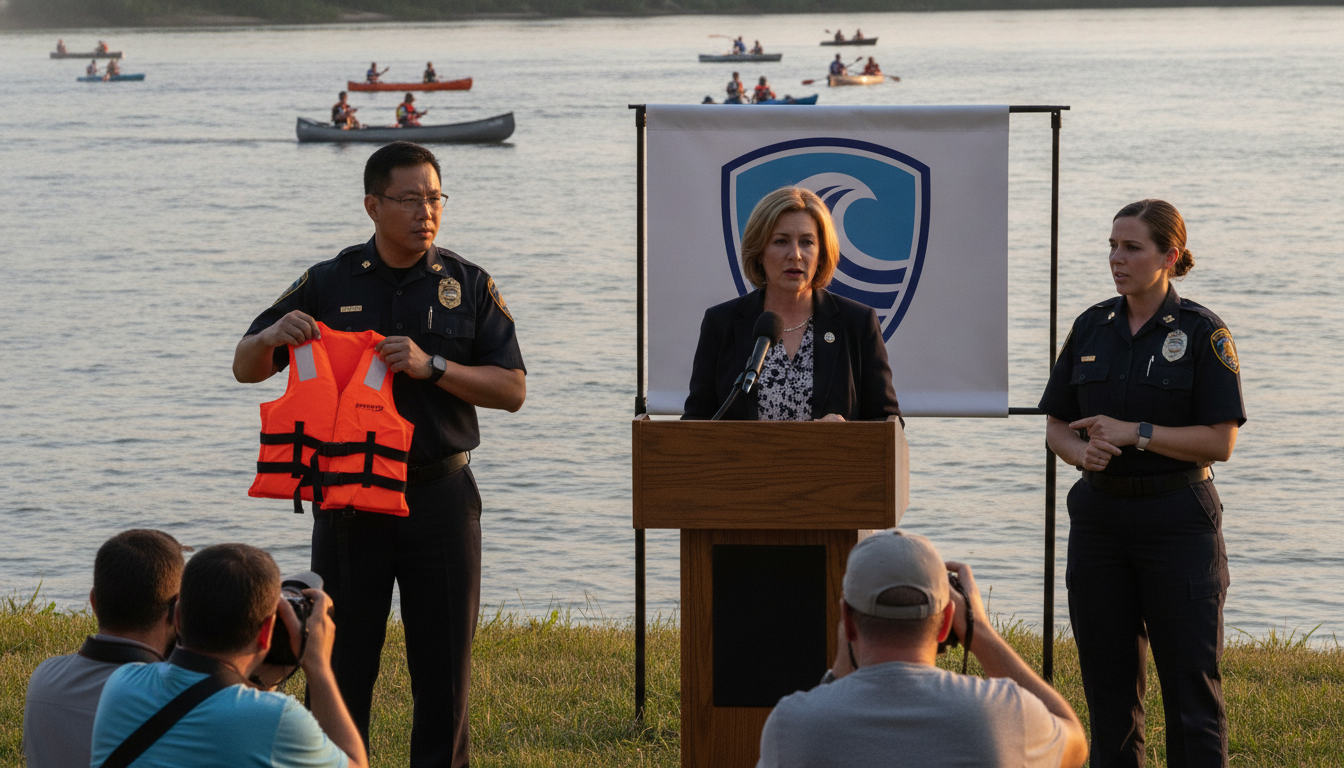
The advisory states that all users must wear their own properly fitting life jacket whenever they are on or near the river. Fit, condition and suitability for the activity are emphasized, with a focus on personal flotation devices designed for moving water. Inflatable devices may not be appropriate for all river conditions and for non‑swimmers.
Children, in particular, should have life jackets sized to their weight and chest measurements, and adults should check straps and clips each time a jacket is put on. Proper fit and maintenance are described as inexpensive measures with high safety returns, especially in swift currents or cold water.
Selecting the right watercraft for the waterway
Choosing the correct craft is presented as a key element of river safety. Canoes, kayaks and stand up paddleboards each perform differently in currents, rapids and narrow channels, and users should match craft to conditions and skill level. The advisory warns against taking ocean or lake boats into confined or fast river sections where maneuvering demands differ.
Recreational users are encouraged to inspect routes ahead of time, to consider flow rates and obstacles, and to seek local knowledge from rental operators or experienced paddlers. When in doubt, opt for a more stable craft or postpone the trip until conditions are safer.
Boat safety kits and simple preparation
Every vessel should carry a basic boat safety kit adapted for river travel, the guidance recommends. Typical items include a whistle or sound signalling device, a throw rope, a waterproof first aid kit and a means of communication such as a fully charged mobile phone in a waterproof case. A basic kit can shorten rescue time and stabilize an injured person until help arrives.
Preparation also extends to clothing choices and contingency planning, including informing a responsible person on land about route and expected return time. Cold water shock can incapacitate even experienced swimmers, so planning and simple gear reduce the consequences of unexpected immersion.
Avoid tying craft together and use ankle leashes cautiously
The advisory cautions against tying multiple watercraft together for group float trips, describing the practice as dangerous in moving water. Tethered craft can trap occupants against obstacles, reduce maneuverability and amplify the effects of currents on the group. Users are urged to keep craft independent and to maintain spacing that allows quick separation when needed.
Ankle leashes, commonly used by paddleboarders, are recommended only where conditions make them pragmatic and when users understand the risks. In flowing rivers a leash can hold a person to a craft that is being pulled by current, so the guidance advises careful judgment and quick release options.
Local rentals and operator responsibility
Rental operators and guides are identified as key partners in promoting river safety, with responsibilities to provide properly fitting life jackets and to advise customers on craft selection. Staff should brief clients on river hazards, demonstrate emergency procedures and supply appropriate safety kits for the trip. Inspecting gear between rentals and offering condition briefings can prevent mismatches between equipment and environment.
Recreation providers are also encouraged to recommend skill‑appropriate routes and to refuse to outfit groups when weather or flows create unsafe conditions. Clear communication and a conservative approach help keep both beginners and experienced paddlers safer on busy summer waterways.
The guidance underscores that river safety is a shared responsibility, combining supervision, equipment, training and common sense to reduce risk. Families and recreational users are urged to plan carefully, wear properly fitted life jackets and choose craft that match the river conditions before launching.
