
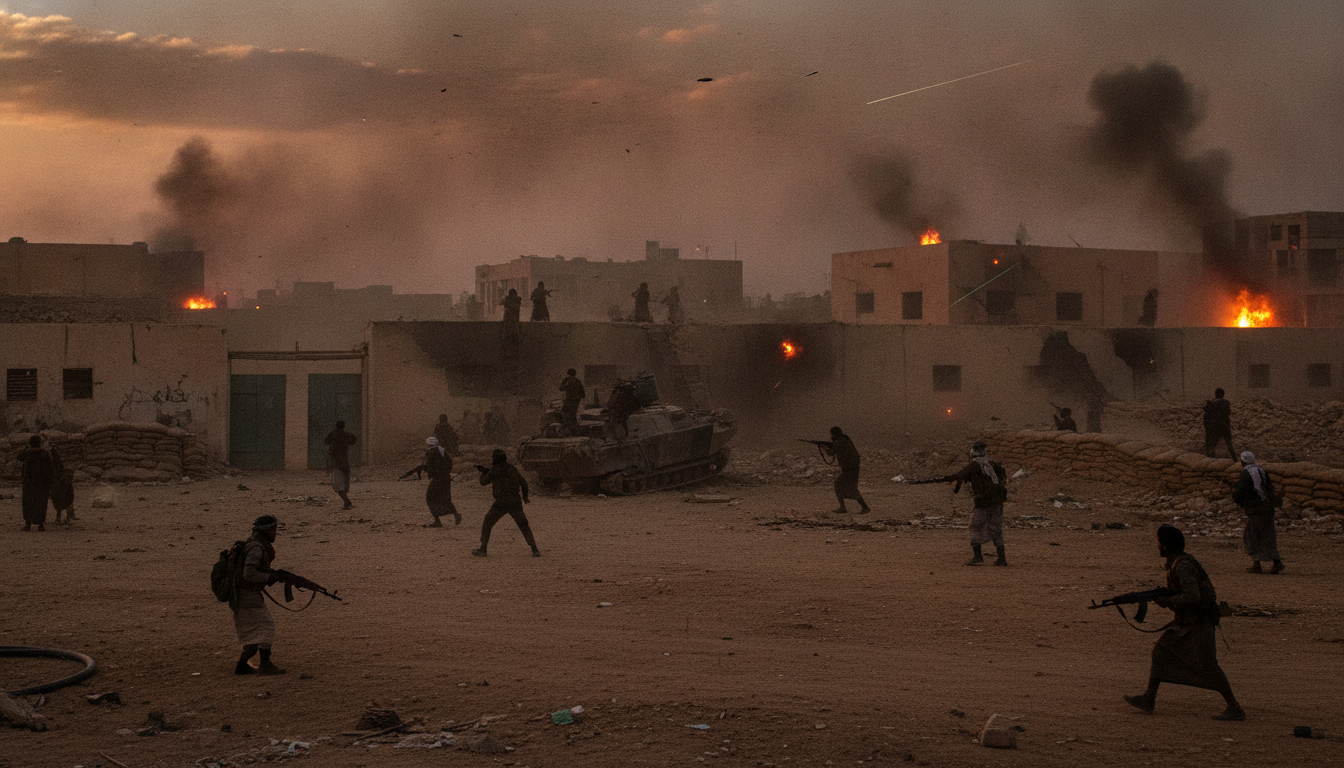
Hodeidah offensive escalates as Houthis strike army barracks in southern city
Houthis launched a surprise Hodeidah offensive on army barracks in southern Hodeidah, intensifying fighting along Yemen’s strategic Red Sea coast at sea.
The Hodeidah offensive began on July 5, 2026, when Yemeni government officials said Houthi fighters launched a sudden attack on army barracks in the southern district of Hodeidah. The assault is part of a widening bout of clashes across western Yemen as both sides seek to seize territory along the Red Sea coast and consolidate control over key positions.
Houthis launch surprise offensive on southern Hodeidah barracks
Yemeni government sources described the operation as an attempted rapid seizure of military facilities that would give the Houthis a stronger foothold in the city’s southern approaches. Government statements said the barracks were targeted in pre-dawn strikes and ground assaults, catching some units unprepared and triggering immediate counter-operations.
Local residents reported heavy gunfire and explosions as fighting erupted, while first responders moved cautiously amid ongoing clashes. Confirming details remained limited, with both sides issuing conflicting claims over the scope and success of the initial strikes.
Clashes spread across western Yemen’s Red Sea corridor
After the attack on the barracks, Yemen’s western coastal areas saw renewed exchanges of fire as both forces maneuvered to control roads and towns linking Hodeidah to neighbouring provinces. Military officials from each side described offensive and counter-offensive movements, signaling an expansion of the frontline beyond isolated skirmishes.
Analysts warned that sustained battles along the Red Sea corridor could disrupt supply lines and military logistics for both the internationally recognised government and Houthi forces. The pattern of rapid offensives followed by localized counter-attacks has driven volatile frontlines in recent months.
Strategic importance of Hodeidah and the Red Sea coast
Hodeidah’s location on the Red Sea makes it strategically valuable for whoever controls supply routes and coastal access, a reality that underpins the latest Hodeidah offensive. Control of ports and coastal highways can influence the movement of goods, military supplies and humanitarian aid across the region.
Both parties have repeatedly cited the strategic nature of the coast in public statements, framing their operations as necessary to secure access and deny the opponent a decisive logistical advantage. Observers say the competition for coastal control raises the stakes for regional trade and maritime safety.
Military claims, movements and territorial aims
Each side has put forth its own narrative about the objectives and outcomes of the recent assault, with government officials framing it as an unprovoked Houthi escalation. Houthi spokespeople, where reachable, have described their actions as part of broader military operations to reclaim positions they regard as hostile or illegitimate.
Independent verification remains difficult because reporters and monitors face access and security constraints in active combat zones. Satellite imagery and third-party military assessments, when available, will be needed to corroborate claims about territorial gains and the disposition of forces.
Humanitarian consequences and civilian impact
Civilians in southern Hodeidah and nearby towns have already borne the immediate consequences of renewed fighting, with residents fleeing residential areas and seeking shelter away from frontlines. Humanitarian groups warned that escalations along the Red Sea coast complicate delivery of food, medical supplies and other essential aid to communities still recovering from earlier rounds of conflict.
Hospitals and clinics in the area reported surges in patients with injuries related to the clashes, and aid agencies called for secure corridors to reach people in need. The potential for maritime disruption also raises concerns about longer-term shortages of goods that arrive through Red Sea shipping lanes.
Regional responses and international concerns
Regional capitals and international organisations monitoring Yemen urged restraint and called for measures to prevent further escalation along the coast. Diplomatic actors stressed the importance of protecting civilian infrastructure and maintaining access for humanitarian operations amid rising tensions.
The recent Hodeidah offensive further complicates international efforts to stabilise Yemen, where periodic flare-ups have repeatedly undermined ceasefire agreements and stalled political talks. Observers urged renewed dialogue even as military activity increased on the ground.
Fighting in and around Hodeidah on July 5, 2026, underscores the fragility of security along Yemen’s Red Sea coast and the risks posed to civilians, commerce and humanitarian assistance as both sides press to control strategic terrain.
