
Ukraine drone strikes on Crimea intensify, hitting air defenses, bridges and energy sites
Ukraine drone strikes on Crimea intensify, hitting air defenses, bridges and energy sites and straining Russian logistics and forces on the southern front.
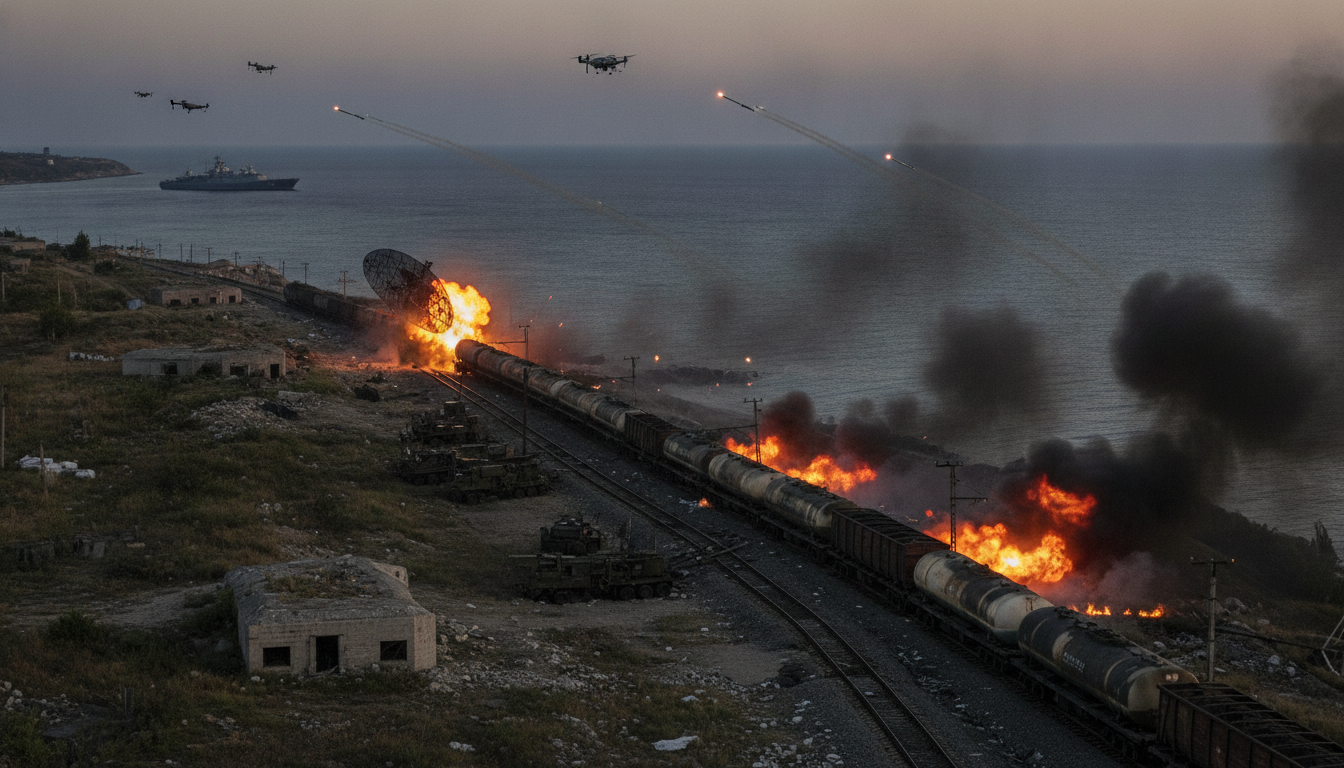
Crimea has come under a sustained campaign of Ukraine drone strikes on Crimea that has reshaped the peninsula’s tactical environment and forced Russian forces into a more defensive posture. Ukrainian units have focused attacks on air-defense nodes, transport links and fuel and power facilities, saying the strikes are meant to degrade Russia’s ability to project power from the peninsula. Officials and analysts describe the campaign as a deliberate effort to turn Crimea from a fortified bastion into an operational vulnerability for the Kremlin.
Crimea under persistent drone campaign
The Ukrainian campaign began by exploiting Crimea’s geography and maritime approaches, using swarming unmanned systems to reach targets previously sheltered by layered defenses. Military footage released by Ukrainian units and open-source imagery show repeated strikes across military bases, logistics hubs and coastal facilities throughout June.
Ukrainian commanders say the tempo of operations has accelerated as new systems and tactics have been fielded, allowing drones to penetrate farther and strike with greater effect. Analysts note that this shift has created sustained pressure on Russian units stationed on the peninsula and along the southern front.
Targeting Russian air defenses
Ukrainian forces have prioritized Russia’s air-defense network, claiming dozens of radar and missile sites as targets in recent weeks. Kyiv reported targeting some 31 air-defense systems and radars during a single month, and released footage that it says shows strikes on high-value assets, including a long-range Neva-B radar system in late June.
Retired U.S. Army Lt. Gen. Ben Hodges described the new capability as allowing Ukraine to “touch every single place” where air-defense or logistics infrastructure is located, an assessment echoed by Ukrainian analysts who say drone swarms are exploiting legacy systems built for traditional aircraft and missiles. Independent verification of some claimed hits is limited, though satellite imagery and multiple on-the-ground videos have correlated with a number of the reported strikes.
Attacks on bridges and supply routes
With air defenses disrupted, Ukrainian forces then shifted to severing supply lines into and out of Crimea. Drones have struck ferries, cargo vessels, fuel transports and the narrow land corridors that connect the peninsula to Russian-held territory, complicating resupply efforts.
One prominent target was the Chonhar Bridge linking Crimea to Ukraine’s Kherson region, which Ukrainian forces struck in early June. Russia erected a temporary pontoon bridge that was later attacked again, and satellite images reviewed by commercial imagery firms show construction of a longer causeway in response — an effort Moscow hopes will be less vulnerable to aerial attack.
Strikes on energy and fuel infrastructure
Ukraine drone strikes on Crimea have also targeted the peninsula’s energy and fuel nodes, producing blackouts and acute fuel shortages that local authorities have described as a state-of-emergency-level strain. Verified attacks in June included oil terminals and storage facilities, compression stations and power plants, according to imagery and videos released by Ukrainian units.
Analysts warn that repeated damage to power substations and fuel depots creates a compounding logistical problem for occupying forces, hampering repairs and resupply. Hennadii Riabtsev, an energy analyst, said the damage is exposing “systemic vulnerability” in Crimea’s grid and fuel network and risks turning the peninsula into a significant logistical trap.
Russian force posture and repair efforts
Moscow has spent years fortifying Crimea: increased troop levels, additional air defenses, coastal batteries, and expanded naval assets have all aimed to make the peninsula a secure military platform. The Kerch Strait Bridge and new vessels bolstered Russia’s access and presence in the Black Sea region.
Yet the recent wave of drone attacks has forced Russian units to divert resources to defensive repairs and convoy protection, with some units shifting into a more cautious posture along the southern front. Russian repair crews have repeatedly patched bridges and utilities while opening temporary routes, a pattern that Ukrainian commanders have described as a predictable, repair-and-strike dynamic.
Military analysts and tactical evolution
Ukrainian unmanned brigades and regiments have published strike footage showing first-person drone views and impact sites, demonstrating both tactical innovation and an evolving strike catalogue. Officers such as Artem Bielienkov of the 412th Unmanned Systems Brigade say Kyiv will continue to adapt tactics and expand the depth of strikes as necessary.
Other analysts caution that degrading Russian combat power to the point of forcing a strategic withdrawal will take sustained pressure over weeks or months, not days. Kostiantyn Mashovets, a Ukrainian military analyst, stressed that the campaign must be maintained to achieve longer-term objectives and to compel Moscow to reevaluate its posture in the south.
The immediate effect of Ukraine drone strikes on Crimea has been to complicate Moscow’s ability to use the peninsula as an unassailable forward base, producing supply bottlenecks, energy shortfalls and heightened defensive demands. How those strains translate into broader operational shifts on the southern front will depend on whether Kyiv can sustain the campaign and on how quickly Russia adapts its defenses and logistics.
