
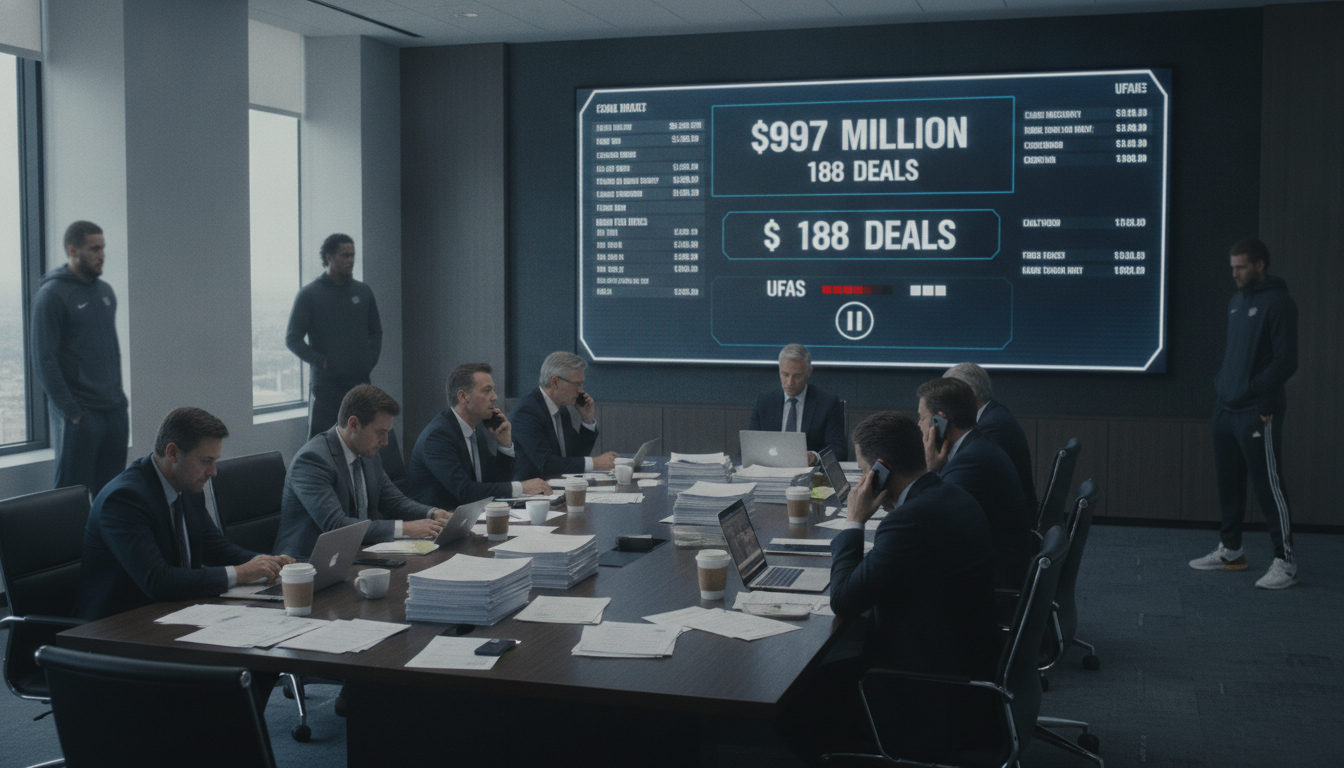
NHL free agency surge: 188 deals, $997M committed — but top UFAs still unsigned
Day 3 of NHL free agency saw 188 contracts worth $997 million signed since July 1, yet marquee unrestricted free agents like Anthony Mantha, Evander Kane and Patrik Laine remain available as teams weigh fit.
Two days into the July window, general managers moved quickly to lock up depth and promise, committing nearly a billion dollars to new and returning players. The NHL free agency market opened with frenetic activity, but a surprising number of quality unrestricted free agents are still unsigned entering Day 3. Teams are now parsing term, cap implications and role fit as they decide whether to chase veteran scoring, physicality or defensive size.
Opening Spending Surge Tops $997 Million
The early spending spree left no doubt that clubs wanted to seize perceived value and fill roster holes before training camps. Front offices signed 188 contracts through the initial days, allocating a collective $997 million in cap commitments and signaling both confidence and urgency. That pace consumed much of the available short-term money on many rosters, reshaping where teams can chase remaining UFAs.
With most blue-chip signings completed, the remaining market is skewed toward veterans who offer specialized skills or risk-reward profiles. Negotiations now hinge on length and annual average value, with many teams preferring one- or two-year deals to preserve flexibility for trade or development decisions. The surplus of unsigned players creates opportunities for low-risk, high-upside signings late in the opening weekend.
High-Profile Forwards Still on the Market
Anthony Mantha stands out among the unsold forwards after a career-best campaign produced 64 points in Pittsburgh. At 31, he combined improved health, mental coaching and expanded opportunity to post strong numbers, though his 21.7 shooting percentage was far above his career norm. Teams in need of power-forward scoring — including Montreal, Buffalo, St. Louis and Winnipeg — are expected to weigh short-term deals that limit long-term exposure.
Evander Kane, a future Hall of Famer by some metrics, remains available despite compiling 41 assists last season and proven playmaking ability. Reports indicate Kane is engaged in talks with his hometown Buffalo Sabres, a storyline that would offer a full-circle finish if completed. Meanwhile Patrik Laine, a former second-overall pick with elite shot power, is facing the likelihood of a significant pay cut after an injury-plagued season that limited him to five games.
Scoring Veterans and Finishers Drawing Interest
Vladimir Tarasenko, who scored 23 goals last season with Minnesota, and veteran Claude Giroux, who played all 82 games for Ottawa, are among the scorers expected to draw short-term offers. Tarasenko’s shot and track record make him a candidate for teams seeking secondary scoring and power-play punch. Giroux’s durability and playmaking late in his career have prompted reported interest from Montreal, Colorado and a possible return to Philadelphia.
Players like Michael Bunting offer a different profile: agitation, penalty drawing and a history of complementary scoring. Bunting’s versatility and forechecking make him a potential one-year target for clubs looking to fortify a middle-six role without a long-term financial commitment.
Defencemen with Size and Power-Play Upside Remain
Big, mobile defencemen have not all found new homes. Brandt Clarke Stanley — a 6-foot-7 left-shot with an offensive breakout — drew interest after a strong contract year and a rental stint in Buffalo. Sources suggest he could test markets that value size and power-play ability, with the player reportedly seeking significant multi-year compensation. Teams such as Winnipeg, Seattle and other playoff hopefuls might see him as a fit for a top-four role.
John Klingberg, still capable of quarterbacking a power play, has found limited stability since leaving Dallas and remains unsigned amid questions about his defensive reliability. Clubs with offensive needs from the right side, including Boston and Philadelphia, have been linked to the veteran playmaker as they evaluate how his strengths and weaknesses align with system demands.
Goaltending Options and Veteran Backups Available
Goaltenders with experience are also among the remaining UFAs, and several clubs appear open to signing veteran nets on short-term, mentorship-focused contracts. Mike Smith’s peers like Alex Talbot, who led unsigned skaters in games played last season, could fill backup roles and provide stability for younger starters. Talbot’s recent save percentage dip raises questions about performance regression, but teams in search of experienced depth may still find value in his resilience and league familiarity.
Other veteran goalies such as Petr Mrazek, Matt Murray and James Reimer round out a market where clubs often prefer low-risk one- or two-year deals to bridge injured starters or mentor prospects. The goaltending landscape in free agency frequently resolves later than the forward market as teams react to injuries and training camp developments.
Cap Strategy, Term Preferences and Market Signals
As the window tightens, the remaining free-agent decisions are being driven as much by cap math as by on-ice fit. Clubs appear to favor shorter commitments to mitigate long-term risk, especially for players coming off inconsistent seasons or injury histories. Mantha’s spike in conversion rate, Laine’s absence last season and Klingberg’s defensive flaws are examples that push teams toward term caution.
Market signals suggest a bifurcation: contenders will prioritize immediate, role-specific upgrades while rebuilding clubs may target reclamation projects that could appreciate in value. Reporters have noted contract ask variations, including a rumored $25 million ask over four or five years for a top defenceman, underscoring the gap between players seeking security and teams seeking flexibility.
The opening days of NHL free agency have mixed enormous early spending with a secondary market full of calculated gambles. Teams that stay patient and clear on role, term and cap will likely capture the best remaining fits in the days ahead, altering lineups and depth charts as training camps approach.
