
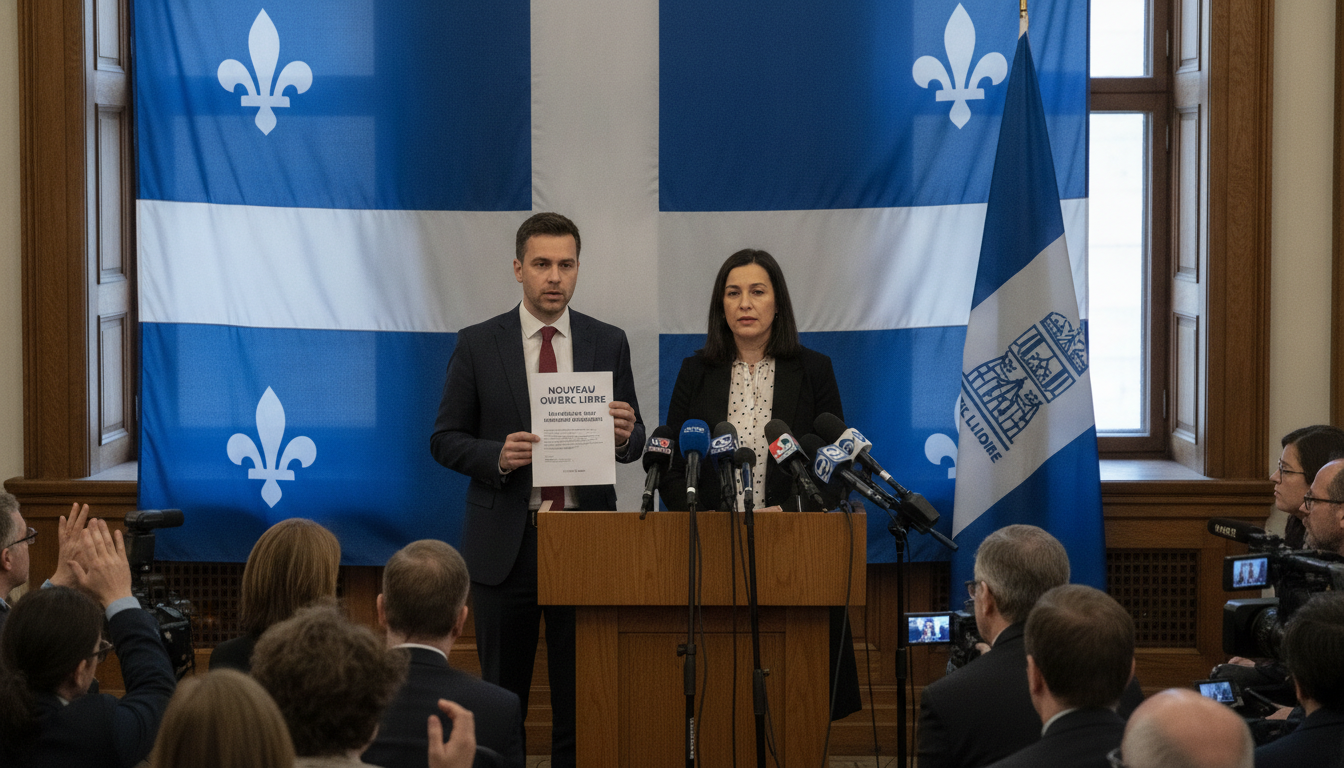
Quebec Solidaire independence manifesto ‘Nouveau Québec libre’ sets inclusive, decolonial path to sovereignty
Quebec Solidaire’s ‘Nouveau Québec libre’ manifesto sets a decolonial, inclusive plan for independence, proposing a constituent assembly and a referendum.
Quebec Solidaire publishes a concise independence manifesto
The party released a roughly 20-page document titled Nouveau Québec libre that lays out why it considers independence urgent in 2026. The Quebec Solidaire independence manifesto frames the move toward sovereignty as a response to ecological crises and shifting international trade dynamics. The party argues that an independent Quebec would be better positioned to defend its interests on the global stage.
The manifesto deliberately limits detail to make its message more accessible, according to party spokespeople. It presents independence as a practical and political priority rather than a technocratic exercise. The document seeks to shift the broader sovereigntist debate toward themes of inclusion and decolonization.
Plan centers Indigenous nations as foundational partners
A central pillar of the manifesto is the recognition of a plurinational Quebec that would include the province’s eleven Indigenous nations. The party positioned the move to sovereignty as a means to offer “real emancipation” to First Nations and Inuit communities. The manifesto’s preface was prepared by Quebec Solidaire’s national Indigenous commission, signaling an effort to embed Indigenous voices at the start of the process.
Quebec Solidaire says consultation and co-construction with Indigenous nations are indispensable to legitimacy. The party stops short of prescribing the precise institutional arrangements, arguing those must emerge through negotiated processes. That approach reflects a desire to avoid unilateral prescriptions and to ensure Indigenous communities understand and consent to the consequences of state transformation.
Constituent assembly proposed to draft a sovereign constitution
The manifesto proposes forming a constituent assembly made up of representatives from across Quebec society to draft the constitution of a sovereign state. Under Quebec Solidaire’s model, the referendum question would ask voters whether they accept the constitution produced by that assembly. If approved, the party says the constitution would be implemented and independence proclaimed.
Proponents argue this method offers clarity by presenting a concrete institutional blueprint to voters, rather than asking a binary independence question without specifying the future state’s form. Party co-spokespeople contend the model reduces uncertainty for citizens and particularly for Indigenous nations, who would be voting on a defined constitutional framework. Critics, however, warn that coupling institutional design with the independence question could complicate public deliberation.
Parti Québécois model differs with extensive Blue Book approach
The release of Quebec Solidaire’s short manifesto comes days after the Parti Québécois published a comprehensive “Blue Book” setting out hundreds of pages on currency, borders, citizenship and defence. The PQ’s approach emphasizes detailed policy answers and a step-by-step plan for transition, which its authors say is intended to reassure voters about the practicalities of sovereignty.
In its internal critique, the PQ questions the wisdom of combining questions about independence and institutional design in a single consultation. The party warns that doing so risks assembling a coalition against independence made up of voters opposed for disparate reasons. The PQ has also signalled it intends to publish a dedicated chapter on Indigenous relations later in the summer of 2026, following a period of dialogue.
Campaign messaging aims to broaden support for sovereignty
Quebec Solidaire’s leaders have repeatedly underscored the choice to keep the manifesto short as a strategic decision meant to widen appeal. Party co-spokesperson Sol Zanetti has described the document as an invitation to a different vision of independence — one that is accessible, inclusive and oriented toward social and ecological justice. He said the party has used years of campus and public talks to refine the themes that appear in the manifesto.
The Nouveau Québec campaign is built around listening and co-construction rather than top-down technical answers, according to party officials. That stance reflects a belief that legitimacy for any future independence vote depends on broad-based participation and on addressing questions that matter to diverse communities. It also signals Quebec Solidaire’s intent to differentiate itself from sovereigntist rivals by emphasizing values and process over dense policy manuals.
Political implications and immediate next steps
The manifesto sets the stage for a renewed debate within Quebec’s independence movement about strategy and sequencing. Quebec Solidaire’s proposal for a constituent assembly and constitution-led referendum raises novel procedural questions that will likely prompt responses from other parties and from Indigenous leadership. Public reaction will hinge on how convincingly the party can show its model protects minority rights and delivers clarity for everyday governance.
In the weeks ahead, both parties are expected to continue public outreach while Indigenous nations weigh the terms of engagement. The PQ’s promise to release its chapter on Indigenous relations this summer adds another element to the evolving conversation. With the sovereigntist field now offering competing blueprints, the electoral and civic response will determine whether either approach can broaden support for independence.
Quebec Solidaire’s manifesto has reopened debates about the shape and sequencing of sovereignty, prioritizing inclusion and Indigenous partnership while proposing a constitution-first path to a referendum.
