
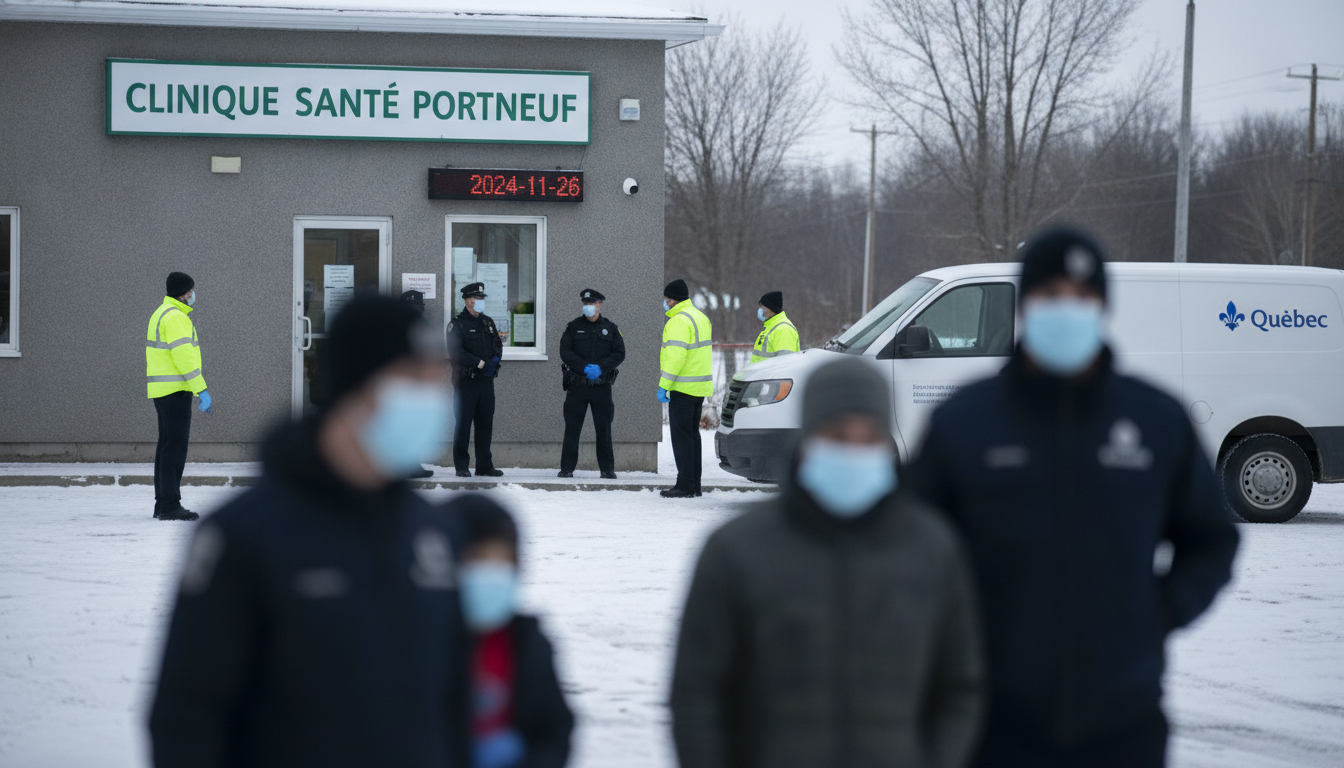
Measles outbreak expands in Quebec’s Capitale-Nationale with five new cases
Quebec public health reports five new measles cases in the Capitale-Nationale, bringing the province’s outbreak total to 27 active infections as authorities ramp up contact tracing.
Outbreak update and provincial tally
Quebec’s health authorities say the measles outbreak has grown with five newly confirmed cases in the Capitale-Nationale region.
The provincial count now stands at 27 active cases, with infections previously reported in Montreal, Montérégie, Laval, the Laurentides and Lanaudière.
Public health officials identified the most recent cluster within the Portneuf area, prompting targeted investigations and exposure notifications.
Officials say the new cases are part of an ongoing outbreak that remains under active surveillance by Santé Québec.
Cases located in Pont‑Rouge, Donnacona and Saint‑Raymond
The Direction de la santé publique de la Capitale‑Nationale reported seven cases linked to the municipalities of Pont‑Rouge, Donnacona and Saint‑Raymond.
Those infections form the newest focal point of the larger provincial outbreak and have led to localized public‑health measures.
Health authorities released a list of locations where transmission may have occurred, including community and retail sites frequented by residents.
The names of these sites were circulated to help exposed individuals identify potential contact and seek advice from public‑health services.
Places of possible exposure identified
Public health listed several locations associated with the new cases: the Caisse Desjardins in Pont‑Rouge, Jean Coutu pharmacies in Pont‑Rouge and Donnacona, and the Maxi grocery store in Donnacona.
Officials also indicated that Quebec City’s Jean‑Lesage international airport is among the known exposure sites for this outbreak.
Authorities are urging people who visited those sites during the relevant time windows to monitor for symptoms and follow public‑health guidance.
Contact tracing teams continue to notify identified contacts and advise on quarantine or testing as appropriate.
Public‑health assessment: outbreak is controllable, risks remain
Dr. Philippe Robert, director of public health for the Capitale‑Nationale, described the situation as manageable because many of the newly infected individuals had already been identified and were in quarantine.
He acknowledged the possibility of additional cases appearing in the coming days, including outside the immediate Portneuf area.
Dr. Robert emphasized that containment relies on active case finding, quarantine of contacts and rapid vaccination where gaps are identified.
He also noted that the seven most recent cases do not involve individuals in high‑risk categories such as pregnant people, infants or those with severely weakened immune systems.
Vaccination coverage and regional context
Health officials say the recent cluster is coincidental rather than indicative of a localized vaccine‑coverage problem in the Capitale‑Nationale.
Reported immunization rates in the region approach 95 percent among students by the end of secondary school, a level public health considers strong for community protection.
Authorities repeated that vaccination remains the most effective defense against measles and urged anyone uncertain of their immunization status to consult their health provider.
Public‑health teams are assessing potential pockets of under‑immunization and offering vaccination to contacts and at‑risk groups as needed.
Quarantine rules and health risks explained
Public health is calling for a 14‑day quarantine period for identified contacts, consistent with the known incubation period for measles.
Officials also stressed that measles is highly contagious—more so than COVID‑19—and can spread before symptoms appear.
Complications from measles can include pneumonia and inflammation of the brain, and in rare cases the infection can be fatal, with risks described by authorities as low but serious.
Given those risks, public‑health messaging focuses on rapid identification, isolation of cases and ensuring close contacts receive appropriate follow‑up care or vaccination.
Public‑health teams in Quebec continue to investigate transmission chains, expand contact tracing and provide guidance to affected communities as the province monitors the outbreak. Authorities ask residents to stay informed through local public‑health channels, check their immunization records and seek medical advice if they develop fever, rash or other symptoms consistent with measles.
