
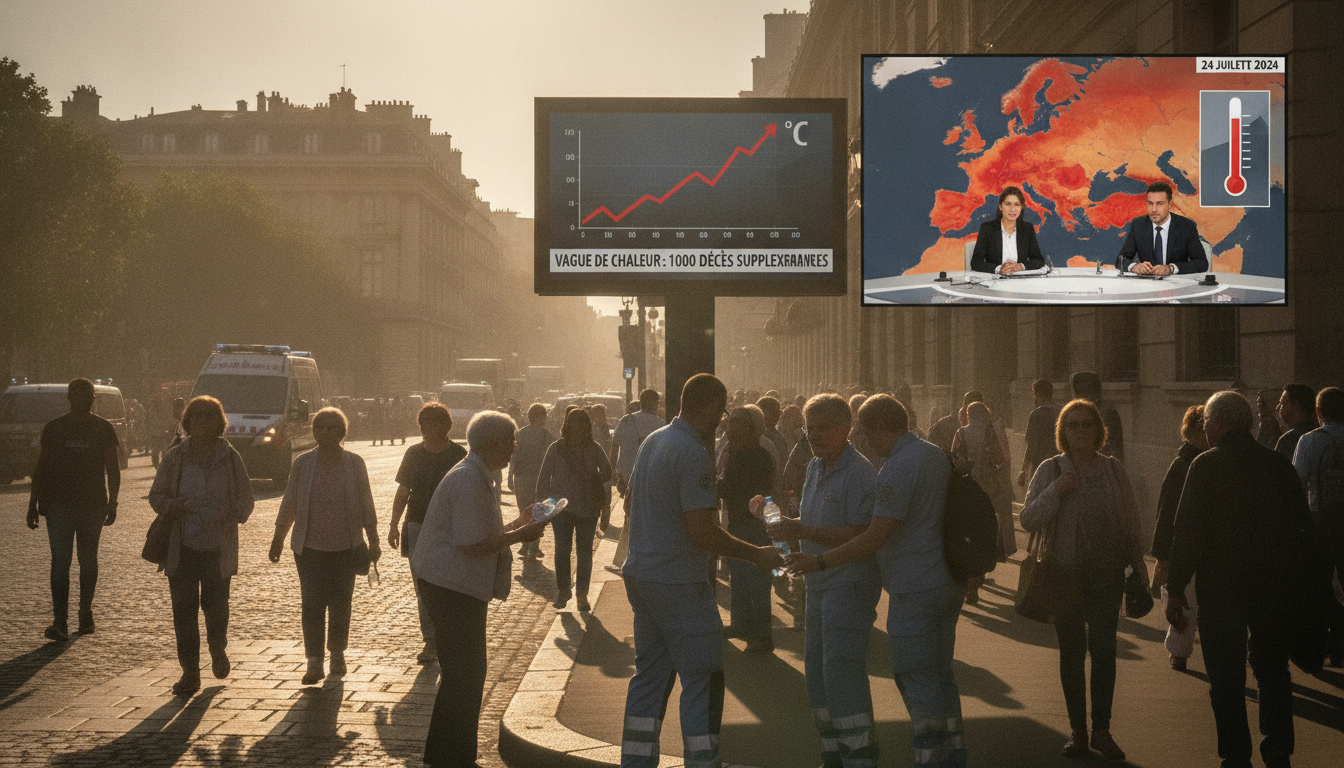
European heatwave pushes east as 191 million face scorching temperatures
European heatwave moves east; 191 million may exceed 35°C. France reports ~1,000 excess deaths since June 24 as scientists link the event to climate change.
The European heatwave intensified Sunday as a broad swath of scorching air shifted eastward, with some 191 million people expected to see temperatures above 35°C at some point during the day. Authorities from Germany to Hungary reported new temperature records and emergency measures, while France began tallying the human cost of an eleven-day heat event. Scientists warned the pattern is consistent with climate-driven changes to atmospheric circulation that can trap heat over the continent.
Heat dome advances across central and eastern Europe
A persistent high-pressure “heat dome” pushed extreme temperatures from Western Europe toward Germany, Poland, the Czech Republic and Hungary on Sunday. Forecasters said the mass of hot air remained unusually intense, maintaining daytime highs above 35°C for tens of millions of residents.
Meteorological offices recorded fresh national and regional marks over the weekend, underlining the speed and breadth of the episode. The movement of the heat altered which countries were placed under the greatest strain from prolonged hot nights and blistering daytime conditions.
Records and notable temperature readings
Several countries logged exceptional values, with Denmark reaching about 37°C and the Czech Republic reporting around 40.6°C. Germany registered an extreme of roughly 41.5°C, and meteorologists noted an unprecedented overnight minimum of 29.4°C at Kubschütz, exceeding the previous late-night benchmark from August 2003.
Heat records extended beyond daytime highs: unusually warm nights prevented relief in many urban areas, increasing health risks for vulnerable people. Emergency services and hospitals reported higher demand for assistance linked to heat-related illnesses.
France begins counting excess deaths linked to the heatwave
French health authorities said the country has recorded approximately 1,000 more deaths than would be expected since June 24, when temperatures first climbed above 40°C across parts of the territory. Santé publique France noted the wave has hit people 65 and older hardest and flagged a roughly 40 percent rise in deaths occurring at home.
Government officials have reduced the red vigilance alert to just two departments in France’s far east, with an expected lifting of the last warnings at 22:00 local time. Ministers and hospital leaders cautioned that official tallies may rise as caretakers and home aides return to residences and check on isolated seniors.
Healthcare and emergency officials sound alarms
Senior hospital staff and public health officials conveyed grim expectations about the aftermath as normal routines resume. Philippe Juvin, head of emergencies at a major Paris hospital, warned that when family members and carers resume visits many households could reveal people in serious distress or deceased after days without adequate cooling or fluids.
France’s health minister, Stéphanie Rist, said the excess mortality observed so far is unlikely to match the scale of the 2003 heat crisis, which was estimated to have caused some 15,000 deaths. Still, officials emphasized the need for sustained outreach to seniors and at-risk residents in the coming days.
Scientists link the event to climate change and ocean anomalies
Researchers pointed to long-term human-driven warming as the fundamental driver behind repeated, more intense European heatwaves. Specialists also highlighted the role of an unusually cold patch of North Atlantic water—sometimes called a “cold blob”—that can shift the jet stream and favour persistent high-pressure systems over Europe.
Marilena Oltmanns, an ocean and climate physicist at the University of Bremen, said those combined factors help explain why Europe is warming rapidly in summer months. Paleoclimatologist Jean Jouzel, former IPCC vice-chair, cautioned that such events are the kind of outcomes climate science has long forecast and urged governments and citizens not to treat the episode as a temporary anomaly.
Early impacts on marine life and fisheries
Scientists monitoring coastal waters are already reporting ecological consequences tied to higher sea temperatures. On the English Channel at Wimereux, researchers observed that plankton samples are shrinking and shifting in composition, a change that can cascade through marine food webs.
The alteration in plankton communities has correlated with declines in cold-water fish species, researchers said, signalling potential medium-term impacts for fisheries and coastal economies. Marine biologists warned that repeated marine heat stress could reshape ecosystems and local livelihoods if the pattern continues.
Emergency measures in cities, altered transport operations and public advisories on hydration and cooling have been common responses across affected countries. In Berlin, police planned to use water cannons again to spray cooling mist for residents, while other cities extended opening hours at cooling centres.
The current European heatwave underscores both immediate humanitarian concerns and broader climate risks, officials and scientists said, as health systems, communities and natural ecosystems confront soaring temperatures and unusually warm nights.
