
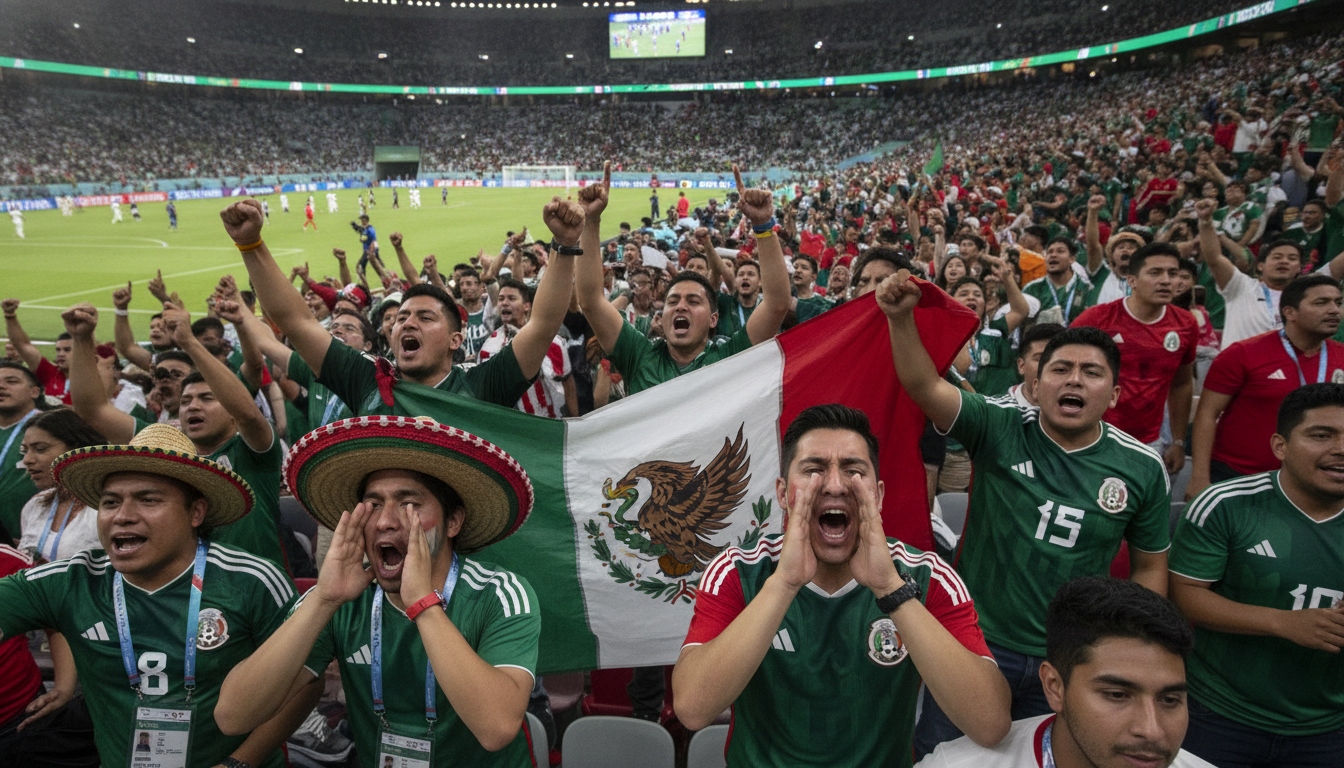
Mexico World Cup chant repeats banned slur at Azteca during final group match
Mexico World Cup chant echoed at the Azteca as fans repeated a banned slur during the final group match against the Czech Republic, risking renewed FIFA penalties.
Fans at Mexico’s final World Cup group-stage match chanted a derogatory term toward Czech goalkeeper Matej Kovar, an incident that revived attention on the longstanding Mexico World Cup chant and its disciplinary consequences. The remark, audible in the stadium late in the first half when Kovar took a goal kick, has a history of drawing fines and sanctions against the Mexican federation. Mexico had already secured first place in Group A before facing the Czech Republic, but the chanting again shifted focus to crowd behavior and governing-body enforcement.
Chant Heard at Azteca During Mexico Match
The chant, which literally translates to “male prostitute” in Spanish, was audible in sections of the Estadio Azteca during the game’s opening hour. Broadcast audio and on-site reports captured the refrain as Czech goalkeeper Matej Kovar prepared and executed a goal kick toward the end of the first half.
Supporters use the phrase as an attempt to unsettle opposing goalkeepers at set plays, a practice that has been widely condemned by football officials and human-rights advocates. Stadium security and match officials continued play without a stadium-wide stoppage, but the recurrence of the chant prompted immediate criticism from observers and past disciplinary reminders from FIFA.
History and Fines Linked to the Chant
The Mexico World Cup chant has roots stretching back roughly a quarter-century and rose to international prominence during the 2014 World Cup in Brazil. It resurfaced at major tournaments in subsequent cycles, including the 2018 World Cup in Russia and the 2022 tournament in Qatar, drawing repeated regulatory attention each time.
FIFA has previously fined the Mexican soccer federation substantial sums—amounting to hundreds of thousands of dollars—after determining the chants violated stadium conduct and anti-discrimination rules. Those sanctions have been applied alongside warnings and disciplinary proceedings intended to curb the chant’s use at international matches.
Effect on Players and Match Atmosphere
Opposing goalkeepers have long been the target of the chant, and its strategic timing during goal kicks aims to provoke a reaction or distraction. Players on both sides generally seek to remain focused amid crowd noise, but repeated slurs can alter the tone of a match and heighten tensions in the stands.
Team officials and ambassadors for the sport have emphasized the duty of national federations and match organizers to protect players from abusive chanting. While the immediate on-field impact during the Mexico–Czech Republic match appeared limited to noise and distraction, the event reinforced concerns about the persistence of discriminatory behavior by sections of attending supporters.
Mexican Federation Efforts to Stop the Chant
The Mexican soccer federation has publicly stated efforts to curb the chant in past years, issuing appeals to fans and coordinating with stadium authorities to deter its use. These efforts have included internal messaging, stewarding measures and cooperation with match-day organizers, all aimed at aligning fan conduct with FIFA rules.
Despite these attempts, enforcement has proved uneven and the chant has persisted in various venues. Officials acknowledge the challenge of policing tens of thousands of spectators and say sustained cultural and organizational measures are necessary to produce lasting change in crowd behavior.
Potential Consequences and FIFA Oversight
The recurrence of the chant places the Mexican federation at risk of new disciplinary action from FIFA, which has a history of assessing fines, ordering partial stadium closures, or imposing other sanctions when discriminatory chants are documented. Repeat incidents increase the likelihood of escalated measures under FIFA’s disciplinary code.
Mexico’s progression to the knockout rounds as Group A winners does not shield it from accountability, and observers say governing bodies will likely review match reports and audiovisual evidence to determine whether formal proceedings are warranted. The outcome of any disciplinary review could influence future permit conditions and match-day requirements for the federation.
The incident at the Estadio Azteca underscores ongoing tensions between passionate fan traditions and the game’s anti-discrimination standards. The Mexico World Cup chant remains a flashpoint for debate about how best to balance robust fan support with respect for players and international regulations, and the issue is likely to remain under scrutiny as the tournament advances.
