
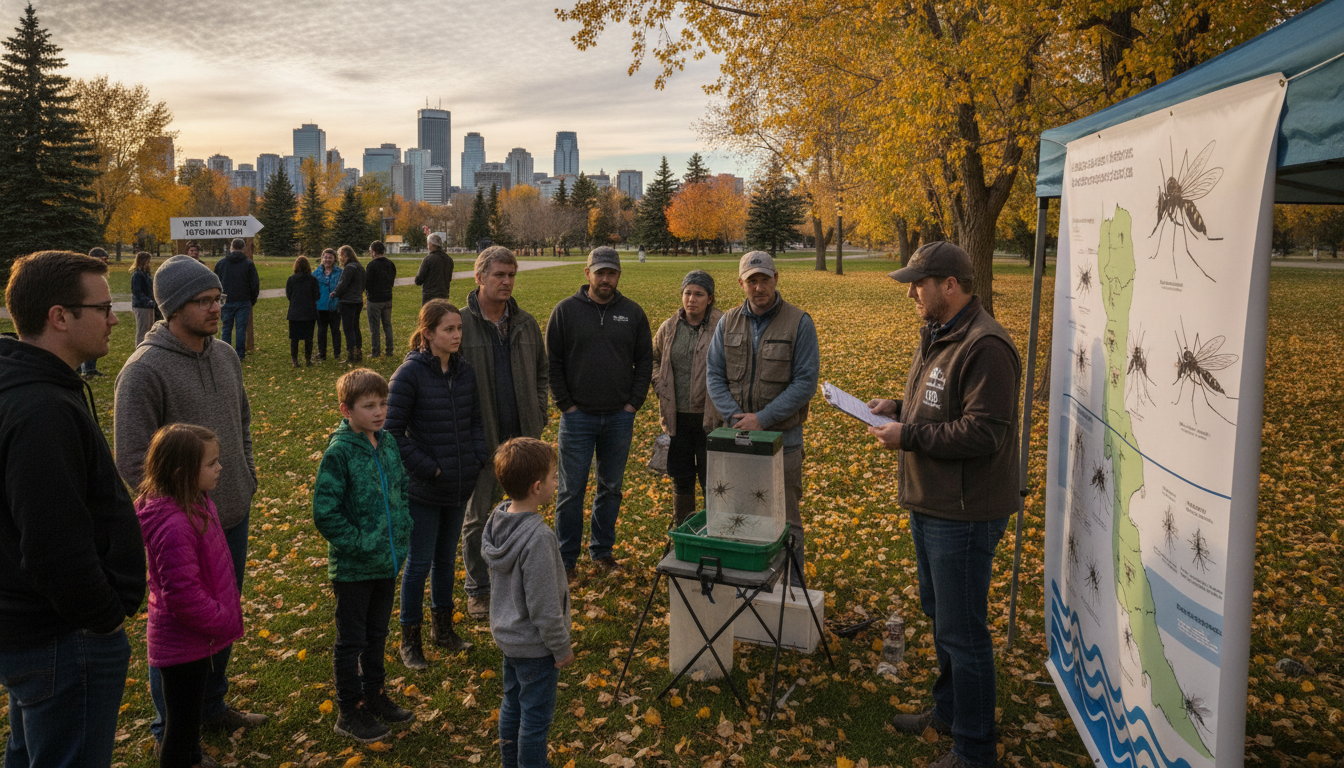
Culex pipiens mosquitoes detected in Edmonton after heavy June rain, raising West Nile vigilance
Culex pipiens detected in Edmonton after nearly 200 mm of June rain, prompting West Nile precautions; city urges residents to reduce backyard breeding.
Edmonton is seeing the early arrival of Culex pipiens mosquitoes following an unusually wet June, city pest-control staff confirm. The species is associated with West Nile virus and has begun appearing in urban habitats where standing water is common. City officials say heavy rainfall alone does not guarantee a population explosion, but the presence of this species sharpens public-health attention.
New mosquito species identified in the Edmonton area
City biological sciences technician Mike Jenkins says Culex pipiens is now moving into parts of Alberta and has been recorded in the Edmonton region. Unlike the floodwater mosquitoes commonly found here, Culex pipiens lays egg rafts on small, exposed water surfaces and can reproduce quickly. Officials link the species’ spread to past detections and to events such as the 2025 deaths of two grey owls at the Calgary Zoo, which were likely tied to West Nile virus carried by this mosquito group.
Why recent heavy rain has not yet caused a massive surge
Despite nearly 200 millimetres of rain in June, Jenkins explains that a multi-year dry spell reduced the reservoir of dormant mosquito eggs in local vegetation. Floodwater species rely on eggs that survive dry periods and hatch when seasonal ponds fill, but populations remained relatively low coming into this wet period. That means current conditions create excellent hatching opportunities, yet a full-scale surge depends on a combination of egg reserves, local habitat types and species behavior.
Backyard breeding sites officials are watching
Culex pipiens thrives in small, often overlooked containers and shallow water that do not require vegetation, which makes homeowners’ yards ideal breeding sites. Eavestroughs clogged with debris, uncovered rain barrels, neglected birdbaths and decorative ponds all offer places for egg rafts to hatch within days. Highway and roadside ditches also concentrate water and shelter that repel natural predators, creating linear hatcheries that can seed surrounding neighbourhoods.
Simple actions residents can take immediately
Public-health advice focuses on removing standing water and denying mosquitoes easy laying sites. Empty and scrub birdbaths weekly, cover rain barrels with fine mesh, clean gutters and turn over wheelbarrows or other containers that collect rain. When spending time outdoors, an oscillating fan on a porch or deck can significantly reduce bites by preventing mosquitoes from landing, while screens and repellents offer additional protection.
City control measures and targeted larvicide use
Edmonton crews are concentrating on highway ditches and temporary water bodies, using larvicide treatments that are derived from naturally occurring soil bacteria. The treatments are formulated to target mosquito larvae feeding patterns and are applied to ephemeral sites rather than permanent lakes or ponds. City staff say this approach reduces larvae before adult mosquitoes emerge and aims to limit broader chemical exposure by focusing on habitats where mosquitoes are the dominant aquatic life.
Monitoring, testing and public-health coordination
Health officials monitor mosquito populations and test specimens for West Nile virus to guide public messaging and control efforts. If virus activity is detected in mosquito pools, local public-health units typically increase surveillance and may issue targeted advisories for vulnerable populations. Medical authorities remind older adults and people with weakened immune systems to be vigilant, as they are at higher risk of severe illness if infected.
The coming weeks will show whether Culex pipiens establishes sustained populations across Edmonton neighborhoods and whether West Nile activity increases. Residents are being asked to follow straightforward prevention steps and report unusually high mosquito numbers to the city so control teams can prioritize response.
