
Iran Denies IAEA Access to Bombed Nuclear Sites Amid Switzerland Talks
Iran denies IAEA access to bombed nuclear sites as US-Iran talks in Switzerland continue; diplomats negotiate Strait of Hormuz, oil flows and frozen assets.
Tehran refuses inspections despite Swiss negotiations
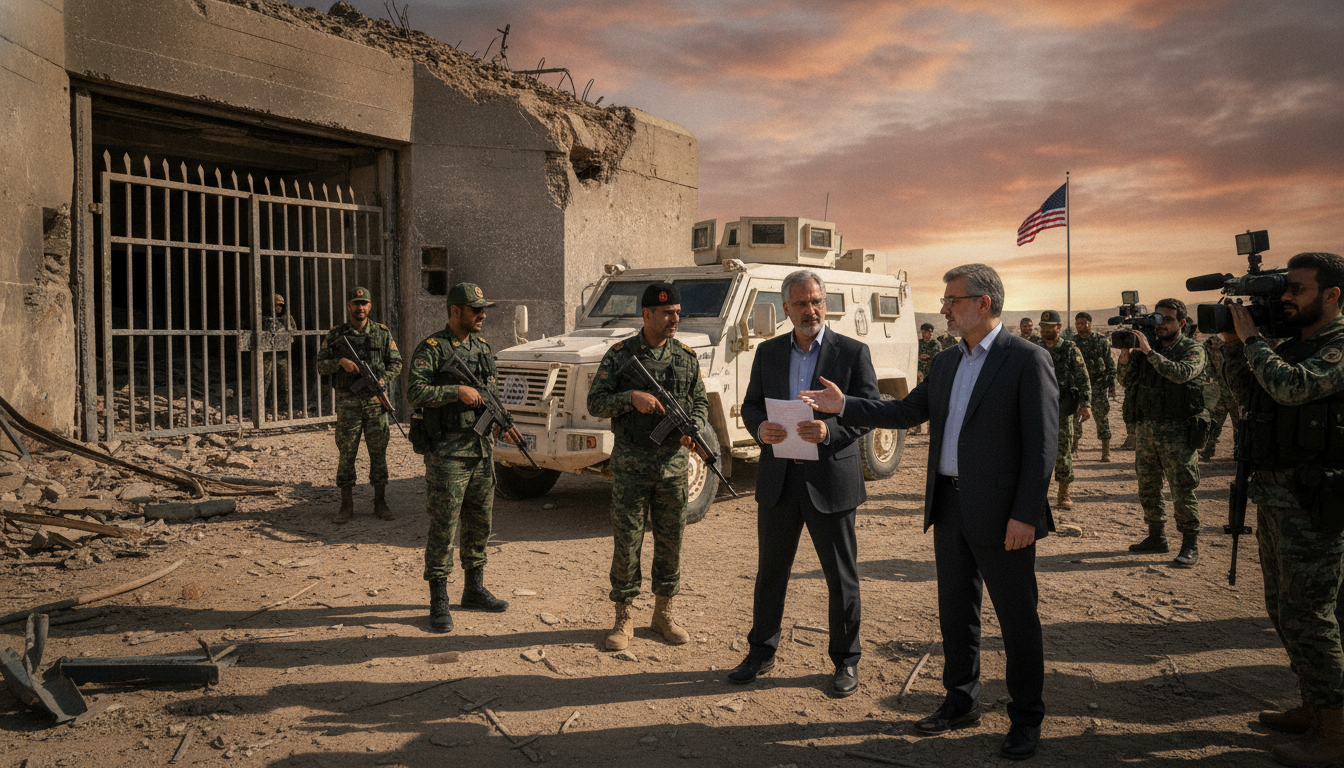
Iran on Tuesday refused to grant the International Atomic Energy Agency access to several key nuclear sites that were struck in recent attacks, officials said. The decision represents a fresh impasse in diplomatic efforts to resolve the wider Middle East conflict even as negotiators met in Switzerland. The denial comes after initial rounds of talks between Iranian and U.S. teams that both sides described as constructive.
The refusal will complicate efforts to clarify the status of Iran’s uranium stocks and the condition of facilities damaged in the strikes. Iranian authorities framed the decision as a sovereign prerogative tied to security concerns and the ongoing hostilities. Western diplomats warned that lack of transparency could raise regional tensions and undermine confidence-building measures.
Dispute over enriched uranium stockpiles
A central point of contention is Tehran’s inventory of highly enriched uranium, which international monitors say has reached levels far above thresholds set for civilian programs. Iran insists its nuclear program remains peaceful and that it has the right to a full civil nuclear fuel cycle. International experts, however, note that enrichment levels reported by monitoring bodies approach weapons-grade concentrations, increasing global scrutiny.
The AIEA has repeatedly sought unfettered access to sites and records to verify declarations and account for material, a demand Iran rebuffed on Tuesday. Without inspections, the international community will have to rely on satellite imagery and indirect reporting to assess any potential weaponization risk. That uncertainty is likely to feature prominently in upcoming diplomatic sessions.
U.S. officials offer conflicting accounts of agreement
U.S. officials in Switzerland described the first phase of negotiations as laying “solid foundations,” but public statements from American leaders have not been uniform. Vice-president J.D. Vance, who led the U.S. delegation, said the talks had produced a framework for further progress, while President Donald Trump declared on his platform that Iran had “fully accepted” the return of inspectors. Tehran’s refusal to admit AIEA teams has exposed a gap between diplomatic signals and on-the-ground reality.
The divergence has prompted questions about coordination within the U.S. policy team and about how bilateral understandings will be translated into enforceable steps. Washington has dispatched senior officials to the Gulf this week, underscoring the stakes for regional allies closely watching developments. The mixed messaging complicates the task of persuading other parties that an agreement will have verifiable guarantees.
Strait of Hormuz control and maritime transit
Negotiators in Switzerland also addressed the status of the Strait of Hormuz, a strategic maritime chokepoint through which a significant share of the world’s oil and liquefied natural gas transits. Iranian representatives have signalled that conditions in the strait will not simply revert to pre-war norms and have asserted they will “administer” passage in ways that reflect Tehran’s security concerns. The corridor’s partial reopening has already seen an uptick in commercial traffic, with specialized platforms reporting a record number of raw-material tankers transiting on Monday.
Control over the strait is a geopolitical flashpoint because any restriction or perceived threat to freedom of navigation would quickly impact global energy markets. Swiss-brokered arrangements aim to restore predictable transit while addressing Iran’s demand for a role in management and oversight. Analysts say durable maritime arrangements will require detailed procedural guarantees and third-party monitoring to reassure shippers and consuming nations.
Temporary easing on oil transactions and frozen assets
As part of confidence-building moves, U.S. officials announced a temporary authorization permitting transactions tied to Iranian hydrocarbon production, sale and transport through August 21, 2026. The concession is designed to stabilize energy markets and provide immediate economic relief without fully lifting broader sanctions. U.S. negotiators have signalled that any expansion of these permissions or the unfreezing of Iranian assets would be conditional and subject to safeguards against diversion to militant groups.
Iran has pushed back, asserting sovereign control over any assets and insisting that Tehran alone should decide their use. U.S. officials have countered that financial measures may be tied to strict monitoring mechanisms to prevent financing of violence. The financial window through late August sets a short timetable for progress and increases pressure on both sides to convert diplomatic momentum into enforceable commitments.
Regional diplomacy and the Lebanon front
The Swiss talks are part of a wider diplomatic push that includes Pakistan and Qatar as mediators and a separate cycle of U.S.-facilitated discussions aimed at reducing hostilities across multiple fronts. Lebanon remains a volatile theatre: indirect and direct negotiations between Beirut and Jerusalem continue, even as the Iran-aligned Hezbollah rejects the process. Recent weeks have seen an easing in some areas but continued exchanges of fire, and Lebanese authorities report thousands of casualties and extensive damage in the south.
A proposed conflict-management cell under the Iran-U.S. protocol is intended to limit cross-border escalation between Israel and Hezbollah, yet implementation faces political and operational hurdles. Regional capitals from the Gulf to South Asia are engaging in shuttle diplomacy to translate agreements into local arrangements. The outcome on the Lebanon front will shape whether a broader ceasefire can hold.
Timeline and next diplomatic steps
Swiss negotiators say the discussions are expected to proceed toward a final document within a 60-day window that can be renewed, with technical working groups continuing to meet. Iranian parliamentary and executive officials are engaged in parallel meetings across the region, including visits to Oman to discuss the strait and a planned state visit to Pakistan by President Massoud Pezeshkian. U.S. envoys are also travelling to Gulf capitals this week to consult with regional partners and coordinate implementation plans.
Despite positive diplomatic rhetoric, the refusal to allow immediate AIEA access underscores that substantive verification remains unresolved. The coming weeks will test whether diplomatic mechanisms can bridge gaps on inspections, naval management and financial safeguards without unraveling fragile progress.
The impasse over IAEA access highlights the fragile balance between negotiating an end to hostilities and ensuring rigorous, verifiable commitments on nuclear and maritime security. The success of the Swiss process will depend on whether Tehran and Washington can convert goodwill into concrete, inspectable measures that reassure regional partners and the global community.
