
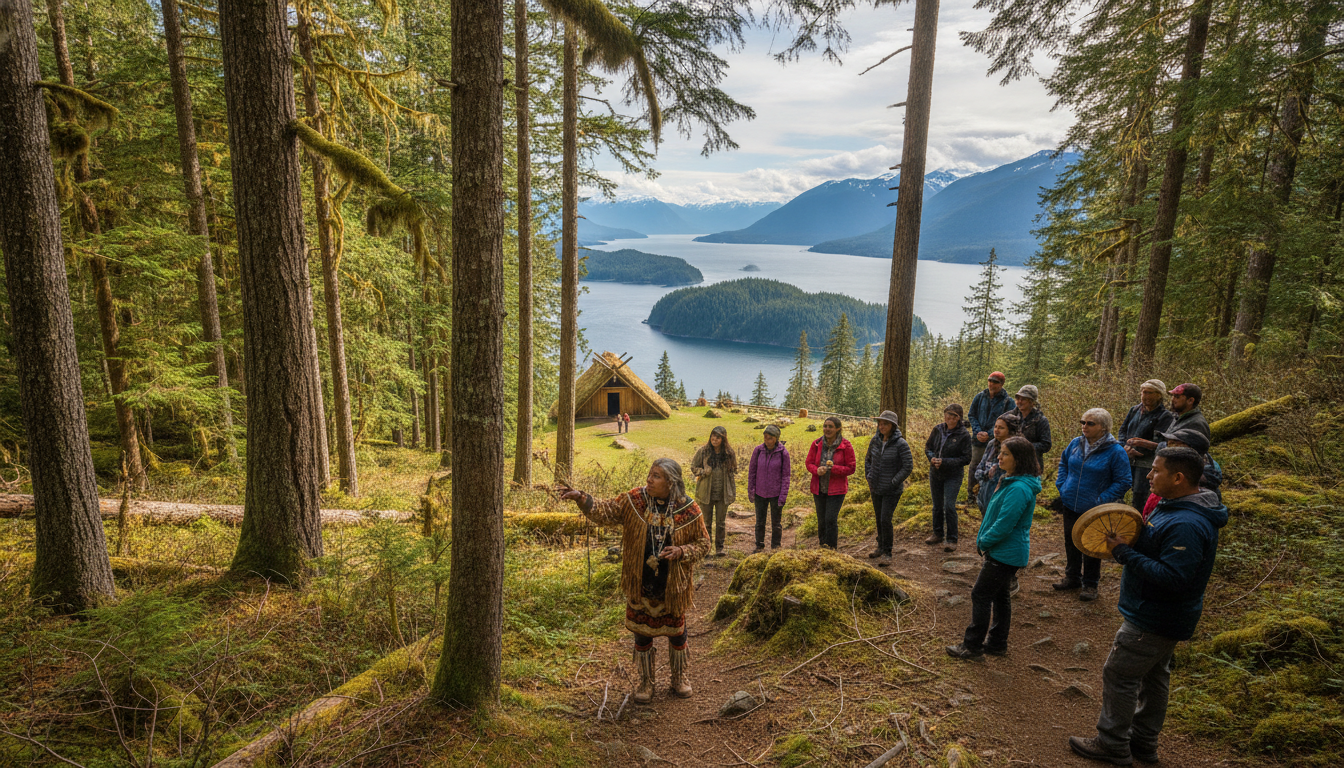
Indigenous tourism in British Columbia grows as nations reclaim land and culture
Indigenous tourism in British Columbia is expanding as First Nations develop culturally led businesses, from guided island tours to restaurants and floating accommodations, to rebuild local economies. The movement blends cultural reclamation with conservation in places such as Clayoquot Sound and Vancouver, drawing visitors while emphasizing community control. Nations and entrepreneurs say the industry offers jobs and cultural platforms but also faces logistical and environmental pressures that require new approaches.
Ahousaht launches cultural tours and a floating-hotel plan
For visitors arriving by boat in Clayoquot Sound, guides from the Ahousaht Nation now lead trips that combine wildlife viewing with songs, stories and land-based teachings. Ahous Adventures, based in Tofino, has grown into a largely Indigenous-staffed operation and plans a floating hotel in an isolated bay to extend stays and bring more visitors under community management. Organizers say the tours are a deliberate act of territorial reclamation, using tourism revenue to revive language, knowledge and stewardship practices.
City kitchens turn food into storytelling
In Vancouver, Salmon n’ Bannock has become a gathering place where Indigenous chefs and staff use local salmon, wild game and bannock to tell cultural histories through food. Founded in 2010 by Nuxalk Nation member Inez Cook, the restaurant remains wholly Indigenous-run and supplies jobs while showcasing traditional ingredients and partnerships with Indigenous producers. Owners and staff describe the venue as both a business and a cultural hub that connects urban diners to Indigenous lands and seasons.
British Columbia’s role and economic footprint
British Columbia accounts for a sizeable share of Indigenous tourism enterprises across Canada, with a cluster of firms along the coast that employ thousands and generate significant revenue for communities. Longstanding organizations such as Indigenous Tourism BC have helped professionalize offerings, creating standards and marketing that other regions now look to replicate. Leaders in the sector point to hundreds of Indigenous-run experiences in the province as evidence that culturally based tourism can scale while remaining locally driven.
Entrepreneurship faces seasonal and access hurdles
Despite success stories, many Indigenous tourism ventures struggle with seasonality, workforce recruitment and fragile access routes. Operators serving remote coastal and island communities say attracting and retaining staff is difficult when businesses operate mainly in summer months. Some enterprises have also suffered when natural disasters or provincial events interrupt travel corridors, reducing bookings and threatening the viability of small enterprises.
Local stewardship anchored by the ʔiisaak Pledge
On the west coast of Vancouver Island, Tla-o-qui-aht Nation leaders have introduced the ʔiisaak Pledge, a framework visitors are invited to accept before exploring sensitive landscapes. The pledge rests on ancestral laws to observe and respond to nature, speak truth about local histories, practice generosity and protect biodiversity for future generations. Park guardians and cultural stewards routinely brief visitors on these principles, framing tourism as an exchange that requires respect for both culture and ecology.
Striking a balance between growth and cultural protection
National organizations are pushing an ambitious goal to make Canada a global leader in Indigenous tourism by 2030, but community leaders stress growth should not come at the expense of cultural integrity. Operators and elders caution against commodifying sacred practices and urge policies that prioritize community benefit, training, infrastructure funding and environmental safeguards. Advocates say investment should support locally owned enterprises so tourism dollars circulate within communities and strengthen long-term resilience.
Indigenous tourism in British Columbia is evolving into a model that seeks to combine economic opportunity with cultural revival and environmental stewardship. As nations expand offerings — from shore-based cultural tours to urban restaurants and novel lodging concepts — their leaders emphasize community control, visitor education and careful planning to ensure growth supports cultural continuity and conservation.
