
U.S.-Iran talks open at Bürgenstock as Lebanon violence and Hormuz closure threaten agreement
U.S.-Iran talks begin June 21, 2026, at Bürgenstock as delegations seek a nuclear and ceasefire accord amid renewed Lebanon strikes and Iran’s Hormuz closure.
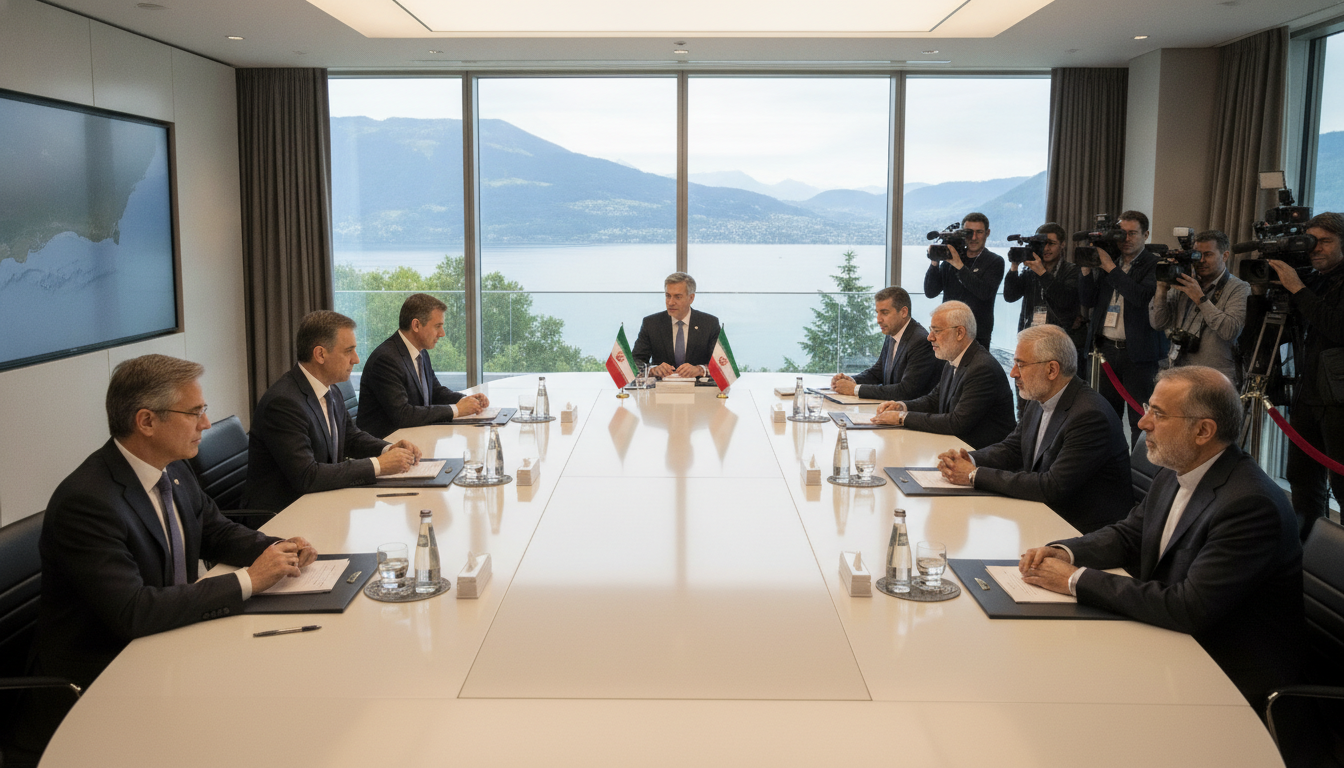
The U.S.-Iran talks opened on Sunday morning, June 21, 2026, at the Bürgenstock luxury hotel overlooking Lake Lucerne as delegations from both countries and regional mediators gathered to try to turn a fragile protocol, signed on June 17, 2026, into a lasting accord.
The negotiations focus on Iran’s nuclear program and a brokered ceasefire, but they start under strain after fresh fighting in Lebanon and Iran’s announcement that it would close the Strait of Hormuz.
Talks convene at Bürgenstock hotel
Delegations arrived at the resort early Sunday, with the American team led by Vice-President J.D. Vance and the Iranian delegation headed by Parliament Speaker Mohammad Bagher Ghalibaf.
Pakistan and Qatar are on site as mediators, and senior Iranian officials including diplomat Abbas Araghchi and central bank governor Abdolnaser Hemmati were reported to have joined the talks.
Mandate and timeline for negotiations
The talks open under a 60-day renewable mandate aimed at producing a final agreement to halt the wider Middle East conflict that erupted after strikes on Iran on February 28, 2026.
U.S. officials said the initial window is intended to allow intense, focused diplomacy on nuclear restraints and implementation steps for a ceasefire, with senior aides expected to rotate through the Swiss venue.
U.S. aims and delegation constraints
Vice-President Vance told reporters before departure he hoped for progress on the nuclear dossier and the Lebanese ceasefire but indicated he might remain in Switzerland only a day or two.
Senior White House advisers including envoy Steve Witkoff and Jared Kushner, a presidential family member involved in back-channel diplomacy, are also participating in the early sessions.
Escalation in Lebanon undercuts ceasefire clause
Despite the protocol’s clause calling for an end to hostilities on all fronts, Israeli strikes in eastern and southern Lebanon on Saturday, June 20, 2026, killed at least 30 people, according to local reporting.
The Lebanese Ministry of Health reported a cumulative toll of 4,057 deaths in Lebanon as of Saturday, June 20, 2026, reflecting the severe human cost that negotiators must address if a ceasefire is to hold.
Iran warns protocol is at risk
Iranian Foreign Ministry spokesman Esmaïl Baghaï warned that the protocol would be “in danger” if its provisions were not implemented quickly, signaling Tehran’s impatience with what it sees as uneven compliance.
Separately, senior Iranian military adviser Mohsen Rezaei urged caution and said rhetoric of optimism should be tempered by the reality that promises have been broken in the past.
Closure of the Strait of Hormuz announced
After renewed fighting in Lebanon, Iran’s military command declared the Strait of Hormuz closed to maritime traffic, a move described as the first retaliatory measure for perceived breaches of commitments.
The Strait had been a central element of the June 17 protocol: its reopening was included among the steps meant to ease global energy market disruptions after Iran initially locked the passage earlier in the conflict, when around 20 percent of global hydrocarbon shipments transited the waterway.
Security and economic stakes for negotiators
U.S. Central Command said it remained vigilant and reported that 55 merchant vessels transited the Strait safely on Saturday, June 20, 2026, underscoring the continued operational strain on naval and commercial operators.
Both Tehran and Washington have floated the idea of levies or fees tied to Strait use; President Donald Trump warned of imposing a toll should diplomacy fail, raising the prospect of protracted economic fallout if transit is disrupted.
The talks at Bürgenstock must reconcile parallel pressures: Tehran’s demands for rapid, verifiable steps to lift maritime and economic restrictions; Washington’s insistence on nuclear constraints and durable cessation of hostilities; and the immediate need to halt violence in Lebanon that threatens to unravel the protocol signed on June 17, 2026.
Diplomats and military officials from multiple countries face a narrow window to translate commitments into enforceable actions while preventing further escalation that could widen the conflict and deepen global economic disruption.
