
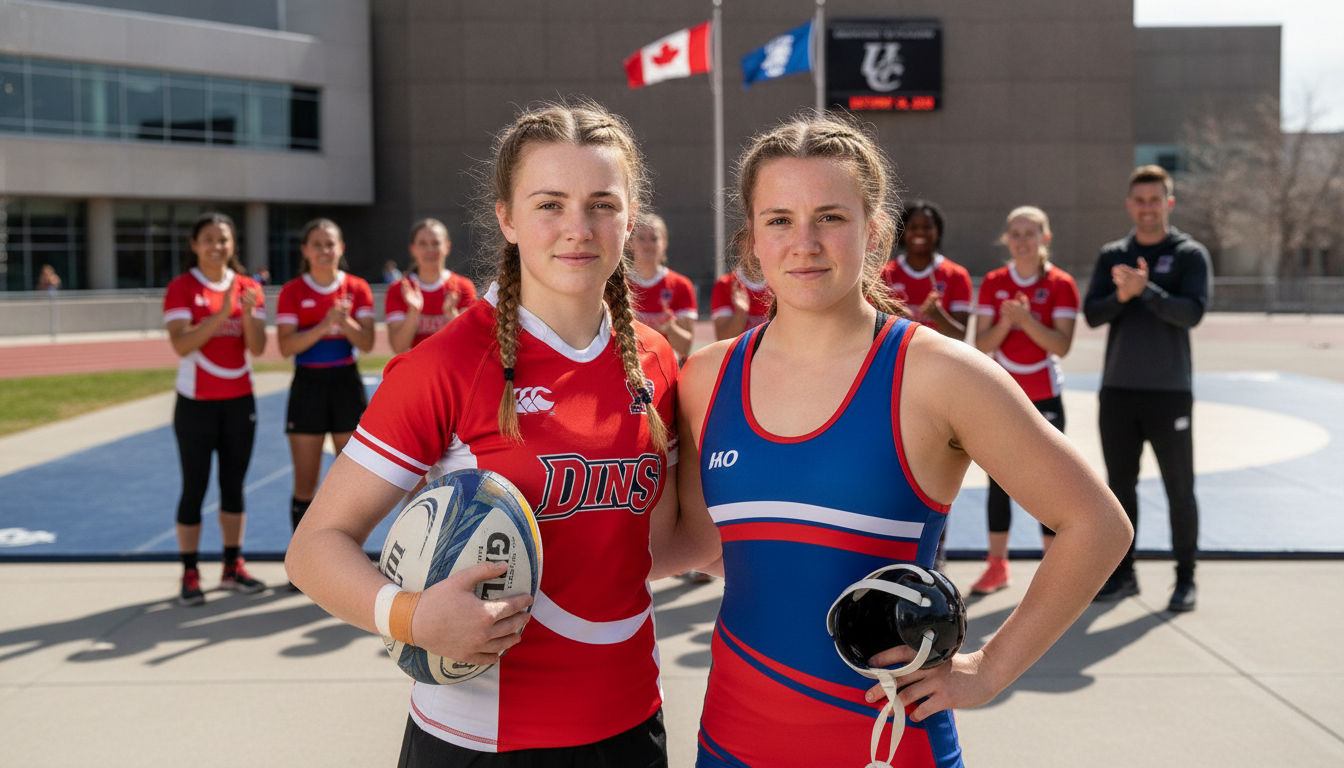
LaBelle sisters to make history as all four join University of Calgary rugby and wrestling programs
Four LaBelle sisters, including 18-year-old twins, will join the University of Calgary women’s rugby and wrestling teams while studying French and education.
The LaBelle sisters will compete together for the University of Calgary this fall, marking the first time all four siblings have been rostered on the same varsity teams in rugby and wrestling. The quartet — twins Kayel and Austyn, both 18, and older sisters Jai, 22, and Danyka, 20 — confirmed their commitments in interviews and team announcements ahead of the new academic year. The news was first discussed publicly on CBC Radio’s The Homestretch, where the sisters described their excitement about combining athletics and classroom study in Calgary.
The arrival of the LaBelle sisters adds both depth and a rare family dynamic to the Dinos programs, which expect the athletes to contribute on the pitch and the mat while pursuing degrees in French and education. Jai transferred to the University of Calgary last year after time at the University of Alberta, while Danyka has been with the program since the previous season. The twins are recent high school graduates who signed on after concluding their secondary careers.
The program will now include a cousin who also plays on the rugby team, reinforcing the family connection within the squads. The LaBelles bring a blend of positional experience: Jai at scrum half, Danyka at centre, and the twins as props. Coaches and teammates say the addition of four related athletes will be notable for both competitive reasons and team culture.
Four LaBelle sisters to compete together for the University of Calgary
This coming season will be the first time all four LaBelle sisters appear on the same university varsity rosters in Calgary. The siblings will represent the University of Calgary in both women’s rugby and wrestling competitions, a dual-sport arrangement that speaks to their multi-discipline backgrounds. Their simultaneous enrollment and participation make the family a rare presence in Canadian university athletics.
The sisters said their family history in sport set the stage for this development, pointing to parents who coached and played rugby at a community level. Teachers, coaches and teammates have highlighted how uncommon it is to see four siblings at once join a single institution’s competitive programs. University representatives welcomed the LaBelles as both athletes and students who will contribute academically and athletically to campus life.
Their commitments were confirmed during conversations with university staff and in interviews broadcast on CBC Radio’s The Homestretch, where Kayel used the playful phrase that opponents will be "getting LaBelle’d" when they face the Dinos. The media exposure underlines the broader interest in how family ties intersect with varsity sport in Canadian universities.
Roles on the pitch and the mat
On the rugby field, the LaBelle sisters occupy distinct positions that together cover key responsibilities across the backline and forward pack. Jai, the most experienced on the U of C roster, plays scrum half and handles distribution and game management. Danyka provides midfield presence as a centre, known for both defensive reads and ball-carrying.
The twins, Kayel and Austyn, are both props and bring strength in the scrum and the close-contact phases of play. Their physical profiles and years of club experience position them to contribute immediately to set pieces and ruck work. Across wrestling, the sisters have also competed in weight-class events, with the twins frequently matched against one another due to shared divisions.
Competing in both rugby and wrestling requires carefully managed training loads and recovery, and the university’s athletic staff will coordinate schedules. Coaches typically adapt strength and conditioning plans to support athletes who participate in multiple sports, and the LaBelles’ history of juggling both codes at club level will be an asset.
From Cochrane clubs to varsity competition
The sisters trace their sporting roots to community programs in Cochrane, where a local wrestling club and family involvement in rugby set them on dual-sport paths. Their father, who grew up playing rugby, and their mother, who coached the sport locally, were cited by the sisters as early influences. The family’s engagement in local sport created a steady route from youth programs to elite junior competition.
Wrestling began for the group after a friend of their father launched a club and encouraged local participation, which the sisters embraced and continued. That grassroots beginning evolved into regional competition and national junior events for individual members of the family. Their progression illustrates the role small-town clubs can play in developing athletes capable of reaching university-level competition.
For each sister, the move to Calgary represents a step up in training infrastructure and competition standards. University programs offer structured schedules, access to sport science support and regular regional and national competition, all of which will test the LaBelles at a higher level. The sisters have indicated they are prepared for that challenge and eager to integrate into the team environments.
Twins’ dynamic in wrestling and sibling rivalries
The twin relationship between Kayel and Austyn adds a particular personal element to the wrestling narrative, as both frequently find themselves in the same weight class. The sisters described a long history of wrestling each other in practice and in competition dating back to childhood. They acknowledged the difficulty of maintaining full competitive intensity against one another because of their close bond, but said referees and coaches often prompt them to refocus when needed.
Austyn described a playful competitiveness that sometimes leads to laughter during matches, while Kayel emphasized the seriousness they both apply in training to improve. The twins’ dynamic is an example of how sibling relationships can simultaneously be a source of comfort and a performance challenge. Their experiences also reflect the balancing act between familial ties and the demands of elite sport.
Older siblings Jai and Danyka have competed against one another only sparingly, but both remember tournament moments that sharpened their competitive instincts. Jai recalled a brief bout against Danyka in a tournament where she prevailed quickly, underscoring how familiarity does not preclude intensity in competition. Coaches said those intra-family matchups have helped the sisters develop resilience and tactical awareness.
Academic plans and campus transition
All four LaBelle sisters will pursue degrees in French and education at the University of Calgary, aligning their academic choices with potential career paths in teaching and bilingual education. The decision to study the same disciplines reflects family priorities and possibly a shared vision for future professional lives. University advisors will work with the athletes to ensure academic requirements and athletic commitments are balanced across terms.
Student-athletes often navigate course scheduling challenges, particularly when competition and travel overlap with key academic milestones. The LaBelles have indicated they are prepared to manage such tensions and to lean on academic supports provided by the university. Their choice of French and education suggests an interest in working with communities where bilingual instruction and youth development intersect.
The university’s student-athlete services include tutoring, study halls and academic counselling tailored to athletes with heavy training schedules. Access to such support is intended to reduce academic risk and foster long-term success both on and off the field. The LaBelles’ intention to pursue degrees while competing underscores the dual expectations of varsity sport.
Coaches and teammates on the LaBelle additions
University of Calgary coaches and teammates reacted positively to the news of the sisters joining the squads, noting the benefits of established chemistry and varied skill sets. Teammates cited the LaBelles’ club experience and family cohesion as assets that should translate into on-field understanding. Coaches pointed to the value of familiar playing relationships when integrating new athletes into existing systems.
While coaches must evaluate each athlete on individual merit, the presence of siblings can accelerate communication and cohesion. Staff also emphasized the need to preserve fairness in selection while leveraging the unique advantages of family ties. Athletic department officials are preparing orientation and integration plans to ensure the LaBelles settle into academic and sport routines smoothly.
The twins’ arrival as props and the addition of midfield strength through Danyka, combined with Jai’s experience at scrum half, give the rugby program options in depth and rotation. Wrestling coaches noted the LaBelles bring not only technical skill but also a commitment to hard work and team support. Observers expect the sisters to contribute to both competitive results and group culture.
Community members and local clubs that helped develop the LaBelles also expressed pride in their advancement to university sport. Small-town coaches who first worked with the sisters said the move validates long-term development pathways. The family’s journey highlights how community investment in youth sport can produce athletes capable of competing at the university level.
The LaBelle story has already drawn attention from local media and supporters who follow university sport in Calgary. Public interest centers on the novelty of four siblings moving together into varsity programs and on the broader themes of family, opportunity and regional development. The sisters have framed their move as a family milestone while stressing their desire to contribute to team success.
Balancing dual sports will require careful management of playing time and recovery, particularly as rugby season and wrestling calendars can overlap with training cycles. Strength and conditioning staff underscore the need for individualized plans to reduce injury risk and to maintain peak performance across disciplines. The LaBelles’ prior history of competing in both sports suggests they have experience managing those demands.
As student-athletes, the sisters will also be visible figures for youth and community outreach programs, roles that many university teams encourage. Their presence could help inspire young players in Cochrane and the surrounding region who see a clear pathway from club participation to university competition. Program outreach leaders see the LaBelles as effective messengers for participation and perseverance in sport.
Recruitment patterns in Canadian university athletics occasionally bring family groupings into the same program, but four siblings across two sports is unusual. The LaBelles’ case may prompt other universities to note the potential advantages of recruiting athletes with pre-existing rapport. Athletic directors say roster construction balances many factors, yet chemistry remains a coveted but intangible element of successful teams.
The sisters have emphasized confidence and seizing opportunities in public remarks to younger athletes considering university sport. Danyka advised her younger sisters to be confident and to embrace opportunities, while Jai urged taking chances and moving quickly when they arise. Their public comments reflect a pragmatic approach to sport and education that university coaches often seek in recruits.
The LaBelles are expected to arrive on campus ahead of preseason camps and orientation, at which point final roster decisions and role assignments will crystallize. Coaching staff will conduct evaluations and determine competition plans that reflect both current needs and long-term development. Preseason will also be a period for the sisters to build relationships with teammates from across the province and country.
Their dual enrollment in rugby and wrestling means the LaBelles will compete under different coaching staffs and within different competition structures, presenting both scheduling complexity and broader exposure. Rugby programs operate within the U Sports and regional conference calendars, while wrestling follows national tournament schedules and weight-class competition cycles. Navigating those systems will be part of their first-year responsibilities.
Family members who have supported the sisters through early development will continue to play a role as mentors and supporters, according to interviews and team statements. The LaBelles said they expect frequent contact with family during the season and plan to lean on their community network for encouragement. That network has been central to their progression and is likely to remain so as they transition to university life.
The sisters’ story has prompted discussion among local sport stakeholders about pathways and retention in youth sport. Observers point to the importance of volunteer coaches, accessible clubs and family support in sustaining athlete pipelines. The LaBelles’ multi-sport background also underscores the potential benefits of diversified early athletic experiences for long-term development.
As recruits and team members, the LaBelle sisters bring narratives that extend beyond wins and losses to include education, family connection and community representation. Their simultaneous presence across two varsity programs will be monitored by coaches, fans and local media as the season progresses. For now, the sisters are focused on preparation, academics and settling into campus life.
The immediate next steps for the LaBelles include participation in team orientation, strength and conditioning assessments, and early practices ahead of official competition. University athletic services will assist with medical screening, class registration and compliance requirements tied to student-athlete status. The sisters have expressed readiness to begin that process and to contribute to team goals.
Their arrival will test roster depth and may influence tactical decisions by coaching staffs as the season unfolds. Coaches will balance experience, performance and potential as they integrate the sisters into match-day rotations and tournament lineups. Early assessments during preseason will shape those choices for both rugby and wrestling competitions.
Local supporters and young athletes will likely follow the LaBelles closely as they begin varsity careers, tracking both sporting results and academic progress. The sisters’ presence on campus is expected to draw attention from media and community groups interested in university sport stories. As student-athletes, they will inhabit roles that blend performance with public visibility.
In the immediate term, the LaBelle sisters have framed their move to the University of Calgary as an opportunity to grow together and individually. They express enthusiasm for competing as teammates rather than opponents, and for continuing the family legacy in sport. Their combined presence on the rugby field and wrestling mat will be a watchpoint for the season ahead.
The LaBelle sisters arrive in Calgary with experience, family support and academic plans that align with their long-term goals, and their transition into university sport will be a story followed by teammates, coaches and community members. They have emphasized confidence and seizing opportunities, and now face the practical realities of preseason, academic registration and the first tests of varsity competition. As they settle into campus and team life, their shared presence represents an uncommon and notable moment in Canadian university athletics.
