
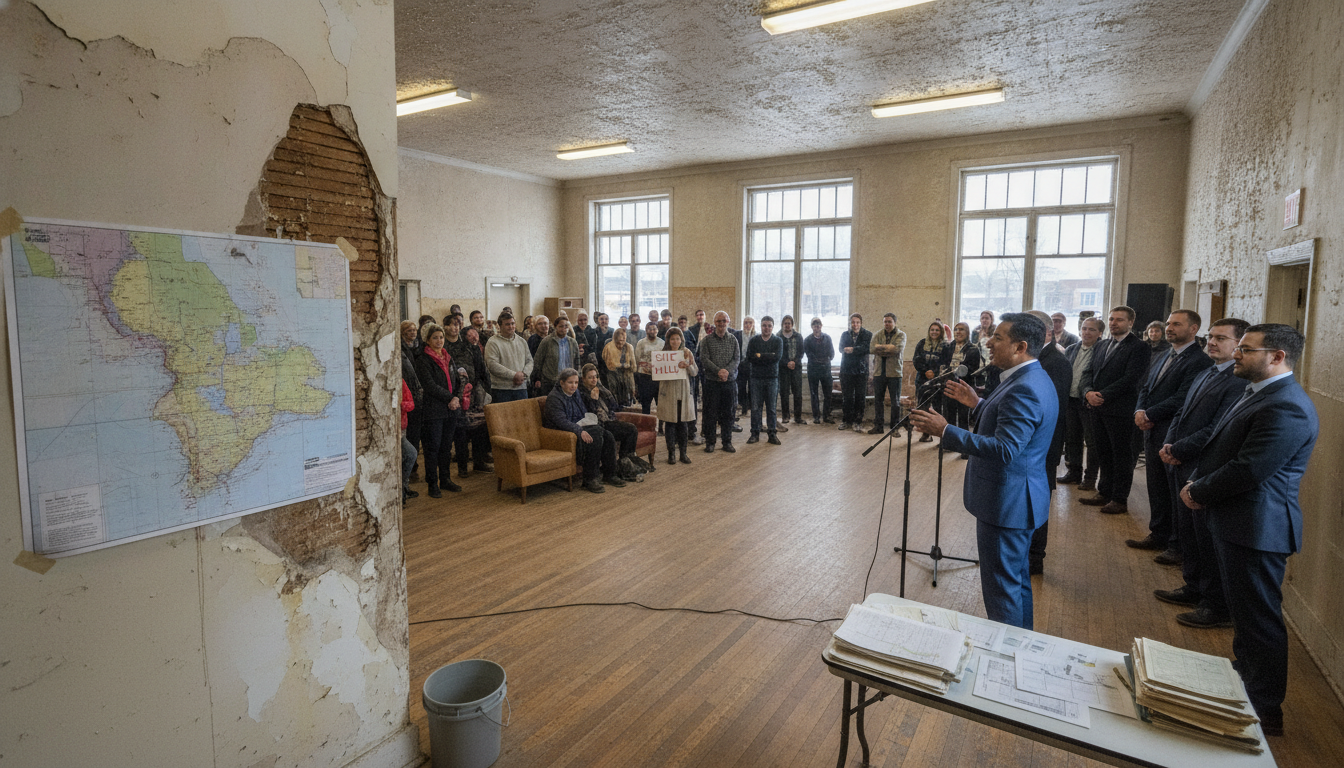
Council backs $1M‑per‑year plan to tackle Edmonton community league buildings’ $100M repair backlog
Edmonton council weighs $1M-per-year plan to fix ageing community league buildings after report finds $100M in repairs and urgent safety risks.
Urgent city debate after infrastructure report
Edmonton community league buildings are the focus of a contentious funding decision after council voted 8‑5 to bring a new funding proposal into the forthcoming four‑year budget deliberations.
A city report and presentations from local league organizations set out a combined capital shortfall of roughly $100 million, with at least $18.6 million identified as immediate work needed to prevent potentially life‑threatening failures.
Council’s motion would see the city allocate $1 million per year to the Edmonton Federation of Community Leagues (EFCL), a contribution intended to be used to leverage federal grants and coordinate repairs across the city.
Officials and league representatives say the money is meant to act as seed funding that, if approved in the budget process, could unlock additional sources for a multi‑year remediation program.
Scope of the damage identified in assessments
City administration and the league foundation told council that a recent building condition assessment found 47 community league facilities rated in poor or very poor condition.
That represents more than one‑third of all community league buildings surveyed and highlights structural, mechanical and life‑safety issues that range from minor to urgent.
Inspectors reported 59 buildings with electrical and wiring concerns, numerous sites lacking proper backflow prevention for sewage, and several with inadequate exit and emergency lighting.
Other deficiencies included missing handrails for people with mobility needs, unsecured exterior doors, and a range of fire‑code problems from unreliable alarms to faulty suppression systems.
Funding history and current municipal contributions
Council heard that the last meaningful increase to community league infrastructure funding occurred in 2012, leaving decades of inflation and growing construction costs to widen the funding gap.
Currently, the city contributes about $2.8 million annually to the community league infrastructure program and roughly $7 million a year for operating grants.
League leaders told council that the existing envelope cannot deliver the volume of work required today, especially when many halls were originally built with volunteer labour and older construction standards.
Foundation executive director Laura Cunningham‑Shpeley cautioned that the purchasing power of the infrastructure fund has diminished significantly in the past 15 years.
Proposed model: one project, bulk procurement, volunteer coordination
The Edmonton Community Leagues Foundation and EFCL outlined a coordinated delivery model intended to achieve economies of scale across 11 targeted program areas over the next four years.
Under the proposal EFCL would submit a single comprehensive project plan, hire a professional project manager, and engage a small roster of contractors to complete grouped repairs.
Foundation infrastructure adviser Shaun Good said bulk purchasing of materials and coordinated volunteer site support would reduce administrative load and improve consistency of work.
The approach is pitched as a way to preserve volunteer capacity—more than 9,300 people who put in an estimated 321,000 hours annually—while ensuring complex safety and compliance tasks are handled by professionals.
Legal responsibilities and ownership implications for the city
Administration reminded council that the city already bears a measure of liability for buildings it ultimately assumes under the tripartite agreement with leagues and the foundation.
If a community league becomes unable to operate or maintain its building, ownership can revert to the city, shifting the financial and operational burden back to municipal hands.
That legal framework was presented as part of the rationale for proactive investment: delaying repairs may increase long‑term costs and legal exposure for the city.
City staff argued that modest, targeted municipal funding now could reduce more significant expenditures later if buildings are deemed unsafe or are taken over by the municipality.
What the plan would mean for neighbourhoods
Supporters of the coordinated repair program said it would modernize halls that serve as hubs for sports, childcare, community events and emergency response in neighbourhoods across Edmonton.
Many community facilities were built before formal construction oversight existed, and advocates told council that upgrades would improve accessibility, extend building life and reduce safety risks for users.
Skeptics on council raised questions about the sufficiency of $1 million per year to address systemic shortfalls and whether the proposed model would deliver timely results.
Council’s 8‑5 vote only advances the plan into the budget deliberations, where councillors will debate priorities, trade‑offs and whether to increase the municipal contribution above the proposed level.
City and league officials say they will continue technical assessments and refine cost estimates in the weeks ahead so council has specific project details when the four‑year budget is debated.
The coming budget deliberations will determine whether the city moves from a reactive posture to a coordinated, city‑wide remediation program for community league buildings, with both short‑term safety fixes and longer‑term capital investments on the table.
