
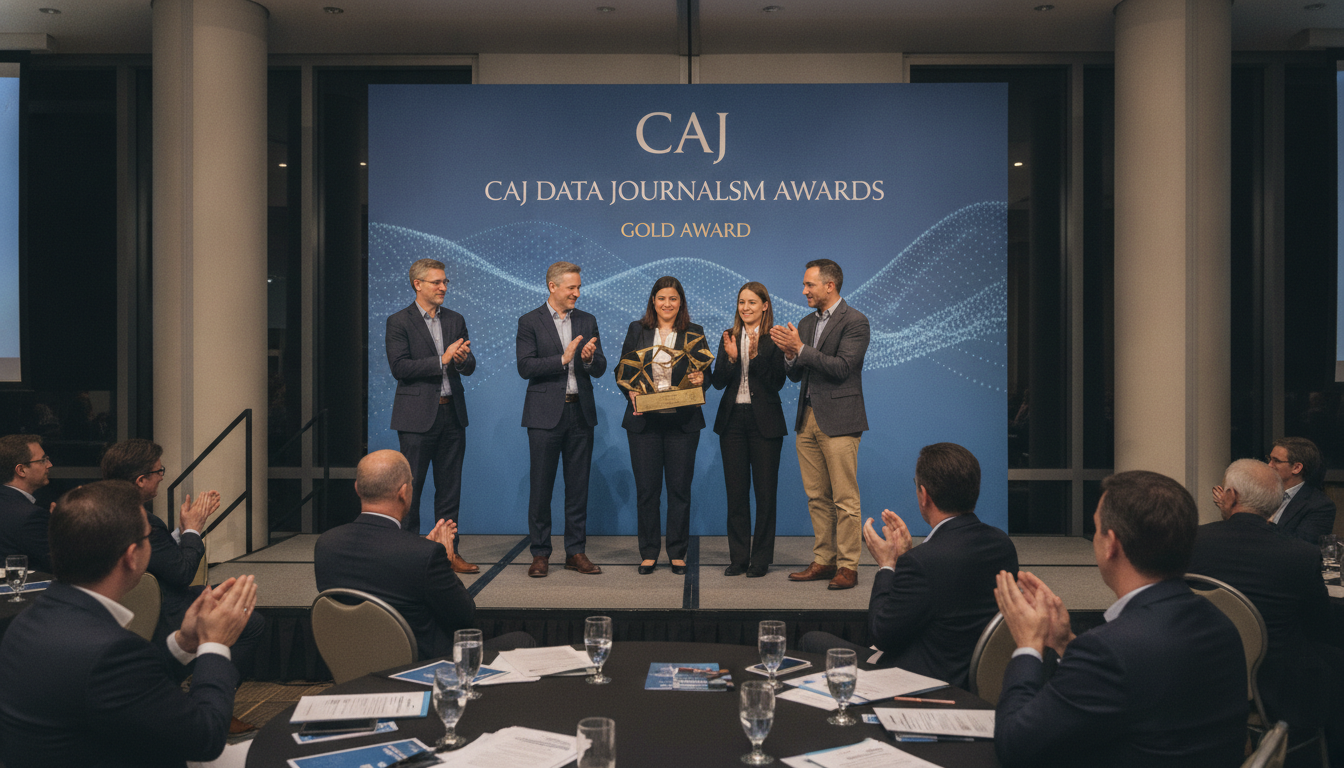
Risky Restaurants investigation wins CAJ Gold for exposing gaps in restaurant inspections
Risky Restaurants won the CAJ Gold for Data Journalism June 14, 2026, after revealing flaws in Alberta restaurant inspections and prompting government steps.
The investigative series Risky Restaurants has been awarded the Canadian Association of Journalists’ Gold prize in Data Journalism after a months-long probe that exposed systemic problems in the province’s restaurant inspections. The reporting, produced by The Journal in partnership with MacEwan University students and faculty, revealed issues with inspection records, public access to inspection data, and food-safety training practices.
CAJ Gold Award announced in Ottawa
The CAJ presented the Gold award at its annual ceremony held in Ottawa on June 13–14, 2026, recognizing data-driven reporting that produced tangible public impact. The prize honors the collaborative project’s use of large datasets, interviews and visual reporting to illuminate the state of food safety oversight in Alberta.
Judges cited the breadth of the reporting and its public-interest outcomes, noting the series’ role in prompting government officials to announce steps to address the shortcomings uncovered. The recognition marks a national acknowledgment of investigative work produced through newsroom-university collaboration.
Data analysis identified flaws in inspection records
Reporters and student researchers examined tens of thousands of inspection records and conducted more than 200 interviews to build the series’ findings. That analysis flagged inconsistencies in how inspections were recorded, gaps in the public-facing web portal, and problems that limited consumers’ ability to assess restaurant safety.
The series laid out specific failings in the inspection reports portal that hindered transparency, as well as shortcomings in standardized food-safety training for workers. Taken together, the evidence suggested systemic weaknesses rather than isolated lapses, according to the investigation’s authors.
University and newsroom partnership power the work
MacEwan associate professor of journalism Steve Lillebuen led a team of 15 students who worked alongside Journal reporters to conduct the data scraping, analysis and reporting. The newsroom supplied reporters, editors and photographers while the university brought research capacity and student manpower to the project.
Students gained hands-on experience working with real investigative techniques including data cleaning, public-record requests and interviewing, while newsroom staff mentored the team through editorial and legal review. The collaboration was described by participants as a model for experiential learning and for expanding the capacity of local investigative journalism.
Series content and newsroom contributions
Risky Restaurants produced a multi-day series that included seven stories, a columnist’s analysis and a podcast component. Journal photographers supplied visuals that accompanied data-driven stories, while colleagues at other newsrooms provided technical assistance for scraping and structuring public records.
Vancouver Sun data journalist Nathan Griffiths assisted with some data scraping, and senior editors within The Journal helped guide the project to publication. The multi-format approach combined narrative reporting, data visualization and audio to reach a broad audience and document the chain of evidence behind the findings.
Government reaction and sector response
Following publication of the series, the provincial government announced it would take steps to address food-safety concerns identified by the reporting. Officials signaled intentions to review inspection processes and improve the public portal used to publish inspection reports.
The reporting also intensified calls from restaurant workers and local chefs for broader reforms to the inspection system and worker training, prompting public discussion about how to better protect consumers and support safe operations in hospitality businesses. Regulators and industry stakeholders have since entered dialogues about next steps.
Recognition for student reporters and newsroom staff
The project credited the reporting of numerous MacEwan students and Journal staff for its depth and reach. Student contributors included Chris Allen, Rebekah Brunham, Brooklyn Burns, Raynesh Ram and David Slater, with additional reporting by Izzy Crozier, Kaitlyn Evans, Lucy Gordon, Edith Juru, Natan Leong, Lexus Morgan, Ryan Reed, Jackson Scherger and Evan Watt.
The Journal’s team included reporters and columnists who worked with students, and editor-in-chief Dave Breakenridge, a MacEwan graduate, praised the collaboration as a demonstration of how newsrooms and universities can jointly elevate public-interest journalism. One student, Liam Newbigging, has since moved onto a full-time contract with the paper.
The project’s scope and the CAJ recognition underline the value of rigorous, data-led investigation for uncovering policy-relevant problems. The award also highlights how combining academic resources with newsroom editorial standards can produce reporting that informs public debate and prompts institutional change.
