
Haiti vs Scotland: Neighbours in Foxboro host émigré community as World Cup match becomes a symbol of homeland struggle
A Foxboro, Massachusetts gathering of Haitian and Scottish fans turned the Haiti vs Scotland World Cup match into a communal event, with neighbours and diaspora members travelling from across North America to watch and to mark a larger story about sport, memory and politics.
Neighbors host cross-cultural World Cup gathering
Charlot Lucien and his neighbour Charlotte Jones opened their Foxboro garden to a mixed crowd before the Haiti vs Scotland kickoff, creating a relaxed, festive scene on a quiet suburban street. Friends from Scotland sang their anthem, an opera singer performed Haiti’s hymn and guests exchanged food, stories and flags in the summer air. The party drew close to thirty Haitians who had arrived from Florida, Montreal and New York, turning an ordinary pre-game meeting into a transnational celebration.
Diaspora drives Haiti’s World Cup presence
For many at the event, the team on the pitch represented Haitians who live abroad as much as those at home. Attendees noted that most players were born or raised outside Haiti, and they described the squad as a product of the global Haitian community rather than domestic leagues. Visitors and local academics said the reliance on the diaspora for national representation mirrors broader political conversations about return, sacrifice and civic duty among expatriate Haitians.
Promises of sport met with allegations of corruption and neglect
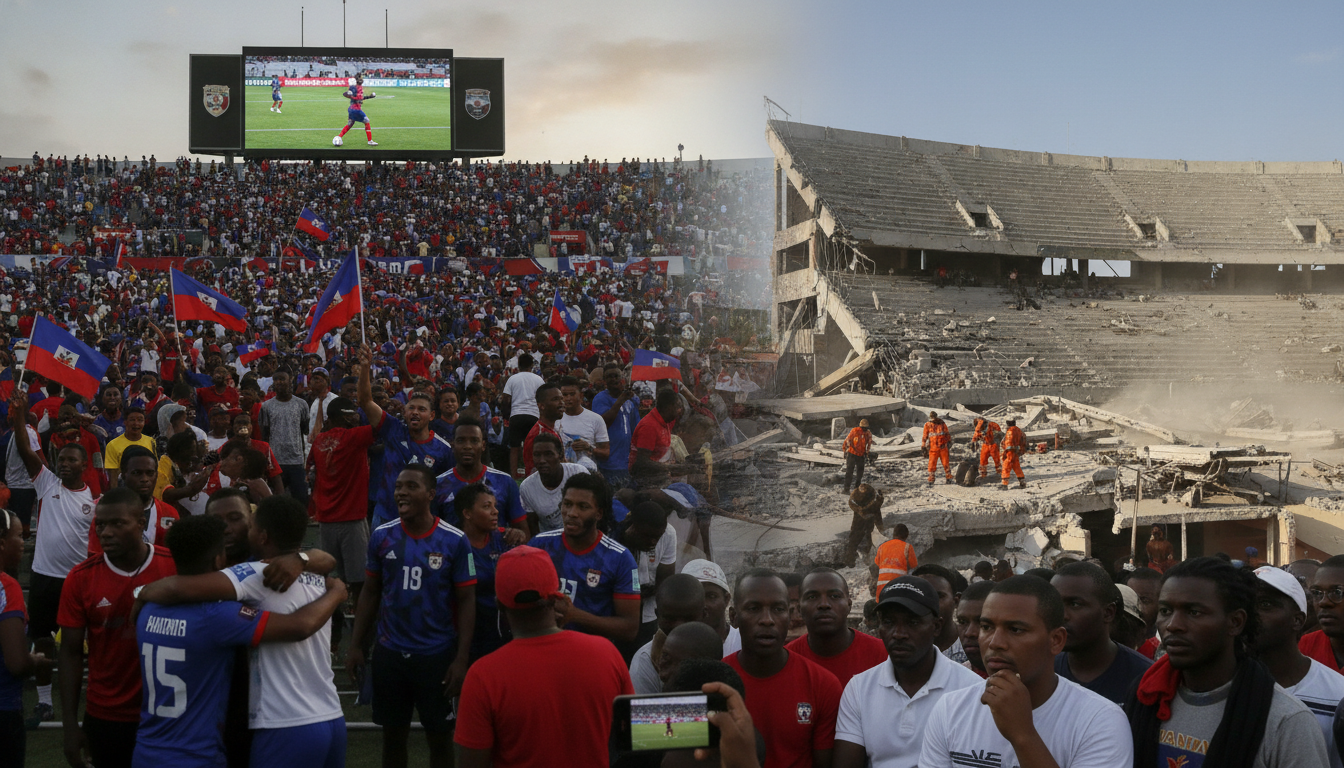
Guests at the Foxboro gathering recalled plans announced after the 2010 earthquake to build multiple stadiums as part of a recovery and youth-creation strategy. They said those projects were financed in part through international oil-for-aid arrangements and later diverted, leaving fields and facilities unfinished or abandoned. Speakers at the party described how corruption and criminal control have contributed to the decay of sporting infrastructure in Port-au-Prince and beyond, a reality that curtails opportunities for young athletes on the island.
Matchday atmosphere and historical echoes
On matchday, thousands of supporters wrapped in Haitian colours gathered, some unable to enter the stadium but following the game with the same solemnity reserved for a civic ritual. Commentators at the gathering highlighted the match’s deeper resonance: Haiti’s qualification on November 18, 2025 coincided with the anniversary of the 1803 Battle of Vertières, a symbolic date in the nation’s fight for independence. Fans drew parallels between that historical milestone and the World Cup appearance, treating the fixture as an extension of national memory and pride.
Community reaction as the game unfolded
Back in Lucien’s home, those who could not attend the stadium watched the match on television with the same intensity as those inside the venue. The crowd reacted audibly to each run, shot and the eventual setback, with emotional pauses that spoke to more than sport. Local academics and community leaders who joined the viewing described the match as both unifying and risky: an occasion that lifts spirits but cannot shoulder the expectations of an entire people facing longstanding social and political challenges.
Aftermath and what the result means locally
When Haiti was defeated, the mood among guests shifted from hope to quiet reflection rather than despair. Attendees said the loss did not erase the significance of the team’s presence on football’s biggest stage, but it did sharpen discussion about what international sport can and cannot accomplish for a country in crisis. Conversations turned quickly to the structural issues that make such achievements difficult to sustain, including weak institutions, gang influence and limited domestic sports development.
The Foxboro gathering illustrated how a single match can function simultaneously as entertainment, homage and political commentary for an expatriate community. For those at the event, the Haiti vs Scotland fixture was a mirror of history, a celebration of diasporic dedication and a reminder that sporting moments often expose the deeper fractures and hopes that shape nations.
