
Trump Name Removed from Kennedy Center After Federal Judge Rules Renaming Unlawful
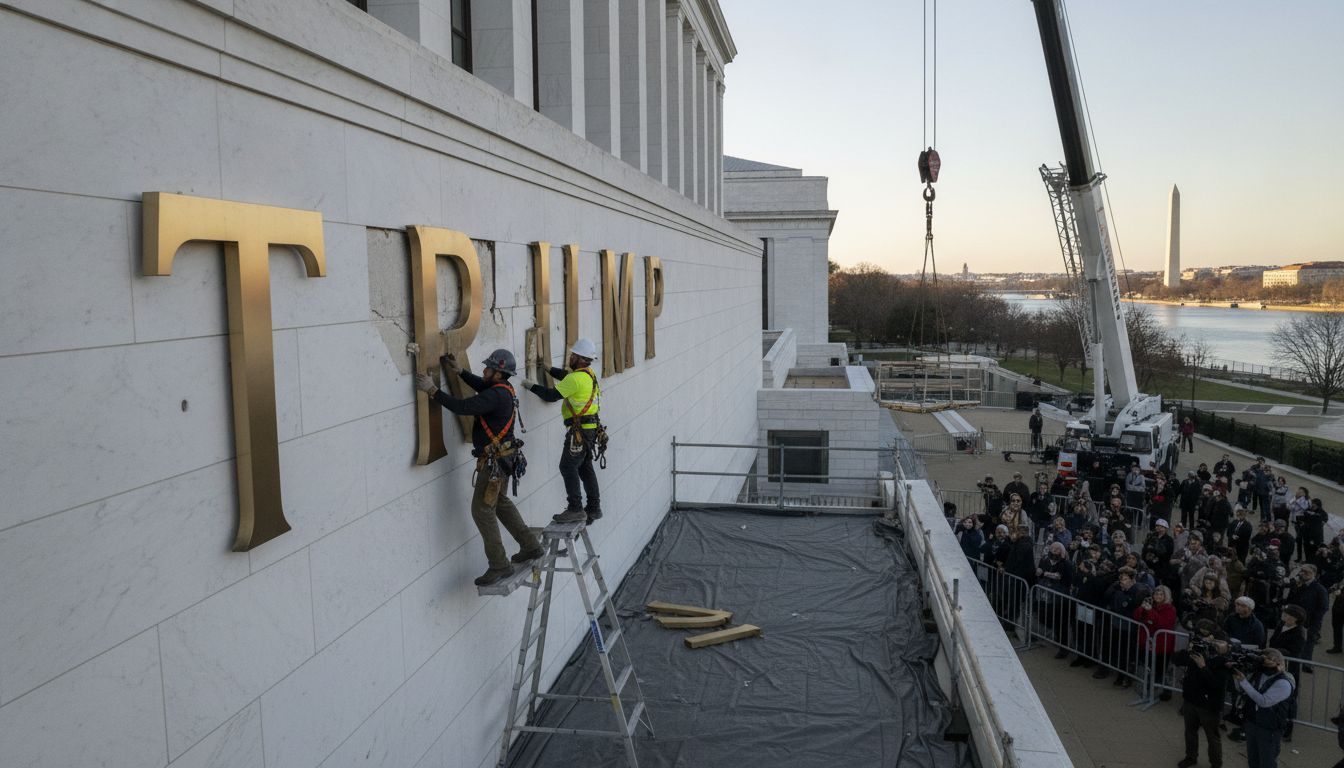
Workers began removing President Trump’s name from the John F. Kennedy Center for the Performing Arts in Washington after a federal judge ruled the December renaming unlawful, ordering its removal on Saturday.
The removal of Trump’s name from the Kennedy Center began Saturday as workers on scaffolding took down the letters from the building’s facade, a move ordered by U.S. District Judge Christopher Cooper. The operation was partially obscured by tarps and awnings as crews followed the court timeline set after Cooper’s May 29 ruling that only Congress can authorize such a renaming. The judge gave the center a 14-day deadline to comply and denied a last-minute appeal from the center’s Trump-aligned board seeking to block the decision.
Judge’s Ruling Cites Congressional Authority
Judge Cooper found that the December decision to add "Donald J. Trump" to the center’s name exceeded the board’s authority and that formal congressional action is required for such a change. In his opinion Cooper wrote that the public interest “is rarely served by the ‘perpetuation’ of ‘unlawful’ governmental action,” framing the removal as a corrective step. The ruling set a firm timetable and also temporarily blocked a separate plan to close the center for two years for renovations.
Board Composition and December Vote
The renaming followed a December vote by the Kennedy Center’s governing board after the composition of that board changed early in President Trump’s administration. The board, packed with Trump loyalists, voted to add the president’s name and the letters were affixed to the building shortly afterward. Several artists and performers cancelled engagements in protest after the change, sparking cultural and operational disruption at the nation’s premier performing-arts institution.
Removals, Objections and the Public Response
Crews worked visibly on the facade on Saturday, with scaffolding and white awnings shielding some of the removal activity from public view. The physical takedown has become a focal point for critics and supporters alike, underscoring how symbolic gestures can quickly become legal and logistical battles. Public reaction has been mixed, with opponents calling the original renaming an abuse of institutional power and supporters framing the president’s name as a valid tribute.
Broader Context of Trump Branding in Washington
The Kennedy Center episode is part of a wider pattern of efforts to place President Trump’s name and likeness across government-related sites and commemorations, according to materials and statements from the administration. The president recently moved to affix his name to other institutions and initiatives, including a renaming of the now-defunct U.S. Institute of Peace and proposals to feature his image on a commemorative $250 bill. The administration has also discussed issuing special passports bearing the president’s image and signature to mark the nation’s semiquincentennial.
Legal Pushback on Other Projects
Beyond naming disputes, several of the president’s proposed construction and renovation projects in Washington have faced legal challenges. Plans reported to involve alterations to the White House grounds and an expanded ballroom have prompted litigation from preservation groups, including a challenge by the National Trust for Historic Preservation. In the Kennedy Center case, Cooper’s temporary block on a two-year closure for renovations leaves the institution in operational limbo and raises new questions about oversight and long-term planning.
Next Steps for the Kennedy Center and Congress
With the letters now being removed, the immediate legal requirement has been met but the underlying question of who may rename national cultural institutions remains unresolved. Judge Cooper’s ruling makes clear that statutory authority rests with Congress, signaling that any future attempt to make a permanent change would need legislative action. Lawmakers, cultural stakeholders and the Kennedy Center’s governing board will now be left to determine whether to pursue congressional approval, revert the institution’s name, or consider alternative honors that comply with federal law.
The physical removal of the president’s name closes one chapter of a contentious episode at the Kennedy Center but opens a broader debate about governance, institutional independence and the limits of executive influence over national cultural landmarks.
