
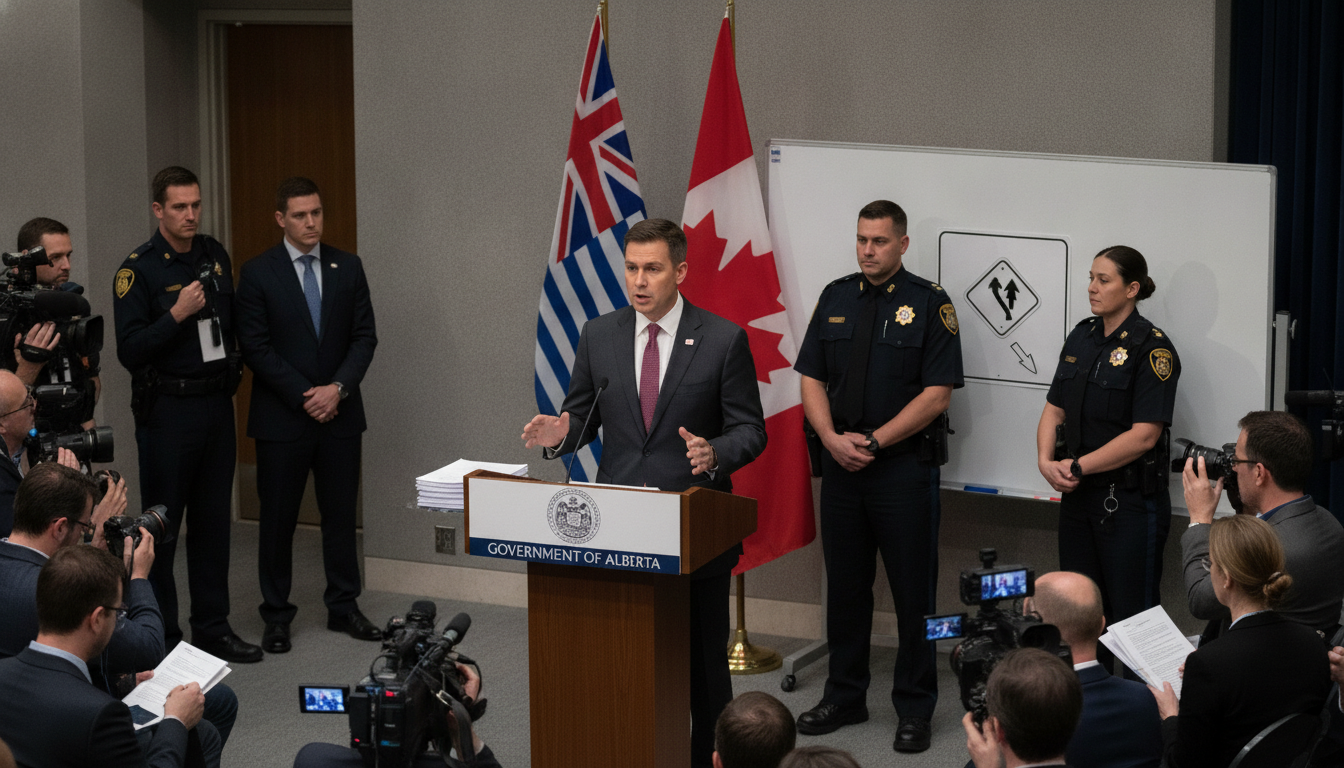
Alberta considers English-only driver knowledge test to tighten licensing and boost road safety
Alberta’s transportation minister has proposed an English-only driver knowledge test to tighten licensing rules and improve road safety amid concerns over language accommodations.
The province’s transportation minister has put an English-only driver knowledge test squarely on the public agenda, proposing changes to the pre-road-test written exam that would limit or remove foreign-language options.
The idea, framed as a public-safety measure, is backed publicly by Calgary Police Service officials who argue that the ability to read English road signs and instructions is essential for safe driving.
The proposal comes as Alberta’s current testing system continues to offer extensive language supports, and officials say they are opening a debate about whether those accommodations are undermining safety and consistency.
Dreeshen’s proposal and public framing
Devin Dreeshen, Alberta’s minister responsible for transportation, has asked Albertans to consider whether the driver knowledge test should be administered only in English.
He has described the measure as a common-sense step to ensure that licence holders understand signage, rules and instructions encountered on the road.
The proposal is being presented as a conversation starter rather than a finalized regulation, but supporters in law enforcement have signalled strong public-safety motives behind it.
Current language accommodations at registries
At present, the Alberta driver knowledge test includes a range of supports for people who do not speak English.
Test-takers may use a paper dictionary to translate questions into their own language, listen to voiceovers in about 25 languages via headphones, or bring a translator if their language is not offered.
Registries publicly advertise that applicants who cannot read or comprehend English can still access the test and complete licensing requirements, reflecting an inclusive approach to newcomer and multilingual communities.
Lessons cited from the United Kingdom’s shift
Proponents point to recent policy shifts in the United Kingdom, where authorities have moved to an English-only knowledge test — with Welsh permitted in Wales — and prohibited voiceover translations and translators for the written exam.
Officials there argued the change reduced safety risks tied to drivers who cannot independently read road signage and lessened opportunities for translator-assisted cheating.
The UK model also includes a longer written exam, a higher pass mark and a hazard-perception video component, measures supporters suggest could inform any Alberta reforms.
Calgary police highlight urban-rural testing loophole
Calgary Police Service officials have told provincial leaders that some novice drivers travel to smaller towns believing the driving test will be easier, then return to urban roads for daily driving.
Those officers describe new licence-holders who pass in low-traffic environments but appear overwhelmed by the density and complexity of city driving, creating immediate safety concerns.
Deputy and senior police leaders have urged parents and guardians to ensure young drivers are assessed in settings similar to where they will actually drive, saying the location and conditions of testing matter as much as the language of the exam.
Arguments on safety, fraud and fairness
Advocates of tighter rules contend that the ability to independently read English signage is a baseline safety requirement and that removing translators would reduce the risk of coaching or fraud during tests.
Critics warn that an English-only policy could erect additional barriers for newcomers and linguistic minorities, effectively narrowing access to mobility and employment unless complementary supports are offered.
Policy options under consideration include raising the pass grade, introducing video-based hazard tests, or restricting test locations, each with different impacts on safety and equity.
Potential policy changes and stakeholder response
If Alberta moves to an English-only knowledge test, practical changes could include elimination of foreign-language voiceovers, stricter rules on translators, or new urban-focused testing requirements.
Officials say any reform would need to balance road-safety benefits against concerns about fairness and accessibility for immigrants and rural residents.
Public consultation, registry procedure updates and training for exam proctors are likely prerequisites to any change, and observers expect robust debate from community groups, immigrant-serving organizations and road-safety advocates.
Dreeshen’s proposal has opened a high-profile discussion about how best to align licensing rules with road-safety goals while treating multilingual residents fairly.
Officials have not announced a timeline for any regulatory change, and stakeholders on all sides say more detailed analysis and consultation will be required before decisions are made.
As the province weighs the trade-offs between language accommodation and uniform safety standards, residents and interested organizations can expect further briefings and opportunities to comment in the weeks ahead.
