
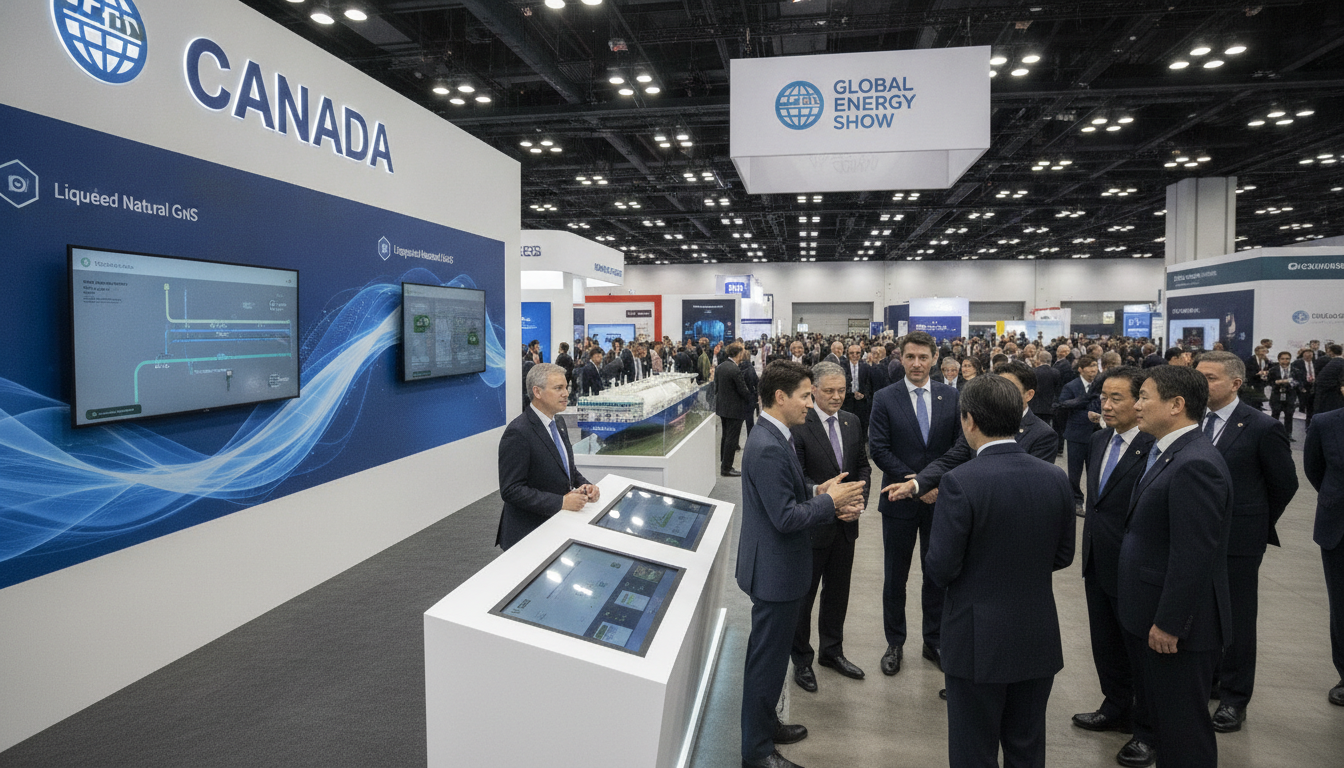
Global Energy Show in Calgary: World Leaders Call for More Canadian Energy
Delegates at the Global Energy Show in Calgary urged renewed investment in Canadian energy, spotlighting LNG partnerships, supply security and cross-border collaboration.
The Global Energy Show in Calgary opened with a clear message from visiting ministers and industry executives: the world wants more Canadian energy. Attendees at the BMO Centre on June 9, 2026 pressed for faster project development, capital inflows and technology transfer, particularly in liquefied natural gas. The conference drew senior officials and corporate leaders who framed Canada as a stable supplier amid global supply shocks.
Global Energy Show draws international delegations
Thousands of visitors filled exhibit halls and conference rooms as representatives from governments and major energy firms convened in Calgary. The event served as a focal point for deals, bilateral talks and investor outreach during a period of heightened market uncertainty. Organizers and senior speakers said the turnout underlined broad international interest in Canadian oil and gas resources.
Nigeria seeks LNG partnerships with Canada
Nigeria’s minister of state for petroleum resources, Ekperikpe Ekpo, used his keynote slot to invite Canadian firms to collaborate on liquefied natural gas projects. He emphasized immediate opportunities to build infrastructure, deploy technology and mobilize capital that could bolster global energy security. His appeal framed Canada as a complementary partner for West African gas developments and for diversifying supply chains.
Canada markets energy stability to allies
Federal Energy Minister Tim Hodgson told attendees Canada can offer reliable, conflict-free energy supplies to trading partners seeking security. Hodgson urged investors to “bring your capital, technology and ambition” to Canadian projects, highlighting the country’s regulatory frameworks and existing industry capacity. U.S. and North American regulators and executives on panels pointed to continental stability as a comparative advantage for buyers and financiers.
UAE highlights longstanding trade and investment links
Musabbeh Al Kaabi, chief executive of Abu Dhabi National Oil Co.’s upstream division, described a “great” relationship between the UAE and Canada that spans decades. He said recent high-level visits and business ties have set the stage for deeper cooperation across energy, logistics, aerospace and technology. Al Kaabi noted bilateral trade and investment figures to underscore the commercial foundation for future project collaboration.
West Coast LNG momentum, pipeline divisions persist
Speakers reiterated that liquefied natural gas projects on Canada’s West Coast are progressing while proposals for a crude oil pipeline remain contested. British Columbia’s energy minister Adrian Dix said his province supports LNG expansion but remains opposed to an Alberta crude pipeline unless proponents and Indigenous communities reach agreement. The divergence underscores regional tensions even as the country promotes broader energy exports.
Industry optimism fueled by recent deals and acquisitions
A series of major acquisitions in Alberta’s oilpatch and multi‑billion dollar LNG agreements on the West Coast have helped revive industry sentiment after a challenging decade. Executives on panels and the trade floor expressed cautious optimism that capital and markets are aligning to support new investment. Alberta political leaders and corporate chiefs used the forum to spotlight projects they said would generate jobs and strengthen long‑term supply commitments.
The discussions in Calgary centered on practical steps: accelerating permitting, scaling technology for emissions reductions, securing financing and ensuring Indigenous participation in projects. Delegates emphasized that partnerships between Canadian firms and international buyers could unlock infrastructure and open new export corridors. While some panels stressed the need for speed in project delivery, others insisted on robust environmental and social safeguards.
Speakers repeatedly tied the case for Canadian energy to geopolitical dynamics, arguing that reliable North American supply can mitigate risks posed by disruptions elsewhere. Regulatory and industry representatives highlighted recent policy measures intended to de‑risk investments and attract foreign capital. Observers at the show noted an appetite among buyers for long‑term contracts backed by stable jurisdictions.
Investor interest at the BMO Centre translated into networking and exploratory talks rather than immediate deal announcements for many attendees. Nevertheless, the visible presence of sovereign and corporate delegations signaled momentum that Canadian provinces and industry leaders hope will continue beyond the conference. Organizers said follow‑up meetings and bilateral negotiations were expected in the weeks after the event.
Looking ahead, participants said the critical tasks are converting interest into financed projects, aligning federal and provincial policy frameworks, and ensuring meaningful collaboration with Indigenous partners. The Global Energy Show underscored a central industry argument: with global demand pressures and supply-chain concerns, Canada’s energy sector stands at a crossroads where increased investment and partnership could reshape export capacity and market relationships.
